

- Updated: February 2, 2026
- 6 min read
Microsoft Partners with Anthropic: Claude Code Integrated into Notepad and Other Apps
Claude Code is now embedded in Microsoft Notepad and a suite of other Microsoft products, a key milestone of the expanding Microsoft‑Anthropic partnership.
The integration brings Anthropic’s powerful Claude Code AI coding assistant directly into everyday productivity tools, letting developers and even non‑technical staff generate, refactor, and debug code without leaving the familiar Microsoft environment.
Source: The Verge
A deeper look at the Microsoft‑Anthropic partnership
Microsoft’s collaboration with Anthropic began in mid‑2023 when the cloud giant first offered Anthropic’s Claude Sonnet 4 through Azure. The deal was expanded in November 2025, granting Microsoft Foundry customers access to the latest Claude models—Claude Opus 4.1, Claude Haiku 4.5, and the newly released Claude Code. In return, Anthropic committed to purchasing $30 billion of Azure compute capacity, cementing a multi‑year, mutually beneficial relationship.
While OpenAI remains Microsoft’s primary partner for frontier models, the company has deliberately diversified its AI stack. By embedding Claude Code across internal engineering teams, Microsoft is testing a “best‑of‑both‑worlds” approach: GitHub Copilot for familiar code‑completion tasks and Claude Code for higher‑level reasoning, refactoring, and natural‑language‑to‑code translation.
According to Microsoft’s communications chief, “OpenAI continues to be our primary partner, but we are equally committed to exploring Anthropic’s models where they excel.” This balanced stance signals a strategic shift toward a heterogeneous AI ecosystem rather than a single‑vendor lock‑in.
Claude Code lands in Notepad, Teams, Edge, and beyond
In the latest rollout, Microsoft has woven Claude Code into the fabric of its flagship productivity suite:
- Notepad: A new “AI Assist” pane lets users type natural language prompts (e.g., “Create a Python script that parses CSV files”) and receive ready‑to‑run code snippets instantly.
- Microsoft Teams: Developers can summon Claude Code in chat to generate code snippets during stand‑ups or code‑review discussions, reducing context‑switching.
- Edge Browser: The DevTools console now offers an “AI Suggest” button powered by Claude Code, which can auto‑complete JavaScript functions or suggest CSS fixes.
- Power Platform: Low‑code makers can describe desired automation in plain English, and Claude Code translates it into Power Automate flows.
These integrations are not limited to developers. Microsoft’s Experiences + Devices division is encouraging designers, product managers, and even HR staff to experiment with Claude Code for rapid prototyping, documentation generation, and data‑analysis scripts.
Internally, the Workflow automation studio on UBOS has already adopted a similar AI‑assisted approach, allowing users to drag‑and‑drop actions while Claude suggests the underlying code. The success of that model likely informed Microsoft’s decision to push Claude Code into its own low‑code environments.
What the integration means for products and developers
Claude Code’s arrival reshapes the developer experience in three concrete ways:
- Speed of iteration: Developers can generate boilerplate code in seconds, freeing time for architecture and testing.
- Lower barrier to entry: Non‑technical staff can prototype simple scripts, democratizing automation across the organization.
- Quality assurance: Claude Code’s built‑in linting and security checks catch common vulnerabilities before code is committed.
From a product‑management perspective, the integration accelerates feature roll‑outs. Teams can prototype UI components in Notepad, test them in Edge, and push them to production with a single click—thanks to the shared AI backend.
UBOS’s own ecosystem mirrors these benefits. For instance, the AI marketing agents leverage Claude‑style prompting to generate campaign copy, while the Enterprise AI platform by UBOS offers a unified API that can call Claude Code, OpenAI, or Anthropic models based on workload.
Developers should also be aware of the emerging “dual‑assistant” workflow: Microsoft encourages engineers to compare Claude Code with GitHub Copilot on a per‑task basis, feeding feedback into both models. This data‑driven approach will likely refine future iterations of both assistants, making them more specialized.
Stay updated with the latest AI developments
For a broader view of how AI is reshaping the tech landscape, check out our AI news hub. It aggregates breakthroughs from OpenAI, Anthropic, and emerging startups, giving you a single source for trend analysis.
Specifically, the Microsoft updates page tracks every new feature rollout, from Azure AI services to Office 365 enhancements, ensuring you never miss a critical change that could affect your workflow.
Visualizing the Claude Code integration
The diagram below illustrates how Claude Code sits between the user interface (Notepad, Teams, Edge) and Microsoft’s Azure AI layer. Requests flow from the UI to the Claude model, which returns code snippets that are instantly injected back into the editor.
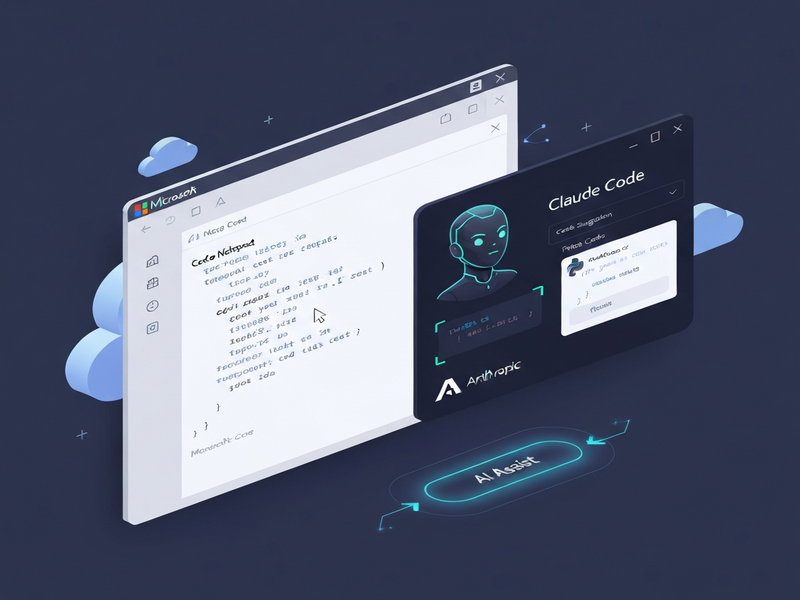
The image highlights the seamless handoff between front‑end tools and the Claude backend, emphasizing low latency and secure data handling.
Looking ahead: AI‑first development at Microsoft
Claude Code’s integration is more than a feature add‑on; it signals Microsoft’s commitment to an AI‑first development paradigm. As the partnership deepens, we can expect:
- Expanded model availability across Azure services, giving developers the choice to select the best‑fit model per workload.
- Deeper embedding of AI assistants in low‑code platforms like Power Apps, reducing the need for hand‑coded solutions.
- Enhanced security and compliance layers, ensuring that generated code respects enterprise policies.
For organizations looking to stay competitive, the message is clear: adopt AI‑augmented tools early, train teams on prompt engineering, and leverage the dual‑assistant strategy to maximize productivity.
UBOS continues to provide a sandbox for experimenting with these technologies. Whether you’re building a custom AI Chatbot template, an AI SEO Analyzer, or a full‑scale AI Video Generator, the platform’s modular architecture lets you plug in Claude, OpenAI, or any future model with minimal friction.
Meta description suggestions
- Claude Code now powers Microsoft Notepad and other products, marking a major step in the Microsoft‑Anthropic partnership. Learn the impact on developers and productivity.
- Explore how Microsoft’s integration of Anthropic’s Claude Code transforms Notepad, Teams, and Edge, and what it means for AI‑first development.
- Discover the implications of Claude Code’s rollout across Microsoft tools, the strategic partnership with Anthropic, and future AI trends.