

- Updated: January 30, 2026
- 7 min read
Space Beyond Announces Affordable Ashes‑to‑Space Service Launching in 2027
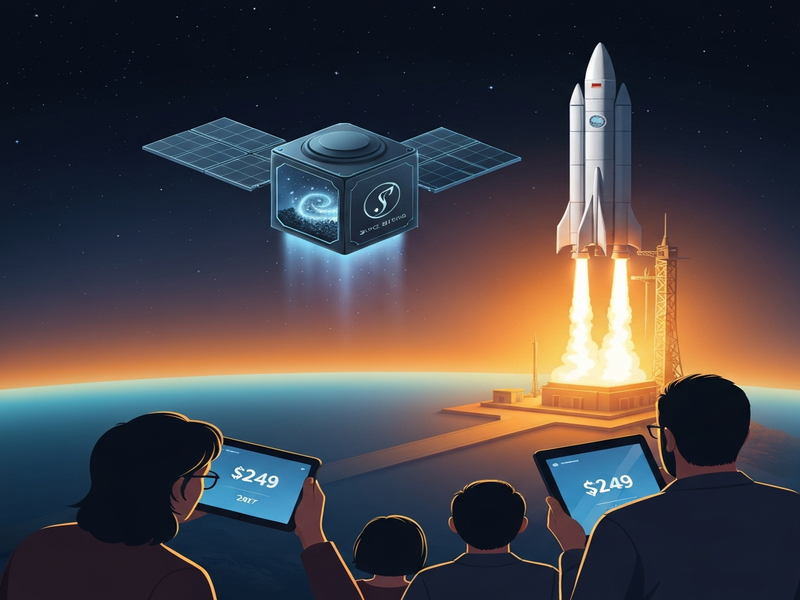
Space Beyond’s “Ashes to Space” service will launch a CubeSat on a SpaceX Falcon 9 rideshare in October 2027, allowing up to 1,000 families to send a gram of their loved one’s ashes into a sun‑synchronous orbit for as little as $249 per person.
A New Kind of Memorial: The “Ashes to Space” Concept
Imagine looking up at the night sky and knowing that a fragment of a cherished family member is silently circling the Earth above you. Space Beyond, a lean startup founded by former NASA and Blue Origin engineer Ryan Mitchell, is turning that poetic vision into a commercial reality. By leveraging the economies of scale offered by SpaceX’s rideshare program, the company promises an affordable, dignified, and technically robust way to memorialize loved ones among the stars.
Who Is Behind Space Beyond?
Ryan Mitchell spent a decade shaping hardware for NASA’s shuttle program before joining Jeff Bezos’ Blue Origin, where he witnessed first‑hand how launch costs have plummeted. “When I attended a family ash‑spreading ceremony, I kept asking myself, ‘How can we make this moment last longer?’” Mitchell told the original TechCrunch article. That question sparked the birth of Space Beyond, a bootstrapped venture that prioritizes accessibility over profit.
What the “Ashes to Space” Service Actually Offers
Space Beyond’s core product is a CubeSat‑based memorial platform that can carry the ashes of up to 1,000 individuals per launch. The service is structured around three simple tiers:
- Basic Memorial – $249: One gram of cremated remains, a digital certificate, and a live‑track link to view the satellite’s orbit.
- Premium Tribute – $499: Includes a personalized 3‑D‑printed plaque attached to the CubeSat and a commemorative video.
- Legacy Package – $799: Adds a private “memorial page” on Space Beyond’s portal, plus a limited‑edition digital artwork generated by AI.
Customers must arrange cremation independently; the service only handles the safe integration of the ashes into the satellite. Each participant receives roughly one gram of ash, a weight carefully calibrated to keep the total payload within the CubeSat’s mass budget while still making the mission financially viable.
Launch Timeline and Capacity
The first flight is slated for October 2027, when Arrow Science and Technology will integrate the CubeSat onto a SpaceX Falcon 9 rideshare. The launch will accommodate up to 1,000 individual memorials, meaning families can pre‑order years in advance and secure a spot on the inaugural mission.
Technical Overview: CubeSat, Rideshare, and Orbit
Space Beyond’s engineering team has chosen a 6U CubeSat (approximately 10 × 20 × 30 cm) as the vehicle for the ashes. This form factor is a sweet spot for rideshare payloads: small enough to keep launch costs low, yet large enough to host a secure compartment, telemetry, and a modest power system.
CubeSat Design and Safety
The satellite’s interior features a sealed, inert‑gas‑filled chamber that protects the ashes from moisture and temperature extremes. Redundant locking mechanisms ensure the compartment remains sealed throughout the five‑year orbital lifespan. The CubeSat also carries a low‑power GPS beacon and a public API that streams its real‑time position, allowing families to track the exact moment the satellite passes overhead.
Why a SpaceX Rideshare?
SpaceX’s rideshare model democratizes access to orbit by bundling dozens of small payloads onto a single Falcon 9 launch. Arrow Science and Technology, a certified integration partner, will handle the mechanical and electrical interface between the CubeSat and the launch vehicle. This partnership reduces the per‑customer cost dramatically compared to a dedicated launch, making the $249 price point feasible.
Sun‑Synchronous Orbit (SSO) Details
The CubeSat will be placed into a sun‑synchronous orbit at roughly 550 km altitude. An SSO provides consistent lighting conditions, which is ideal for Earth‑observation payloads and, in this case, for predictable visibility from the ground. The orbit’s inclination (~98°) ensures the satellite passes over every latitude, giving families worldwide the chance to spot it in the night sky.
Market Context: Memorial Services Meet Space Tourism
Sending ashes to space is not a brand‑new idea—companies like Celestis have offered similar services since the 1990s, typically charging several thousand dollars per launch. Space Beyond’s disruptive pricing and rideshare approach position it at the intersection of two fast‑growing markets: personalized memorial services and affordable space tourism.
A More Accessible Memorial Option
Traditional memorials can cost anywhere from $2,000 to $10,000, especially when incorporating niche services such as scattering ashes at remote locations. By contrast, Space Beyond’s basic tier undercuts those figures while offering a truly unique experience—having a loved one orbit the Earth.
Catalyzing the Space Tourism Ecosystem
As launch costs continue to fall, the barrier to entry for space‑related experiences drops with them. “The rideshare model is the same engine powering the next wave of sub‑orbital tourism,” notes Enterprise AI platform by UBOS. By normalizing small‑scale payloads, Space Beyond helps prove that personal, non‑scientific missions can share launch infrastructure, paving the way for future consumer‑grade experiences such as orbital hotels or private observation decks.
Founder and Investor Perspectives
“I’ve been told I’m not charging enough for this service,” Mitchell said, “but the funeral industry already over‑charges families at their most vulnerable moment. Our goal is dignity, not profit.”
Investors echo this sentiment. A silent partner from the UBOS partner program highlighted the strategic fit: “Space Beyond demonstrates how AI‑driven workflow automation can streamline compliance, tracking, and customer communication—exactly the kind of use‑case we champion on our platform.”
How UBOS Technology Enhances the “Ashes to Space” Experience
While Space Beyond handles the hardware, the digital side of the service benefits from UBOS’s low‑code ecosystem. The Web app editor on UBOS enables rapid creation of the memorial portal, while the Workflow automation studio automates order processing, compliance checks, and notification workflows.
For families wanting a more interactive experience, the platform can integrate OpenAI ChatGPT integration to power a virtual memorial assistant that answers questions about the satellite’s status, orbital mechanics, and even generates personalized tribute messages using AI.
Moreover, the Chroma DB integration stores immutable records of each memorial, ensuring data integrity and long‑term accessibility. The ElevenLabs AI voice integration can read those records aloud, creating an audio tribute that families can listen to on anniversaries.
Pricing, Templates, and Quick Start Options
Potential customers can explore pre‑built solutions in the UBOS templates for quick start. For instance, the “AI SEO Analyzer” template can be repurposed to optimize the memorial portal’s search visibility, while the “AI Article Copywriter” template helps generate heartfelt blog posts for families sharing their stories.
UBOS’s transparent pricing plans ensure that startups like Space Beyond can scale without hidden fees, reinforcing the company’s mission of affordability.
Real‑World Examples and Portfolio Highlights
UBOS’s portfolio examples showcase similar mission‑critical applications, from AI‑driven health trackers to automated compliance dashboards. These case studies illustrate how a robust backend can support a high‑visibility, emotionally charged service like “Ashes to Space.”
Future Outlook: Beyond 2027
Looking ahead, Space Beyond plans to iterate on the CubeSat design, potentially increasing capacity to 2,000 memorials per launch and extending orbital life through passive de‑orbit mechanisms. The company also envisions partnerships with other launch providers, such as Rocket Lab, to diversify launch windows and reduce risk.
From a broader industry perspective, the success of affordable memorial launches could inspire a new class of “personal payloads” – from time‑capsule art installations to micro‑laboratory experiments funded by individuals. As the innovation ecosystem matures, the line between commercial and personal space missions will continue to blur.
Conclusion: A Stellar Way to Remember
Space Beyond’s “Ashes to Space” service merges heartfelt remembrance with cutting‑edge aerospace engineering, all while keeping the price within reach of everyday families. By leveraging SpaceX’s rideshare economy, CubeSat technology, and UBOS’s low‑code AI platform, the startup delivers a transparent, dignified, and technically sound memorial option that could redefine how we honor those who have passed.
Ready to explore the stars for your loved one? Visit the UBOS homepage to learn how low‑code tools can help you build custom experiences, or head straight to the UBOS for startups page for partnership opportunities.
For a deeper dive into the technical specifications and launch schedule, read the original TechCrunch article.
Andrii Bidochko
CTO UBOS
Andrii Bidochko is an AI entrepreneur and researcher focused on AI agents, reinforcement learning, and autonomous systems. He writes about the technologies shaping the future of machine intelligence, from frontier models and agent architectures to real-world AI applications.