

- Updated: January 25, 2026
- 7 min read
Hidden Android Setting Detects Fake Cell Towers – How to Enable It
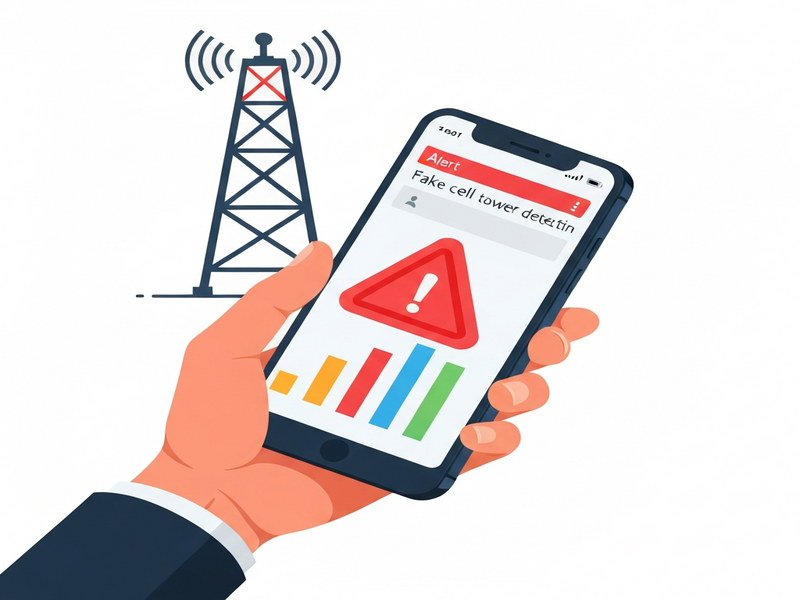
Android includes a hidden setting called **Network Spoofing Protection** that can automatically detect and block fake cell towers (also known as IMSI‑catchers), giving tech‑savvy users an extra layer of mobile security.
Hidden Android Setting That Spots Fake Cell Towers – What It Is, How It Works, and How to Activate It
If you’ve ever worried that someone could be eavesdropping on your calls or tracking your location by masquerading as a legitimate cellular tower, you’re not alone. A recent How‑To‑Geek article revealed that Android already ships with a covert feature designed to sniff out these rogue transmitters. In this news‑style guide we break down the setting, explain the science behind fake‑tower detection, and walk you through the exact steps to turn it on—so you can protect your privacy without installing third‑party apps.
What Is the Hidden Android Setting?
Starting with Android 12, Google introduced an under‑the‑radar toggle named Network Spoofing Protection. It lives inside the Developer options menu and is disabled by default to preserve battery life on devices that never encounter rogue towers. When enabled, the operating system cross‑checks the broadcasted cell‑tower identifiers (MCC, MNC, LAC, CID) against a continuously updated database of known legitimate towers. Any mismatch triggers a warning and, optionally, forces the device to fall back to a safer network mode.
This feature is part of Android’s broader Android security initiative, which aims to harden the mobile stack against emerging threats such as IMSI catchers, fake base stations, and over‑the‑air (OTA) attacks.
How It Detects Fake Cell Towers
The detection algorithm relies on three complementary techniques:
- Signal‑strength anomaly analysis: Real towers exhibit predictable power curves based on distance and terrain. Sudden spikes or drops often indicate a nearby impostor.
- Cryptographic verification: Modern LTE/5G networks embed signed identifiers. Android validates these signatures against the fake cell tower protection service, which aggregates reports from millions of devices.
- Geolocation cross‑check: The OS compares the tower’s reported location with the device’s GPS coordinates. A large discrepancy (e.g., a tower claimed to be 500 km away) raises a red flag.
When any of these checks fail, Android logs the event, notifies the user with a system toast, and optionally disables the suspicious network. The data is then anonymized and sent to Google’s security servers to improve the global detection model.
How to Enable Network Spoofing Protection on Your Android Device
Activating the hidden setting is straightforward, but it does require access to the Developer options menu. Follow the steps below, and you’ll have real‑time fake‑tower detection running in seconds.
- Open Settings → About phone. Scroll to Build number and tap it seven times. You’ll see a toast confirming “You are now a developer!”
- Return to the main Settings page. A new Developer options entry appears near the bottom.
- Enter Developer options. Scroll down to the Network section.
- Locate “Network Spoofing Protection”. The toggle may be labeled “Detect fake cell towers” on some OEM skins.
- Turn the switch on. Android will prompt you to restart the radio module; confirm the action.
- Verify activation. Open a terminal app or use
adb shell dumpsys telephony.registryto seespoofingProtection=enabledin the output.
After enabling, you’ll notice a subtle icon in the status bar whenever Android blocks a suspicious tower. The notification reads “Potential fake cell tower blocked” and offers a link to view details in the Security & privacy dashboard.
Benefits and Security Implications
Turning on this hidden setting delivers tangible advantages for privacy‑conscious users:
- Call and SMS interception prevention: Fake towers often force devices onto insecure 2G networks where encryption is weak. By blocking them, your voice and text remain encrypted.
- Location‑privacy safeguard: IMSI catchers can triangulate your position even when GPS is disabled. Spoofing protection stops the tower from feeding false location data to apps.
- Reduced data‑leak risk: Some rogue stations inject malicious payloads into data streams. Android’s verification stops these payloads before they reach your apps.
- Battery efficiency: Although the feature adds a small processing overhead, it prevents the device from repeatedly reconnecting to unstable towers—a common cause of battery drain.
- Community‑driven intelligence: Each detection contributes to a crowdsourced map of malicious towers, improving protection for every Android user worldwide.
Real‑World Scenarios Where the Setting Saves the Day
Understanding the practical impact helps you decide whether to enable the feature today.
| Scenario | Potential Threat | How Spoofing Protection Helps |
|---|---|---|
| Traveling in high‑risk regions (e.g., border zones) | Government‑run IMSI catchers attempting to intercept calls | Detects and blocks the rogue base station before a connection is made |
| Attending large public events | Criminals setting up temporary fake towers to harvest data | Alerts you instantly, allowing you to switch to Wi‑Fi or airplane mode |
| Using public transportation | Malicious actors exploiting weak cellular coverage in tunnels | Prevents fallback to insecure 2G, preserving encryption |
How UBOS Enhances Mobile Security Beyond Android’s Built‑In Tools
While Android’s native spoofing protection is a solid first line of defense, enterprises and power users often need deeper analytics, automated response, and integration with broader security ecosystems. UBOS offers a suite of AI‑driven tools that complement the Android feature:
- UBOS homepage – Overview of the platform’s AI‑centric security capabilities.
- About UBOS – Learn how the team’s expertise in AI and mobile security fuels continuous innovation.
- UBOS platform overview – A unified console for monitoring network anomalies across Android fleets.
- Enterprise AI platform by UBOS – Scalable AI models that detect sophisticated spoofing attempts in real time.
- UBOS partner program – Collaborate with security vendors to embed custom detection rules.
- AI marketing agents – Not directly security‑related, but showcases UBOS’s ability to automate complex workflows, a principle that also powers security automation.
- Workflow automation studio – Build automated responses (e.g., quarantine a device) when Android flags a fake tower.
- UBOS templates for quick start – Deploy pre‑built security dashboards in minutes.
By pairing Android’s built‑in spoofing protection with UBOS’s AI analytics, organizations can achieve end‑to‑end visibility—from the handset level up to the corporate security operations center.
FAQ – Quick Answers for the Curious
Will enabling the setting affect my data plan?
No. The feature only blocks connections to towers that fail verification; legitimate networks remain untouched, and no extra data is consumed.
Is the setting available on all Android devices?
It appears on Android 12 and newer builds. Some OEM skins may hide it under a different name, but the underlying functionality is present in the AOSP code.
Can I see a log of blocked towers?
Yes. Navigate to Settings → Security & privacy → Network security → Spoofing protection log to view timestamps, tower IDs, and locations.
Take Control of Your Mobile Privacy Today
Fake cell towers are a growing threat, but Android’s hidden Network Spoofing Protection gives you a powerful, no‑cost shield. Enable it now, and consider augmenting it with UBOS’s AI‑driven security suite for enterprise‑grade monitoring and automated response.
Explore UBOS’s Enterprise AI Platform to future‑proof your organization against evolving mobile threats.
For more in‑depth guides on Android security, stay tuned to our blog and subscribe to our newsletter.