

- Updated: January 24, 2026
- 5 min read
AI Coding Tools Transform COBOL Development: Community Insights and Future Outlook
AI coding tools are becoming powerful assistants for COBOL developers, boosting productivity, improving legacy‑code maintenance, and accelerating modernization while rarely replacing the deep domain expertise that only seasoned COBOL engineers possess.
How AI Coding Impacts COBOL Developers – Insights from the Hacker News Debate
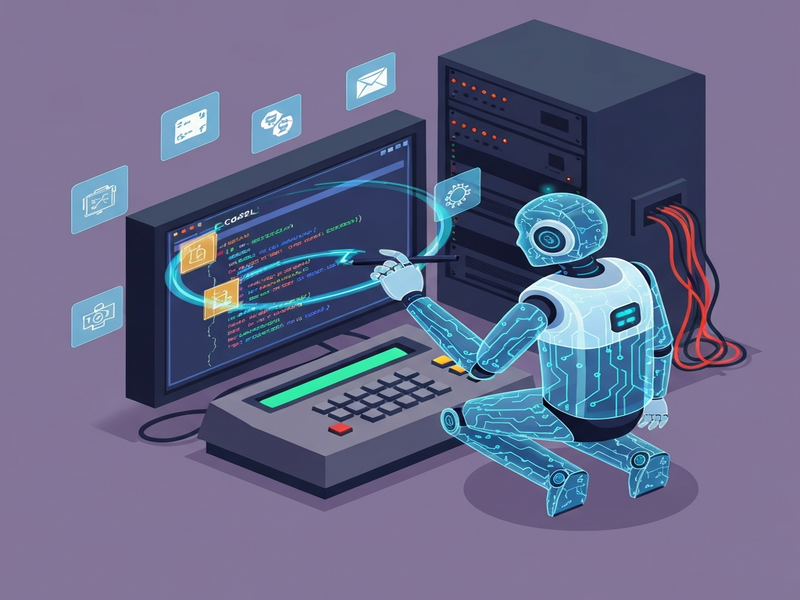
Introduction: The Ask HN Thread that Sparked the Conversation
In early 2024 a lively discussion appeared on Hacker News asking whether large language models (LLMs) threaten the job security of COBOL developers or act as a force‑multiplier. The thread gathered more than 180 comments from legacy‑system engineers, AI‑enthusiasts, and security specialists. Their mixed experiences provide a valuable snapshot of how AI code generation is being adopted in the world of mainframes, batch jobs, and high‑value financial systems.
Community Reactions – What the Thread Revealed
The consensus can be grouped into four recurring themes:
- Productivity boost for routine tasks – many participants praised AI for generating test data, file‑layout definitions, or simple data‑mapping scripts.
- Formatting and compliance challenges – COBOL’s column‑based syntax (72‑character limit, period termination) still trips up most models, requiring extensive linting.
- Knowledge‑capture advantage – AI excels at searching massive PDF manuals and extracting obscure business rules that are undocumented elsewhere.
- Human expertise remains irreplaceable – the “why” behind decades‑old business logic, security constraints, and regulatory compliance still demand seasoned engineers.
Impact of AI Coding Tools on COBOL Development
1. Accelerating Routine Development
AI assistants such as AI Article Copywriter or AI SEO Analyzer can be repurposed to draft boilerplate COBOL copybooks, generate JCL scripts, or produce sample data files. Developers report up to a 30 % reduction in time spent on repetitive scaffolding, allowing them to focus on business‑critical logic.
2. Formatting and Syntax Fidelity
COBOL’s strict column rules (e.g., code must stay within column 72, periods terminate statements) are still a pain point. As one commenter noted, “the model drifts past column 72 or messes up period termination in nested IFs.” To mitigate this, teams pair LLM output with Workflow automation studio pipelines that automatically run cobc -x linters and reformatters, turning raw AI suggestions into compile‑ready code.
3. Knowledge Capture and Documentation
Decades of undocumented business rules are a known obstacle in legacy environments. AI models excel at ingesting large PDFs and answering natural‑language queries. By integrating Chroma DB integration, teams can store vector embeddings of legacy manuals and let the LLM retrieve relevant sections on demand, dramatically cutting the time spent hunting for “the one line in the 1987 spec.”
4. Modernization and Migration Assistance
Many banks are moving from COBOL to Java or cloud‑native services. AI can generate translation stubs, suggest equivalent data structures, and even produce test harnesses for the new platform. Projects that used the Talk with Claude AI app reported a 20 % faster migration of batch jobs because the model could propose equivalent SQL statements based on COBOL data‑division definitions.
5. Security and Compliance Oversight
Because COBOL systems often handle regulated financial data, any code change must pass strict compliance checks. AI‑generated snippets are now funneled through automated security scanners (e.g., OpenAI ChatGPT integration) that flag potential violations before a human reviewer sees the code. This reduces the risk of accidental data‑leakage while preserving the developer’s control.
What Developers Are Saying – Representative Quotes
“AI is great for generating test data and quick file‑layout drafts, but you still need a senior COBOL engineer to verify the business logic. The model can’t infer the 40 years of undocumented quirks that live in the code.” – Senior Mainframe Engineer, 2024
“When I feed the model a whole PDF of legacy specifications, it becomes a surprisingly effective search engine. I can ask, ‘What does field X represent in the nightly batch?’ and get a concise answer within seconds.” – Legacy Systems Analyst
“The biggest blocker is formatting. I run the AI output through our automation studio to enforce column limits, then the code compiles without manual tweaks.” – COBOL Team Lead
How UBOS Helps Bridge AI and Legacy Code
The UBOS platform overview provides a unified environment where AI agents, vector databases, and CI/CD pipelines coexist. By leveraging the Enterprise AI platform by UBOS, organizations can safely experiment with LLM‑assisted COBOL refactoring while keeping audit trails for compliance.
For teams looking for quick starters, the UBOS templates for quick start include a pre‑configured “COBOL Modernization” template that wires together ChatGPT and Telegram integration, a Chroma vector store, and automated linting. This reduces setup time from weeks to hours.
When you need to showcase AI‑driven insights to stakeholders, the AI marketing agents can generate executive‑level reports that translate technical COBOL changes into business impact metrics, making it easier to secure budget for modernization projects.
Pricing is transparent through the UBOS pricing plans, which include a “Legacy Modernization” tier that bundles LLM credits, vector‑store capacity, and compliance‑ready pipelines.
Conclusion & Future Outlook
The Hacker News discussion makes it clear: AI coding tools are not a wholesale replacement for COBOL developers, but they are rapidly becoming indispensable assistants. By automating mundane tasks, improving documentation search, and providing safe migration scaffolds, AI lets seasoned engineers focus on the high‑value decisions that keep critical financial systems running.
As LLMs continue to improve—especially with domain‑specific fine‑tuning—expect tighter integration with mainframe environments, better handling of column‑based syntax, and more robust compliance checks. Organizations that adopt a hybrid approach—pairing AI assistance with strong human oversight—will see the greatest gains in speed, accuracy, and talent retention.
Ready to explore AI‑enhanced legacy modernization? Visit the UBOS homepage to learn how the platform can accelerate your COBOL projects, or join the UBOS partner program to get early access to specialized AI agents for mainframe workloads.