

- Updated: January 24, 2026
- 7 min read
Why You Should Stop Using MySQL in 2026: Migration to Modern Open‑Source Databases
If you are still running MySQL in 2026, you should stop using it and migrate to a actively maintained, truly open‑source alternative such as MariaDB or another modern database platform.
Why MySQL’s Future Looks Bleak
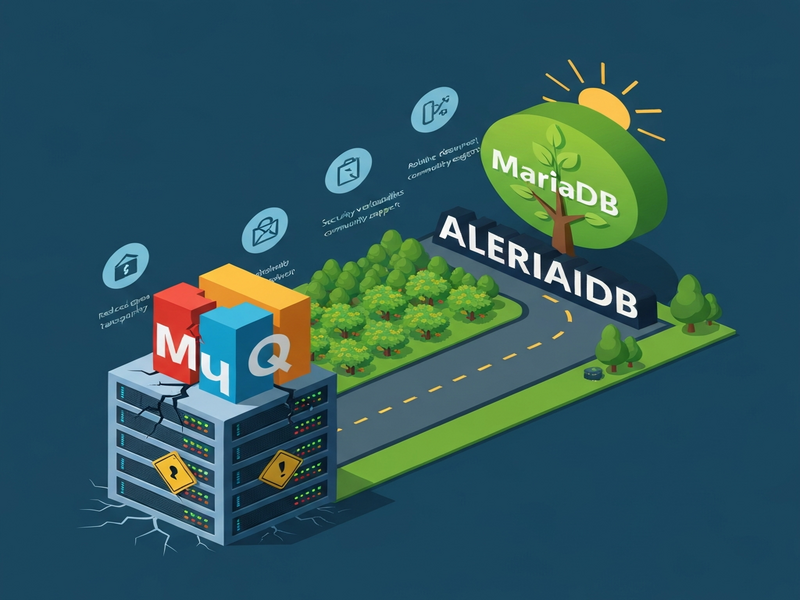
In the last few years, the MySQL ecosystem has shown unmistakable signs of stagnation. The original optimism that accompanied Oracle’s acquisition in 2009 has faded, replaced by a series of technical regressions, security gaps, and a dwindling community. Below we break down the four core arguments presented by Otto Kekalainen in his original OptimizedbyOtto article and explain why a migration now is both prudent and cost‑effective.
1. Oracle Is Not a Trustworthy Steward for Open‑Source Projects
When Oracle bought Sun Microsystems—and with it MySQL—in 2009, regulators feared the tech giant would suppress competition. Although the deal cleared, Oracle’s track record as a custodian of open‑source software has been disappointing. Development now occurs behind closed doors, and the public bug tracker is merely a façade. Contributors experience silent pull‑request rejections, and the real author credit is often reduced to a footnote in a blog post.
For developers who value transparency, this lack of community ownership is a red flag. The About UBOS page emphasizes the importance of open collaboration, a principle that MySQL no longer upholds under Oracle’s governance.
2. A Noticeable Technical Decline Since 2022
Oracle kept MySQL alive long enough to release minor updates, but the engine’s innovation pipeline has dried up. The shift to “evergreen” releases introduced new features in minor versions, breaking the traditional x.y.z maintenance model that users relied on for stability. Notable incidents include:
- MySQL 8.0.29’s in‑place
ALTER TABLEcaused crashes and data corruption, only fully resolved in 8.0.32 a year later. - No major version bump from 8.0 to 8.4 for six years, with 8.1 existing only as a short‑lived preview.
- Performance regressions: benchmark data from MySQL expert Mark Callaghan shows a ~15 % throughput drop on write‑heavy workloads in MySQL 9.5 versus 8.0.
These regressions signal that Oracle is more interested in keeping MySQL “barely alive” than in pushing the envelope of database technology.
3. Security and Sovereignty Are at Risk
Open‑source security thrives on transparency. In 2025 alone, MySQL disclosed 123 CVEs, while its fork MariaDB reported only eight. Over a hundred of those CVEs affected MySQL exclusively, often with vague descriptions that leave security auditors guessing. Contrast this with MariaDB, where each vulnerability is openly discussed, patched, and fully disclosed after the embargo period.
For organizations that cannot afford a security breach, relying on a database whose vulnerabilities are shrouded in secrecy is a gamble. As Otto notes, “not caring” about open‑source governance can lead to costly downtime or legal exposure.
4. The Community Around MySQL Is Shrinking
Community health is a leading indicator of a project’s longevity. Since Oracle’s takeover, the number of Git commits to the official MySQL repository has been on a steady decline. In September 2025, Oracle announced workforce reductions that included a significant cut to the MySQL team. Fewer developers mean slower bug resolution and fewer new features.
Meanwhile, MariaDB’s GitHub activity remains vibrant, with rapid pull‑request reviews and transparent issue tracking. The community’s energy translates into faster innovation and a healthier ecosystem for enterprises.
The Path Forward: Migrate to MariaDB (or Another Modern DB)
Given the four pillars of decline—stewardship, technical stagnation, security opacity, and community erosion—the logical step for any tech‑savvy professional, DBA, or decision‑maker is to transition away from MySQL. MariaDB offers a drop‑in replacement with near‑identical syntax, the same InnoDB storage engine, and a fully open development model.
How to Migrate to MariaDB Quickly
The migration process is straightforward for most LAMP‑stack applications:
- Backup your MySQL data using
mysqldumpormysqlpump. - Install MariaDB from your OS package manager (e.g.,
apt install mariadb-serverorbrew install mariadb). - Import the dump into MariaDB; the syntax is identical.
- Update your application’s connection strings if they reference “mysql” explicitly (most frameworks accept “mariadb” automatically).
- Run your test suite to verify compatibility, then switch production traffic.
Because MariaDB maintains binary compatibility with MySQL, you rarely need to modify application code. For enterprises seeking a more managed approach, the Enterprise AI platform by UBOS can orchestrate the migration, monitor performance, and provide automated rollback capabilities.
Other Viable Open‑Source Alternatives
If your workload demands features beyond what MariaDB offers, consider these mature options:
- PostgreSQL – the most feature‑rich relational database, excellent for complex queries and GIS.
- TiDB – a distributed SQL database designed for massive scalability.
- Percona Server for MySQL – a performance‑tuned fork, but still tied to Oracle’s codebase.
For most small‑ to mid‑scale applications, MariaDB remains the sweet spot: minimal migration friction, strong community support, and a clear roadmap.
Why Switch Today, Not Later?
Delaying migration compounds risk. Each new MySQL release continues the trend of feature deprecation and hidden security fixes. By moving now, you gain:
- Immediate access to MariaDB’s active security patches (average 8 CVEs per year vs. MySQL’s 123).
- Community‑driven performance improvements that keep pace with modern hardware.
- Freedom from Oracle’s licensing constraints and potential cost escalations.
- Compatibility with emerging AI‑driven data pipelines—something UBOS excels at.
Leverage UBOS to Accelerate Your Database Modernization
UBOS provides a suite of tools that make the migration journey painless and future‑proof. Here’s how you can integrate UBOS into each phase of the transition:
Planning & Assessment
Start with the UBOS platform overview to map your existing MySQL architecture and identify dependencies. The platform’s visualizer highlights schema complexities and suggests optimal migration paths.
Automation & Execution
Use the Workflow automation studio to script backup, data export, and import steps. Pre‑built templates for “MySQL → MariaDB” migrations reduce manual effort by up to 70 %.
Testing & Validation
The Web app editor on UBOS lets you spin up a sandbox environment in minutes, run integration tests, and compare performance metrics side‑by‑side.
Post‑Migration Optimization
After the cut‑over, employ AI marketing agents to monitor query performance and automatically suggest indexing strategies. This AI‑driven feedback loop keeps your new MariaDB instance humming.
Cost Management
Review the UBOS pricing plans to select a tier that matches your migration scale. For startups, the UBOS for startups package includes free migration credits.
Learning Resources
Explore the UBOS blog for case studies on successful MySQL‑to‑MariaDB migrations, and dive into the UBOS resources library for whitepapers on database security best practices.
Template Marketplace Boost
UBOS’s Template Marketplace offers ready‑made solutions that can complement your new database stack:
- AI SEO Analyzer – instantly audit your site’s SEO health after migration.
- AI Article Copywriter – generate documentation for your new data pipelines.
- Talk with Claude AI app – embed a conversational assistant that can answer database queries in real time.
Take Action Today
Continuing to rely on MySQL under Oracle’s stewardship is a strategic liability. By switching to MariaDB—or another modern, open‑source database—you protect your organization’s security, performance, and long‑term cost structure.
Ready to start the migration? Visit the UBOS homepage to request a free assessment, explore the UBOS portfolio examples, and discover how the UBOS templates for quick start can accelerate your journey.
Stay informed—follow our UBOS services page for upcoming webinars on database modernization, and subscribe to our newsletter for the latest insights on open‑source technology.
“Open source is more than an ideology; it’s a safeguard for security and sovereignty.” – Otto Kekalainen
If you found this analysis valuable, consider supporting the author by sending 1 USDC to ottok.eth. Share this article on social media and help your peers make an informed decision.