

- Updated: January 23, 2026
- 8 min read
Introducing Gibram: An In‑Memory Knowledge Graph Server for Retrieval‑Augmented Generation
Gibram is an open‑source, in‑memory knowledge graph server built to accelerate Retrieval‑Augmented Generation (RAG) and GraphRAG workflows by combining graph relationships with vector search in real time.
Introduction: Why Gibram Matters in the AI Landscape
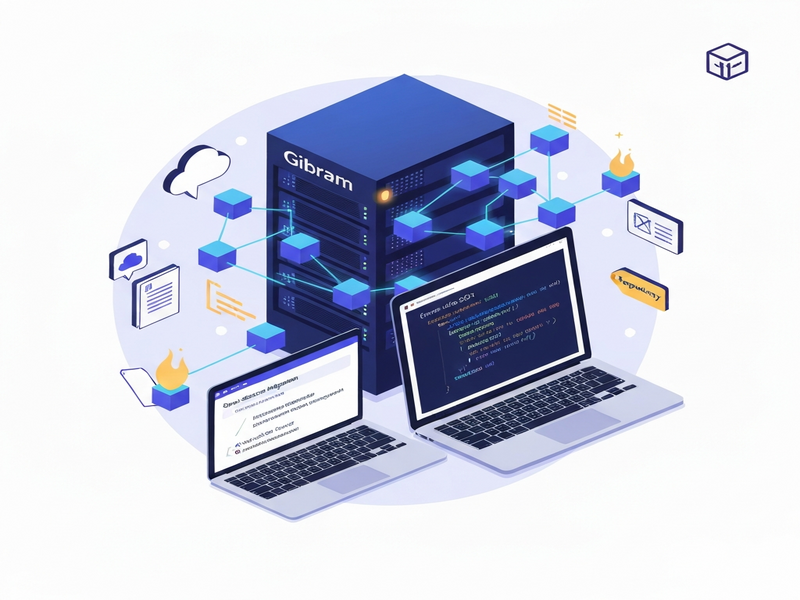
In the rapidly evolving world of generative AI, the ability to retrieve precise, context‑rich information is as critical as the language model itself. Traditional vector databases excel at similarity search but often lose the relational context that humans naturally use to reason. Gibram fills this gap by storing entities, relationships, and their embeddings together in RAM, enabling instant, graph‑aware retrieval that powers next‑generation RAG and GraphRAG pipelines.
Whether you are a developer building a chatbot, a data scientist exploring knowledge graphs, or an AI researcher prototyping novel retrieval strategies, Gibram offers a lightweight, ephemeral solution that integrates seamlessly with popular LLM APIs and Python SDKs.
For more context on how in‑memory AI platforms are reshaping enterprise workflows, explore the UBOS homepage, which showcases a suite of AI‑first products built on similar principles.
What Is Gibram? Overview and Key Features
In‑Memory Knowledge Graph Engine
Gibram stores a graph of named entities and relationships directly in RAM. This design eliminates disk I/O latency, making it ideal for short‑lived analysis, rapid prototyping, and interactive AI assistants where response time is paramount.
Hybrid Vector‑Graph Architecture
Each node (entity) and edge (relationship) can be enriched with an embedding generated by any vector model (e.g., OpenAI, Cohere). The Chroma DB integration demonstrates how Gibram can act as a front‑end to a persistent vector store when long‑term retention is required, while still keeping the hot path in memory.
Graph‑Aware Retrieval
Traditional RAG pipelines retrieve documents based solely on embedding similarity. Gibram adds a graph traversal layer that can follow relationships (e.g., “author → company → product”) to surface context that pure similarity would miss. This is especially valuable for compliance, legal, or technical domains where linked concepts matter.
Configurable Ephemeral Storage
Data lives in memory with a configurable TTL (time‑to‑live). When the TTL expires, the graph is automatically pruned, ensuring a clean slate for each experiment without manual cleanup.
Python SDK for GraphRAG Workflows
The official Python SDK provides a high‑level API that mirrors GraphRAG patterns: chunking, entity extraction, embedding, and graph insertion. Developers can swap out components (e.g., use OpenAI ChatGPT integration for extraction or ElevenLabs AI voice integration for audio‑based pipelines) with minimal code changes.
Open Source & MIT License
Gibram is released under the permissive MIT license, encouraging community contributions, commercial adoption, and integration into proprietary stacks without licensing friction.
Benefits for RAG and GraphRAG Workflows
By marrying graph semantics with vector similarity, Gibram unlocks several strategic advantages for Retrieval‑Augmented Generation pipelines:
- Higher Recall with Contextual Links: Traversing relationships surfaces relevant passages that are semantically distant but topologically close, reducing missed information.
- Faster Latency: In‑memory storage eliminates disk bottlenecks, delivering sub‑100 ms query times even for multi‑hop traversals.
- Dynamic Knowledge Bases: Ephemeral graphs let you spin up fresh knowledge bases per user session, perfect for personalized assistants.
- Plug‑and‑Play with Existing LLMs: The SDK works with any OpenAI‑compatible model, including ChatGPT, Claude, or custom fine‑tuned models.
- Cost‑Effective Scaling: Since the graph lives in RAM, you avoid expensive persistent storage fees for temporary workloads.
These benefits align closely with the capabilities of AI marketing agents, which often need to retrieve brand‑specific knowledge quickly to generate on‑the‑fly copy. Similarly, the Enterprise AI platform by UBOS leverages fast knowledge retrieval to power large‑scale customer support bots.
Quick Start and Installation Guide
1️⃣ Install the Binary (One‑Liner)
curl -fsSL https://gibram.io/install.sh | sh
The script downloads the latest server binary and places it in /usr/local/bin. After installation, launch the server:
gibram-server --insecure
By default the service listens on localhost:6161. You can change the port via the --port flag or a YAML config file.
2️⃣ Docker Deployment (Container‑First Teams)
For environments that prefer containerization, pull the official image and run:
docker run -p 6161:6161 gibramio/gibram:latest
To customize configuration, mount a config.yaml file:
docker run -p 6161:6161 \
  -v $(pwd)/config.yaml:/app/config.yaml \
  gibramio/gibram:latest
3️⃣ Python SDK Setup (Code‑First Approach)
Install the SDK from PyPI:
pip install gibramA minimal indexing and query example:
from gibram import GibRAMIndexer

# Initialise the indexer (replace with your own LLM key)
indexer = GibRAMIndexer(
    session_id="demo-project",
    host="localhost",
    port=6161,
    llm_api_key="sk-..."
)

# Index a couple of sentences
stats = indexer.index_documents([
    "Python is a programming language created by Guido van Rossum.",
    "JavaScript was created by Brendan Eich at Netscape in 1995."
])
print(f"Entities extracted: {stats.entities_extracted}")
print(f"Relationships extracted: {stats.relationships_extracted}")

# Query the graph
results = indexer.query("Who created JavaScript?", top_k=3)
for entity in results.entities:
    print(f"{entity.title}: {entity.score:.2f}")
4️⃣ Custom Component Pipeline (Advanced)
The SDK lets you replace the default chunker, extractor, or embedder. For example, to use a larger model for extraction:
from gibram import GibRAMIndexer
from gibram.chunkers import TokenChunker
from gibram.extractors import OpenAIExtractor
from gibram.embedders import OpenAIEmbedder

indexer = GibRAMIndexer(
    session_id="custom-pipeline",
    chunker=TokenChunker(chunk_size=512, chunk_overlap=50),
    extractor=OpenAIExtractor(model="gpt-4o", api_key="sk-..."),
    embedder=OpenAIEmbedder(model="text-embedding-3-small", api_key="sk-...")
)
This flexibility makes Gibram a perfect fit for teams already using ChatGPT and Telegram integration or planning to add voice capabilities via ElevenLabs AI voice integration.
Community, Licensing, and Ecosystem
Gibram’s source code lives on GitHub under the permissive MIT license. This encourages both individual contributors and enterprises to fork, extend, and embed the engine in proprietary products without legal friction.
The project maintains an active issue tracker, a #gibram Slack channel, and regular community webinars. If you’re looking to collaborate or need support, the UBOS partner program offers co‑marketing, technical enablement, and joint‑go‑to‑market opportunities for AI‑focused startups.
For organizations that need a more robust, production‑grade environment, consider pairing Gibram with the Enterprise AI platform by UBOS, which adds monitoring, role‑based access control, and multi‑region deployment on top of the same in‑memory graph concepts.
Real‑World Use Cases & Ready‑Made Templates
The flexibility of Gibram shines when combined with pre‑built templates from the UBOS Template Marketplace. Below are a few that illustrate how a knowledge graph can power diverse AI applications:
- AI SEO Analyzer – enriches website pages with semantic entities, then uses Gibram to retrieve related SEO recommendations across the site.
- AI Article Copywriter – leverages a graph of brand guidelines and product attributes to keep generated copy on‑brand.
- AI Video Generator – pulls story‑board elements from a knowledge graph to ensure visual consistency.
- Talk with Claude AI app – demonstrates GraphRAG by letting Claude answer questions that require multi‑hop reasoning over a product catalog.
- GPT‑Powered Telegram Bot – combines Gibram’s fast retrieval with Telegram messaging for real‑time support.
- AI Chatbot template – uses graph‑based context to keep conversations coherent over long sessions.
- AI Image Generator – stores visual concept tags in a graph, enabling prompt augmentation based on related concepts.
- AI Email Marketing – retrieves past campaign performance metrics from a graph to suggest data‑driven subject lines.
These templates illustrate a core principle: knowledge graphs turn isolated data points into a navigable web of meaning. By plugging Gibram into any of these solutions, you instantly gain graph‑aware retrieval without rewriting the underlying logic.
Integrating Gibram Within the UBOS Ecosystem
UBOS provides a suite of low‑code tools that complement Gibram’s developer‑centric API. For instance:
- Web app editor on UBOS – quickly build a UI that visualizes graph nodes and edges for non‑technical stakeholders.
- Workflow automation studio – orchestrate data ingestion pipelines that feed documents into Gibram automatically.
- UBOS templates for quick start – jump‑start a RAG project with pre‑configured connectors to OpenAI, Anthropic, or Cohere.
Startups can leverage the UBOS for startups program to get discounted access to compute resources while building proof‑of‑concepts on top of Gibram. SMBs benefit from the UBOS solutions for SMBs, which bundle Gibram with easy‑to‑use dashboards.
Pricing, Support, and Next Steps
While Gibram itself is free, deploying it at scale may involve infrastructure costs. UBOS offers transparent pricing plans that include managed hosting, monitoring, and SLA guarantees. Choose a plan that matches your expected query volume and memory footprint.
To see Gibram in action, explore the UBOS portfolio examples where similar graph‑based RAG solutions have powered real‑world products ranging from legal assistants to e‑commerce recommendation engines.
Ready to experiment? Grab the binary, spin up a Docker container, or install the Python SDK today. Then, integrate with UBOS’s low‑code tools to accelerate your time‑to‑value.
Conclusion: Take the Graph‑First Leap with Gibram
In a world where LLMs dominate the conversation, the missing piece is often structured, relational context. Gibram delivers that missing piece by keeping entities, relationships, and embeddings together in a blazing‑fast, in‑memory store. Whether you are building a chatbot, a knowledge‑base search engine, or a compliance‑aware assistant, Gibram gives you the agility of a prototype with the power of a graph database.
Dive in now, and let the UBOS community help you scale. Visit the About UBOS page to learn more about the team behind the platform, then head over to the Gibram GitHub repository to star the project and start contributing.
Ready to supercharge your RAG pipelines? Explore UBOS today and unleash the full potential of in‑memory knowledge graphs.