

- Updated: January 19, 2026
- 5 min read
AI Drug Discovery Breakthrough: Chai Discovery Partners with Eli Lilly and Leverages OpenAI
Chai Discovery has sealed a strategic partnership with Eli Lilly, integrating OpenAI’s cutting‑edge generative models into its drug‑discovery platform, and the deal is underpinned by a $130 million Series B round led by top venture‑capital firms.
AI Drug Discovery Breakthrough: Chai Discovery Teams Up with Eli Lilly, Powered by OpenAI, Backed by Leading VCs
In a move that could reshape the biotech landscape, Chai Discovery, the San Francisco‑based AI‑driven drug‑discovery startup, announced a multi‑year collaboration with pharmaceutical giant Eli Lilly. The partnership will give Lilly access to Chai’s proprietary Chai‑2 algorithm for antibody design, while OpenAI’s large‑language‑model technology will power the next generation of generative chemistry. The announcement follows a $130 million Series B financing that valued the company at $1.3 billion, with participation from marquee investors such as General Catalyst, Andreessen Horowitz, and Sequoia Capital.
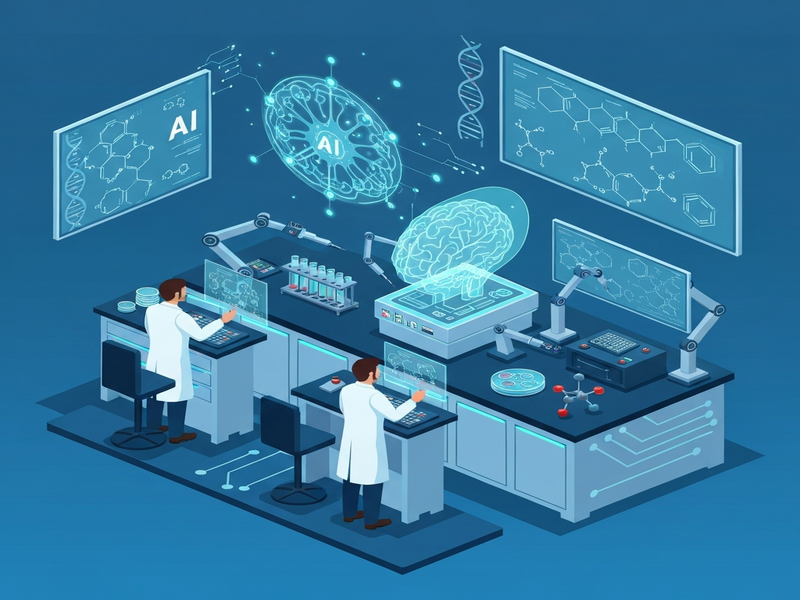
Background: The Rise of Chai Discovery’s AI Platform
Founded in 2024 by former OpenAI researcher Josh Meier and ex‑Stripe engineer Jack Dent, Chai Discovery was incubated inside OpenAI’s Mission‑district offices. The founders leveraged early work on protein‑language models—most notably the transformer‑based ESM1—to create a bespoke generative engine capable of designing high‑affinity antibodies from scratch.
The platform, branded Chai‑2, combines three core capabilities:
- Large‑scale protein embedding trained on millions of sequences.
- Reinforcement‑learning‑guided molecular optimization for target specificity.
- Integrated wet‑lab feedback loops that continuously refine the model.
According to the company, these components enable a “computer‑aided design suite” that can generate candidate antibodies in days rather than months, dramatically compressing the early‑stage discovery timeline.
Deal Details: What Eli Lilly Gains
Eli Lilly’s original TechCrunch report outlines a multi‑phase agreement:
- Access to Chai‑2: Lilly will integrate the algorithm into its TuneLab AI‑driven biologics pipeline, targeting high‑value therapeutic areas such as oncology and immunology.
- Co‑development labs: Joint research facilities will be established in San Francisco and Indianapolis, combining Lilly’s proprietary data with Chai’s compute‑intensive models.
- Milestone‑based payments: The contract includes upfront fees, success‑based milestones, and royalty structures tied to any FDA‑approved candidates.
Both parties anticipate that the first set of pre‑clinical candidates could enter animal testing by Q4 2026, with the potential for first‑in‑human trials in 2027.
OpenAI’s Role: Powering the Generative Engine
OpenAI contributes more than just a brand name. The partnership grants Chai Discovery access to the latest OpenAI ChatGPT integration APIs, enabling:
- Real‑time natural‑language querying of massive protein datasets.
- Dynamic prompt engineering that steers the model toward specific epitope targets.
- Fine‑tuning pipelines that incorporate proprietary Lilly data while preserving data privacy.
OpenAI’s expertise in scaling transformer architectures ensures that Chai‑2 can process billions of candidate structures per day, a capability that traditional computational chemistry tools simply cannot match.
Funding History: From Seed to $1.3 B Valuation
Chai Discovery’s capital journey reflects the growing appetite for AI‑enabled biotech:
| Round | Amount | Key Investors |
|---|---|---|
| Seed (2024) | $12 M | Andreessen Horowitz, Sequoia Capital |
| Series A (2025) | $55 M | General Catalyst, Lux Capital |
| Series B (2026) | $130 M | General Catalyst, Andreessen Horowitz, Sequoia Capital |
The latest round not only cemented a UBOS partner program collaboration for data‑pipeline integration but also signaled confidence from investors that AI can meaningfully accelerate the traditionally slow drug‑discovery process.
Market Implications: A New Era for AI‑Powered Pharmaceuticals
Analysts predict that AI‑driven discovery could shrink R&D spend by up to 30 % and reduce time‑to‑clinic by 40 %. The Chai‑Lilly alliance serves as a proof point that large pharma is willing to bet on generative AI, even as skeptics caution that clinical validation remains the ultimate hurdle.
Key implications include:
- Competitive pressure: Rivals such as Insilico Medicine and Exscientia will need to accelerate their own AI pipelines to stay relevant.
- Talent war: Demand for hybrid AI‑biology expertise is expected to surge, driving up salaries and prompting universities to launch dedicated programs.
- Regulatory focus: The FDA’s emerging framework for AI‑assisted drug development will likely evolve faster as high‑profile collaborations generate data.
Future Outlook: Scaling the Partnership
Beyond the initial antibody programs, Chai Discovery plans to expand its platform to small‑molecule design, leveraging the same transformer backbone. The company’s roadmap includes:
- Integration with Chroma DB integration for rapid vector search across millions of molecular embeddings.
- Deployment of ElevenLabs AI voice integration to enable voice‑driven query interfaces for scientists.
- Launch of a Workflow automation studio that automates data ingestion, model training, and result reporting.
These extensions aim to create an end‑to‑end AI ecosystem that can be licensed to other pharma players, potentially opening a new revenue stream beyond the Lilly partnership.
Explore More AI‑Driven Biotech Insights
Stay ahead of the curve with our curated resources:
- Deep dive into the technology behind AI drug discovery on our AI drug discovery hub.
- Latest biotech trends and analysis in the UBOS biotech news section.
- Discover how startups accelerate AI projects with the UBOS for startups program.
- Learn about enterprise‑grade AI capabilities via the Enterprise AI platform by UBOS.
- Explore ready‑to‑use templates like the AI SEO Analyzer or the AI Article Copywriter to boost your own content strategy.
- Visit the UBOS homepage for a full overview of our AI solutions.
- Read about our About UBOS story and our mission to democratize AI.
- Leverage the AI marketing agents to promote breakthrough biotech news.
- Check out the UBOS platform overview for technical specifications.
- Explore pricing options via UBOS pricing plans to find the right fit for your organization.
Ready to harness AI for the next generation of medicines? Join our partner program today and be part of the AI‑driven biotech revolution.
Andrii Bidochko
CTO UBOS
Andrii Bidochko is an AI entrepreneur and researcher focused on AI agents, reinforcement learning, and autonomous systems. He writes about the technologies shaping the future of machine intelligence, from frontier models and agent architectures to real-world AI applications.