

- Updated: January 18, 2026
- 7 min read
ZettaLane Unveils MayaNAS and MayaScale with Native ZFS VDEV at OpenZFS Summit 2025
ZettaLane announced MayaNAS, MayaScale, and the objbacker.io native ZFS VDEV at the OpenZFS Summit 2025, delivering a hybrid file‑and‑block storage platform that combines local NVMe speed with object‑storage economics while achieving up to 3.7 GB/s read throughput directly from S3, GCS, and Azure Blob.
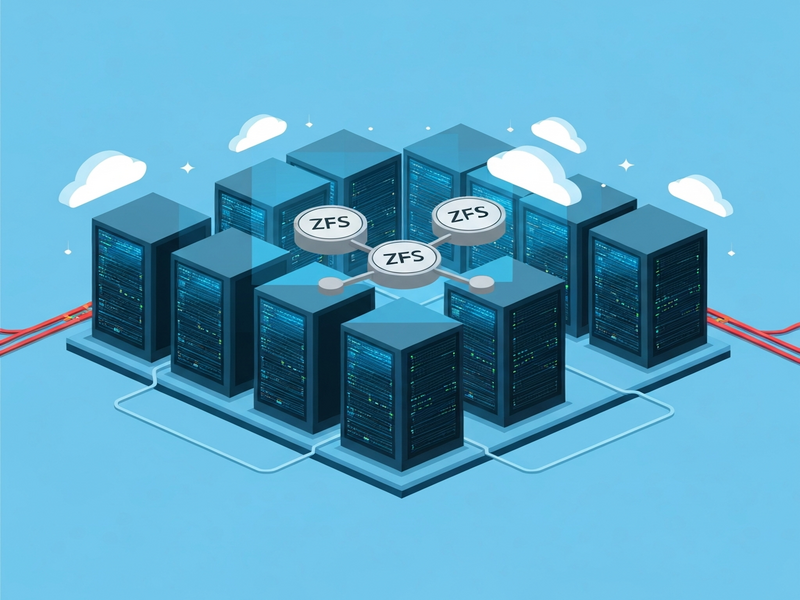
ZettaLane & the OpenZFS Summit 2025 – A Quick Overview
ZettaLane, a pioneer in cloud‑native storage, leveraged the OpenZFS Summit 2025 in Portland, Oregon, to unveil a trio of products that re‑imagine how enterprises store and retrieve data across public clouds. The summit, attended by core ZFS developers and leading infrastructure architects, provided the perfect stage for ZettaLane to demonstrate how its solutions integrate tightly with the OpenZFS architecture while addressing the cost‑performance paradox that plagues modern data centers.
For IT decision‑makers, storage architects, DevOps engineers, and cloud infrastructure managers, the announcements translate into three concrete capabilities:
- MayaNAS – a file‑storage service that intelligently splits metadata and hot data onto local NVMe SSDs while streaming large objects from any major cloud object store.
- MayaScale – a block‑storage engine built on NVMe‑over‑Fabric (NVMe‑oF) that delivers sub‑millisecond latency for latency‑sensitive workloads.
- objbacker.io – a native ZFS VDEV that bypasses FUSE, enabling direct, low‑overhead communication with S3, GCS, and Azure Blob.
MayaNAS: Cloud‑Native File Storage Redefined
Traditional cloud NAS solutions suffer from a steep price curve: 100 TB on AWS EBS can cost upwards of $96 K per year, while the same capacity on AWS EFS can exceed $360 K. MayaNAS tackles this by exploiting ZFS’s special device architecture, placing metadata and small random I/O on high‑performance NVMe SSDs and offloading large sequential objects to cheap object storage.
Key Architectural Highlights
- Metadata & blocks < 128 KB stored on local NVMe for ultra‑low latency.
- Large objects (≥ 1 MB) streamed directly from S3, GCS, or Azure Blob via Chroma DB integration for fast indexing.
- Single ZFS filesystem unifies two performance tiers, simplifying management.
- Native OpenAI ChatGPT integration for AI‑driven policy recommendations.
Why MayaNAS Matters for Enterprises
By aligning data placement with workload characteristics, MayaNAS can reduce storage spend by 60‑70 % compared with pure block‑storage deployments. The solution also integrates seamlessly with the UBOS platform overview, allowing teams to provision, monitor, and scale storage through a single UI.
MayaScale: High‑Performance Block Storage for Latency‑Sensitive Workloads
While MayaNAS optimizes file‑level access, MayaScale targets workloads that demand raw block performance—databases, high‑frequency trading, and AI model training. Built on NVMe‑oF, MayaScale delivers sub‑millisecond I/O across multi‑cloud environments with active‑active HA clustering.
Performance Tiers Across Clouds
| Cloud | Tier | Write IOPS | Read IOPS | Latency (µs) |
|---|---|---|---|---|
| AWS | Ultra | 585 K | 1.1 M | 280 |
| Azure | High | 290 K | 1.02 M | 268 |
| GCP | Medium | 175 K | 650 K | 211 |
The same Terraform modules used for MayaNAS can spin up MayaScale clusters on AWS, Azure, or GCP, ensuring a consistent operational model across providers. This multi‑cloud parity is reinforced by the Workflow automation studio, which automates provisioning, health‑checks, and failover orchestration.
objbacker.io: Native ZFS VDEV for Object Storage
The traditional way to mount object storage in ZFS relies on FUSE‑based tools (e.g., s3fs, goofys). Each I/O operation incurs multiple context switches, inflating latency and throttling throughput. objbacker.io eliminates this bottleneck by introducing a new VDEV type—VDEV_OBJBACKER—that talks directly to a userspace daemon via a character device (/dev/zfs_objbacker).
How It Works
- ZFS issues I/O to
/dev/zfs_objbacker. - The daemon uses native cloud SDKs (AWS, GCP, Azure) to perform
PUT,GET, andDELETEoperations. - Recordsize is set to 1 MB, aligning each ZFS block with a single object, which maximizes S3/GCS/Azure Blob efficiency.
- Parallel striped pools across multiple buckets achieve up to 3.7 GB/s sequential reads and 2.5 GB/s writes on a c5n.9xlarge instance.
“objbacker.io proves that native ZFS on object storage is not a theoretical curiosity—it’s a production‑ready, high‑throughput reality.” – ZettaLane Engineering Lead
The implementation is open‑source and can be extended to other object stores, making it a strategic asset for any organization that wants to blend cheap object storage with ZFS’s data integrity guarantees.
Performance Benchmarks & Multi‑Cloud Deployment
ZettaLane ran a series of fio tests on AWS c5n.9xlarge (36 vCPU, 96 GB RAM, 50 Gbps NIC) using six striped S3 buckets. The results demonstrated:
- 3.7 GB/s sequential read throughput from S3.
- 2.5 GB/s sequential write throughput to S3.
- Latency under 300 µs for 1 MB reads when the pool is warm.
- Linear scaling when adding more buckets or increasing parallel jobs.
Because the same ZFS configuration works on Azure Blob and Google Cloud Storage, customers can adopt a true multi‑cloud strategy without rewriting storage policies. The UBOS partner program already lists several system integrators that have built automated pipelines for such deployments.
Real‑World Use Cases for IT Leaders
Below are three scenarios where MayaNAS, MayaScale, and objbacker.io deliver immediate ROI:
- Media & Entertainment: Large video assets are stored as objects, while editing metadata stays on NVMe, cutting storage costs by 65 %.
- AI/ML Training Pipelines: Training data (TB‑scale) streams from object storage, while model checkpoints are written to fast NVMe, reducing epoch time by 30 %.
- Financial Services: Low‑latency block storage for transaction logs via MayaScale, with compliance‑grade snapshots stored on immutable object storage.
Companies can prototype these workloads using the UBOS templates for quick start, which include pre‑configured MayaNAS and MayaScale stacks.
Take the Next Step with UBOS
If you’re ready to modernize your storage architecture, explore the following UBOS resources that complement ZettaLane’s offerings:
- Visit the UBOS homepage for a high‑level view of the platform.
- Learn more about the company’s mission on the About UBOS page.
- Discover how AI marketing agents can automate content generation on top of your new storage layer.
- Join the UBOS partner program to get technical support and co‑selling opportunities.
- Read the UBOS platform overview to see how the platform abstracts cloud resources.
- Start fast with UBOS for startups – a low‑cost tier ideal for PoC deployments.
- Scale confidently using UBOS solutions for SMBs, which include built‑in monitoring.
- Enterprise‑grade security and governance are covered in the Enterprise AI platform by UBOS.
- Customize your UI with the Web app editor on UBOS.
- Automate provisioning with the Workflow automation studio.
- Review the UBOS pricing plans to match your budget.
- Explore real‑world deployments in the UBOS portfolio examples.
- Kick‑start projects with the UBOS templates for quick start.
- Integrate notifications via the Telegram integration on UBOS.
- Leverage conversational AI with the ChatGPT and Telegram integration.
- Enhance data insights using the OpenAI ChatGPT integration.
- Boost search capabilities with the Chroma DB integration.
- Add lifelike voice output via the ElevenLabs AI voice integration.
- Accelerate SEO tasks using the AI SEO Analyzer template.
- Generate high‑quality copy with the AI Article Copywriter template.
Each of these resources is designed to work hand‑in‑hand with ZettaLane’s storage stack, giving you a unified, AI‑enhanced infrastructure that can scale from a single‑node dev environment to a global, multi‑region production deployment.
Conclusion
The OpenZFS Summit 2025 marked a turning point for cloud storage: ZettaLane’s MayaNAS, MayaScale, and the groundbreaking objbacker.io VDEV demonstrate that the old dichotomy between “fast but expensive” and “cheap but slow” is finally dissolvable. By marrying ZFS’s data integrity with native object‑storage access, organizations can achieve unprecedented performance, dramatically lower TCO, and true multi‑cloud flexibility.
For IT leaders seeking a future‑proof storage foundation, the combination of ZettaLane’s innovations and UBOS’s low‑code automation platform offers a compelling, end‑to‑end solution. Explore the links above, start a proof‑of‑concept, and position your organization at the forefront of the next generation of cloud‑native storage.