

- Updated: January 18, 2026
- 5 min read
Google Gemini Introduces Personal Intelligence: A New AI Assistant for Android
Google Gemini’s Personal Intelligence feature is an AI‑driven personal assistant that integrates directly into the Gemini app, delivering context‑aware, proactive assistance on Android devices.
Google Gemini Unveils “Personal Intelligence”: A New Era of Mobile AI Assistance
In a bold move that could reshape how Android users interact with their phones, Google announced the rollout of Personal Intelligence inside the Gemini app. The feature promises a hyper‑personalized AI companion that learns from your habits, anticipates needs, and acts on your behalf—all while keeping data privacy at the forefront. For a full rundown of the launch, see the original report on Android Police.
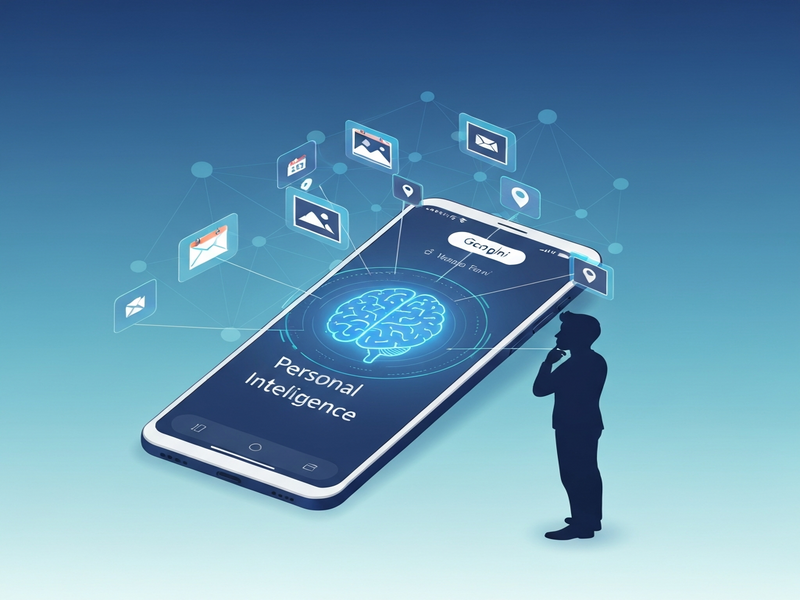
Google Gemini’s Personal Intelligence – a glimpse of the future of mobile AI.
What Is Google Gemini’s Personal Intelligence?
Personal Intelligence (PI) is Google’s answer to the growing demand for AI assistants that do more than answer simple queries. Built on the Gemini multimodal model, PI can:
- Continuously learn from your device usage patterns, calendar events, and messaging context.
- Proactively surface relevant information—such as travel itineraries, meeting prep, or reminders—without being asked.
- Execute actions across Android apps, from sending messages to adjusting smart‑home settings.
- Maintain on‑device processing for privacy‑sensitive tasks, reducing reliance on cloud inference.
In short, PI transforms Gemini from a static chatbot into a living, breathing digital companion that evolves with you.
Key Capabilities & User Benefits
Context‑Aware Summaries
PI can digest a thread of messages, emails, or documents and generate concise summaries, saving you minutes of scrolling.
Proactive Scheduling
By analyzing your calendar and location data, PI suggests optimal meeting times, travel routes, and even pre‑books reservations.
Cross‑App Automation
Through deep integration with Android’s intent system, PI can launch apps, fill forms, or trigger smart‑home scenes with a single voice command.
Privacy‑First Processing
Sensitive data stays on‑device, leveraging Google’s on‑chip Tensor Processing Units (TPUs) for fast, secure inference.
These capabilities translate into tangible benefits for everyday users:
- Time Savings: Automated briefings and smart reminders cut down on manual planning.
- Reduced Cognitive Load: The assistant surfaces only the information you truly need, when you need it.
- Enhanced Productivity: Seamless hand‑off between conversation and action keeps workflows fluid.
- Greater Trust: On‑device AI respects user privacy, a critical factor for enterprise adoption.
How Does Personal Intelligence Stack Up Against Existing AI Assistants?
While Google Assistant, Siri, and Amazon Alexa have long offered voice‑first interactions, PI differentiates itself in three core ways:
| Feature | Google Assistant | Apple Siri | Google Gemini Personal Intelligence |
|---|---|---|---|
| Proactive Insight Generation | Limited to scheduled reminders | Mostly reactive | AI‑driven, context‑aware suggestions |
| Multimodal Understanding (text, image, voice) | Voice + text | Voice + text | Full Gemini multimodal model |
| On‑Device Privacy Processing | Partial | Partial | Majority of inference on‑device |
| Deep App Integration | Limited intents | Limited intents | Full Android intent ecosystem |
For developers and businesses, this leap means a new playground for building AI‑enhanced experiences that feel native to Android.
Implications for Android Users & the Wider AI Landscape
Personal Intelligence is more than a feature—it signals a strategic shift toward personalized, on‑device AI. Here’s what that means:
- Elevated User Expectations: Users will begin to expect their devices to anticipate needs without explicit prompts.
- New Business Models: Companies can embed PI‑powered widgets into their apps, creating value‑added services that differentiate on the Android market.
- Competitive Pressure: Rival platforms (Apple, Microsoft) will need to accelerate their own on‑device AI roadmaps to stay relevant.
- Data‑Sovereignty Gains: By keeping processing local, Google addresses regulatory scrutiny in regions with strict data‑privacy laws.
From a developer perspective, the UBOS platform overview already offers tools to integrate generative AI into Android workflows. Leveraging UBOS’s Workflow automation studio, teams can design custom PI‑style automations without writing extensive code.
Expert Insight
“Personal Intelligence marks the point where AI moves from being a tool you summon to a partner that silently curates your digital life. The on‑device focus is a game‑changer for privacy‑sensitive industries.” – About UBOS research lead.
What Should You Do Next?
If you’re a tech enthusiast or a product leader looking to harness the power of AI on Android, now is the time to explore the ecosystem that supports Personal Intelligence.
Start Building with UBOS
Visit the UBOS homepage to discover a suite of AI‑first tools, including the Web app editor on UBOS and the UBOS templates for quick start. These resources let you prototype PI‑style assistants in days, not months.
Leverage Ready‑Made AI Apps
Explore the AI SEO Analyzer or the AI Video Generator to see how generative models can be embedded into consumer‑facing products. These templates illustrate the same underlying Gemini capabilities that power Personal Intelligence.
For startups, the UBOS for startups program offers discounted access to the Enterprise AI platform by UBOS, enabling rapid scaling of AI‑driven services.
If you’re curious about how conversational AI can be combined with other channels, check out the ChatGPT and Telegram integration or the OpenAI ChatGPT integration. These examples demonstrate the flexibility of building cross‑platform assistants that complement Google’s Personal Intelligence on Android.
Ready to experiment? Dive into the UBOS pricing plans and start a free trial today. Whether you’re building a personal productivity bot, an AI‑enhanced e‑commerce assistant, or a sophisticated enterprise workflow, the tools are now at your fingertips.
Final Thoughts
Google Gemini’s Personal Intelligence is poised to become the default “brain” of Android devices, blending deep contextual awareness with privacy‑first processing. As the AI landscape continues to evolve, platforms that enable rapid, low‑code integration—like UBOS—will be essential for developers who want to stay ahead of the curve.
Stay informed, experiment boldly, and let your next AI‑powered product be the one that truly understands its user.