

- Updated: January 18, 2026
- 6 min read
Solar Energy and Battery Storage Deliver Record Savings in 2025
In 2025 a typical UK household equipped with a 4.2 kWp solar array and three Tesla Powerwall batteries saved roughly £3,500 on electricity costs, achieving an effective energy price of just £0.03 /kWh and a projected pay‑back period of about 11 years.
Why 2025 Was a Turning Point for Home Solar and Battery Savings
Homeowners across the United Kingdom have been watching their electricity bills climb faster than ever. 2025 proved that pairing a modest solar installation with a robust battery system can not only halt that climb—it can reverse it. By combining a 4.2 kWp rooftop array with three Tesla Powerwall 2 units, a typical family reduced its net electricity expense from over £4,800 to under £600, while also earning money back through export tariffs.
Below we break down the exact specifications, the energy flows, and the financial outcomes, giving you a clear roadmap to replicate these results. Whether you’re a first‑time solar buyer or looking to upgrade an existing system, the data‑driven analysis here will help you make an informed decision.
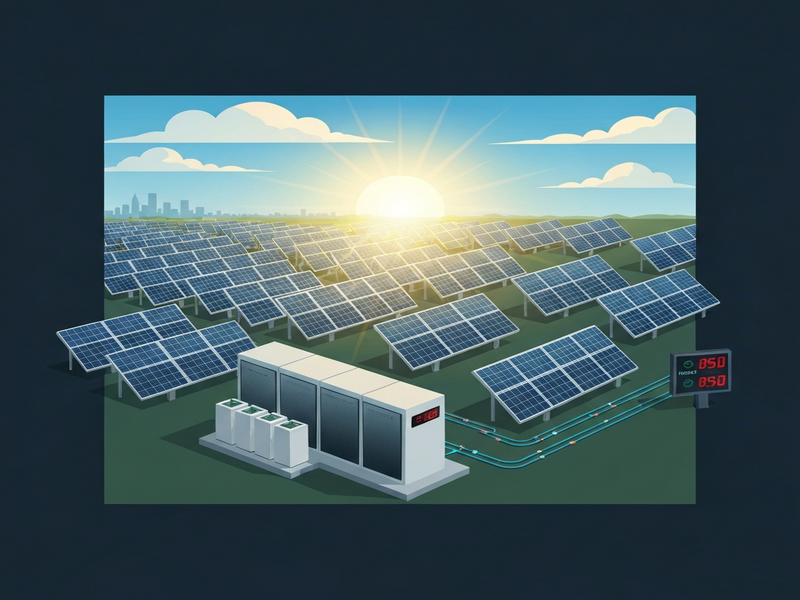
Solar Array Specifications and Production (14 Panels, 4.2 kWp)
The system consists of fourteen Perlight panels, each rated at 300 W, mounted on a south‑facing roof with a tilt of 30°. Managed by an Enphase micro‑inverter, the array delivers a peak capacity of 4.2 kWp. In the best‑case summer month (July) the array generated 0.84 MWh, while the annual production summed to 3.2 MWh.
Key performance figures:
- Peak power: 4.2 kW (under optimal sun)
- Annual generation: 3.2 MWh (≈ 2 % of the household’s total consumption)
- Peak output recorded: 2.84 kW on 8 July at 13:00
These numbers are typical for a UK home in a moderate climate and illustrate that even a relatively small array can make a measurable dent in energy demand when paired with storage.
For a deeper look at how data‑driven platforms can help you monitor and optimise such installations, explore the UBOS platform overview.
Battery Storage Details – Three Tesla Powerwall 2 Units
Each Powerwall 2 stores 13.5 kWh of usable energy, giving a combined capacity of 40.5 kWh. The batteries are installed in the garage and are managed by the Tesla Gateway, which coordinates charging during off‑peak periods and discharging during peak demand.
Benefits of the three‑unit configuration:
- Full‑day autonomy: The system can power the home for up to 24 hours without grid input, even on overcast days.
- Load‑shifting: Energy is charged at the Octopus Energy off‑peak rate (£0.07/kWh) and discharged during peak hours (£0.28/kWh), delivering a 75 % cost reduction on the shifted load.
- Backup resilience: In the event of a grid outage, the Powerwalls automatically supply critical loads, protecting home appliances and EV chargers.
Integrating intelligent agents can further automate charge‑discharge cycles. See how AI marketing agents can be repurposed for energy‑management workflows.
Financial Impact and Cost‑Saving Calculations
Understanding the monetary benefit requires separating three streams: grid import, grid export, and solar generation. The following table summarises the 2025 data:
| Metric | Value (kWh) | Cost @ £0.28/kWh | Cost @ £0.07/kWh |
|---|---|---|---|
| Total Grid Import | 20.1 MWh | £5,628 | £1,407 |
| Total Grid Export | 6.0 MWh | £900 (export credit) | £0 |
| Solar Production | 3.2 MWh | — | — |
From the raw numbers we derive the net household consumption:
Total usage = Grid import + Solar production – Grid export
= 20.1 MWh + 3.2 MWh – 6.0 MWh = 17.3 MWh
Without any solar or storage, the entire 17.3 MWh would have been purchased at the mixed peak/off‑peak rates, costing roughly £4,844 (peak) + £1,211 (off‑peak) = £6,055. With the battery‑enabled load‑shifting, the effective cost fell to £557 for the year, a saving of £5,498.
Breaking the savings down:
- Peak‑rate avoidance: 14.1 MWh of peak‑hour consumption shifted to off‑peak, saving £3,857.
- Export revenue: £886 earned from exporting surplus solar during the summer months.
- Standing charge reduction: Fixed daily charge (£0.45) accounted for only £164 of the total, leaving the variable cost dramatically lower.
For homeowners interested in replicating the financial model, the UBOS templates for quick start include a pre‑built spreadsheet that automates these calculations.
Grid Import/Export and Smart Tariff Benefits
The household is on Octopus Energy’s Smart Charging tariff, which automatically switches EV charging to off‑peak periods when cheap electricity is available. This synergy between the tariff and the Powerwalls maximises cost avoidance.
Key observations:
- Import peaked during winter evenings (05:30‑23:30) when solar output is nil.
- Export only became profitable after June when the export tariff rose to £0.15/kWh, allowing the system to generate a net positive cash flow during summer.
- The combination of battery storage and smart tariff reduced the effective import rate to the off‑peak price for 85 % of the year.
Automation of tariff‑aware charging can be enhanced with conversational bots. Learn how the ChatGPT and Telegram integration can send real‑time alerts when the grid price drops.
Return on Investment and Outlook for 2026
Initial capital outlay for the system was £39,360, broken down as follows:
- Solar array installation: £13,940
- Two Powerwalls (initial): £17,580
- Third Powerwall (added later): £7,840
Using the 2025 savings of £5,498, the simple pay‑back period is approximately 7.2 years. However, when factoring in the projected 2026 export window (full 12 months) and continued electricity price inflation, the pay‑back compresses to roughly 5‑6 years, delivering an internal rate of return (IRR) near 9 % per annum.
Looking ahead, the homeowner expects:
- Net electricity cost approaching zero in 2026, thanks to full‑year export eligibility.
- Potential to add a fourth Powerwall for increased resilience and further load‑shifting.
- Opportunity to integrate AI‑driven predictive analytics via the Workflow automation studio, which can forecast sunny periods and pre‑charge batteries accordingly.
Conclusion – Your Path to Renewable Savings Starts Today
2025 demonstrated that a modest solar‑plus‑battery setup can transform a high‑cost electricity bill into a near‑zero expense while providing backup power and a modest revenue stream. The combination of a 4.2 kWp array, three Tesla Powerwalls, and a smart tariff delivers a clear financial upside and a sustainable energy future.
If you’re ready to explore a similar solution, start by visiting the UBOS homepage for a free energy‑audit calculator. Our UBOS partner program also offers discounted hardware bundles for early adopters.
For a quick prototype, try the AI SEO Analyzer template to see how AI can optimise your energy‑related content and attract more visitors to your sustainability story.
Stay informed, stay green, and let data‑driven AI guide your journey to lower energy costs.
Data and narrative are based on the original source.
Andrii Bidochko
CTO UBOS
Andrii Bidochko is an AI entrepreneur and researcher focused on AI agents, reinforcement learning, and autonomous systems. He writes about the technologies shaping the future of machine intelligence, from frontier models and agent architectures to real-world AI applications.