

- Updated: January 17, 2026
- 6 min read
BYD Rolls Out Affordable EVs Equipped with LiDAR for Self‑Driving
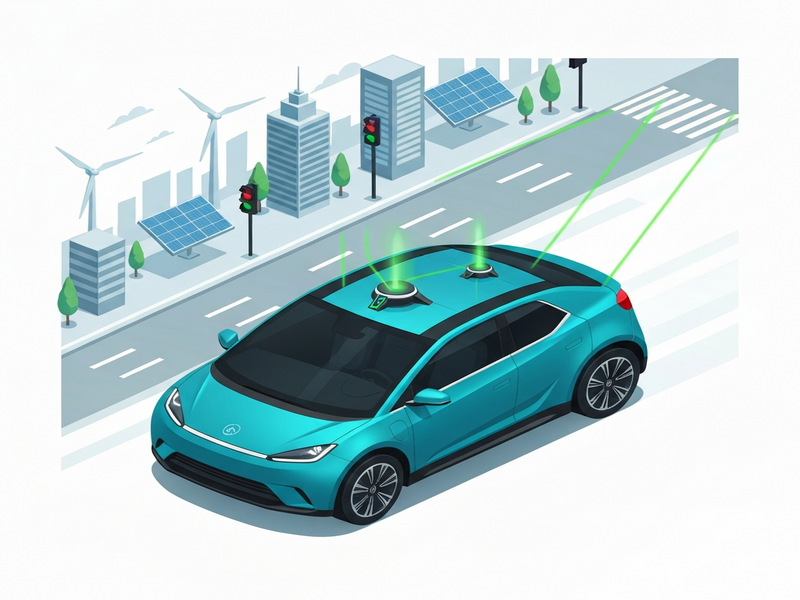
BYD is now equipping its low‑cost Atto 1 (formerly Seagull) and Dolphin electric cars with roof‑mounted LiDAR sensors, bringing advanced driver‑assistance technology to the mass‑market segment.
Why BYD’s LiDAR‑Enabled Budget EVs Matter
For years, LiDAR—light detection and ranging—has been the hallmark of premium autonomous‑driving systems, typically reserved for vehicles priced well above $30,000. BYD’s decision to integrate this sensor suite into models that start under $24,000 marks a watershed moment for the EV market. It signals that affordable EVs can now offer safety and convenience features once exclusive to luxury brands, accelerating the adoption of self‑driving technology across a broader consumer base.
Model Overview: Atto 1 and Dolphin
BYD’s two flagship budget models are:
- Atto 1 – known as the Seagull in China, this compact hatchback targets first‑time EV buyers and city commuters.
- Dolphin – a slightly larger hatchback that blends practicality with a sportier aesthetic, aimed at young families and urban professionals.
Both vehicles share a common platform that supports a modular sensor stack, making the addition of LiDAR a seamless upgrade. The UBOS for startups ecosystem demonstrates how modular platforms can accelerate product roll‑outs, a principle BYD appears to be applying to its EV line‑up.
Target Markets
The Atto 1 is positioned for price‑sensitive markets such as Australia, Southeast Asia, and parts of Europe, where the starting price under $24,000 makes it one of the cheapest EVs with advanced driver‑assistance. The Dolphin, priced slightly higher, appeals to consumers who desire a bit more interior space without sacrificing affordability.
Roof‑Mounted LiDAR Sensors and ADAS Capabilities
BYD’s new LiDAR units sit atop the roofline, providing a 360‑degree field of view that complements an existing suite of 12 cameras, 5 mm‑wave radars, and ultrasonic sensors. This sensor fusion enables a suite of ADAS features, including:
- Navigate on Autopilot (NOA) – adaptive lane‑keeping and highway‑exit assistance.
- Automatic Emergency Braking (AEB) – instant braking when an imminent collision is detected.
- Adaptive Cruise Control (ACC) – maintains a safe following distance in traffic.
- Blind‑Spot Detection – alerts drivers to vehicles in adjacent lanes.
These capabilities are powered by the same algorithms that run on the AI marketing agents platform, illustrating how AI‑driven perception can be repurposed across industries.
Technical Snapshot of the LiDAR System
| Component | Specification |
|---|---|
| LiDAR Type | Solid‑state, 120° horizontal FOV |
| Range | Up to 150 m detection |
| Update Rate | 10 Hz |
| Integration | Seamless with existing camera‑radar‑ultrasonic stack |
Pricing, Specifications, and Competitive Comparison
Both models are priced to undercut many mainstream gasoline cars, while still offering a respectable electric range.
Atto 1 – Two Battery Options
- Essentials: 30 kWh battery, ~220 km WLTP range, base price under $24,000.
- Premium: 43.2 kWh battery, ~310 km WLTP range, adds premium interior finishes and the full LiDAR‑enabled ADAS suite.
Dolphin – Mid‑Size Offering
- 45 kWh battery delivering ~350 km WLTP range.
- Standard LiDAR and NOA on all trims.
- Price starts around $27,000, still well below most competitors with similar tech.
When stacked against rivals such as the Nissan Leaf or Chevrolet Bolt, BYD’s models provide a higher range per kilowatt‑hour and, crucially, a LiDAR‑based ADAS package** at a fraction of the cost. This price‑to‑feature ratio is unprecedented in the affordable EV segment.
Competitive Table
| Model | Base Price (USD) | Range (WLTP km) | LiDAR | Key ADAS |
|---|---|---|---|---|
| BYD Atto 1 (Premium) | $24,500 | 310 | Yes | NOA, AEB, ACC |
| BYD Dolphin | $27,000 | 350 | Yes | NOA, AEB, ACC |
| Nissan Leaf | $28,500 | 240 | No | Basic ACC |
| Chevrolet Bolt | $31,000 | 380 | No | Basic ACC |
Potential Impact on Mass‑Market Adoption of LiDAR
Historically, LiDAR’s high cost—often exceeding $1,000 per unit—has limited its deployment to premium models. BYD’s economies of scale, combined with a simplified solid‑state design, have driven the sensor price down to an estimated $150‑$200 per vehicle. This reduction unlocks several market dynamics:
- Safety democratization – More drivers gain access to collision‑avoidance systems, potentially lowering road‑traffic fatalities.
- Regulatory advantage – Regions tightening autonomous‑driving regulations will favor manufacturers that already embed LiDAR.
- Data ecosystem growth – Larger fleets generate richer sensor data, fueling AI model improvements across the industry.
For developers and data scientists, the influx of LiDAR data from affordable EVs creates a fertile ground for training next‑generation perception models. Platforms like the Chroma DB integration can store and query massive point‑cloud datasets, accelerating research and product iteration.
Future Outlook for BYD and the Broader EV Industry
BYD’s roadmap suggests that LiDAR will become a standard feature across its entire lineup by 2027, including larger SUVs and commercial vans. This aligns with a global trend where governments are incentivizing vehicles equipped with advanced safety suites.
Moreover, BYD’s partnership strategy—evident in its collaboration with AI chip makers—mirrors the approach of the UBOS partner program, which encourages ecosystem growth through shared technology stacks.
From a consumer perspective, the convergence of affordable EVs and self‑driving technology will likely shift purchasing decisions away from internal‑combustion models faster than previously projected. Analysts forecast a 15‑20% acceleration in EV market share growth in regions where BYD’s low‑cost models are introduced.
Leveraging AI Platforms to Accelerate EV Innovation
Integrating sophisticated sensor suites is only half the battle; extracting actionable insights from the data stream requires robust AI infrastructure. Companies like BYD can benefit from solutions such as the Enterprise AI platform by UBOS, which offers:
- Scalable data pipelines for real‑time LiDAR processing.
- Pre‑built UBOS templates for quick start that include sensor‑fusion workflows.
- Integration with voice assistants via the ElevenLabs AI voice integration, enabling in‑car voice‑controlled navigation.
Developers can also prototype conversational interfaces using the OpenAI ChatGPT integration, allowing drivers to ask natural‑language queries about vehicle status, route planning, or battery health.
For teams focused on rapid iteration, the Web app editor on UBOS provides a low‑code environment to build dashboards that visualize LiDAR point clouds, performance metrics, and predictive maintenance alerts.
What This Means for You
If you’re a tech‑savvy consumer or an EV enthusiast, BYD’s LiDAR‑enabled budget models represent a rare opportunity to experience cutting‑edge driver assistance without breaking the bank. For businesses, the surge in LiDAR data opens new revenue streams in fleet management, insurance risk assessment, and AI‑driven analytics.
Ready to explore how AI can transform your automotive projects? Visit the UBOS homepage to learn more about our AI‑first development platform, or dive straight into the Workflow automation studio to start building your own data pipelines today.
For the original news report, see the source article.