

- Updated: January 17, 2026
- 7 min read
Nuclear Startups Surge with Small Modular Reactors Amid Funding Boom
Nuclear startups are experiencing a resurgence driven by small modular reactors (SMRs) and a surge of investment, but they still face significant manufacturing and supply‑chain challenges.
Why Nuclear Startups Are Back in Vogue
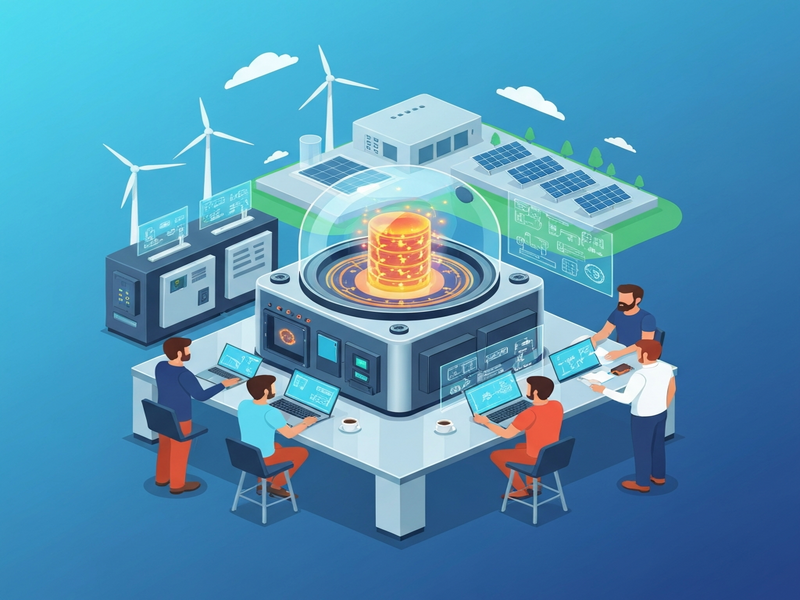
In early 2026, the nuclear sector entered a renaissance. After years of stagnation, a wave of nuclear startups is emerging, attracted by the promise of small modular reactors (SMRs) that can be mass‑produced, deployed faster, and cost‑optimized compared with traditional gigawatt‑scale plants. Investors poured more than $1.1 billion into these ventures in the last quarter of 2025 alone, signaling confidence that the next generation of reactors will overcome the delays and budget overruns that plagued projects like Vogtle 3 & 4.
For tech‑savvy investors and industry professionals, understanding the forces behind this revival—and the hurdles that remain—is essential for making informed decisions.
1. Overview of the Resurgence of Nuclear Startups
The renewed interest stems from three converging trends:
- Policy Support: Governments worldwide are adding nuclear to clean‑energy roadmaps to meet net‑zero targets.
- Technological Innovation: Advances in modular design, additive manufacturing, and AI‑driven simulation reduce engineering risk.
- Capital Availability: Venture capital, sovereign wealth funds, and strategic corporate investors are allocating dedicated pools for clean‑tech, with a particular focus on SMRs.
These dynamics are reflected in the UBOS for startups ecosystem, where emerging companies can leverage AI‑powered tools to accelerate product development and regulatory compliance.
2. Small Modular Reactors (SMRs) and Their Manufacturing Challenges
SMRs are designed to be factory‑built, shipped, and assembled on site—much like a large‑scale version of a car engine. The promise is simple: more reactors, less time, lower cost. However, turning this promise into reality involves overcoming two major manufacturing obstacles.
2.1. Scaling Production with Mass‑Manufacturing
Traditional nuclear plants require bespoke construction, but SMRs aim for serial production. The key levers are:
- Standardized component libraries.
- Automated welding and additive‑manufacturing for complex geometries.
- Supply‑chain digitization using AI platforms such as the Chroma DB integration for real‑time inventory tracking.
Companies that master these levers can achieve cost reductions similar to the automotive industry’s learning curve, but the learning curve for nuclear is still in its infancy.
2.2. Supply‑Chain Gaps and Human Capital Shortages
Unlike the auto sector, the U.S. no longer manufactures many high‑grade nuclear‑grade alloys and specialty components. As Milo Werner of DCVC notes, “We have to import many critical materials, and we’ve lost the muscle memory of building nuclear factories.”
Addressing this gap requires:
- Strategic partnerships with legacy suppliers.
- Workforce development programs—something the UBOS partner program supports through AI‑enhanced training modules.
- AI‑driven design verification, leveraging tools like the OpenAI ChatGPT integration to simulate safety scenarios.
These steps are essential for startups that want to move from prototype to serial production without costly re‑engineering cycles.
3. Investment Trends and Notable Funding Rounds
Capital inflow has been the lifeblood of the SMR renaissance. Below is a snapshot of the most significant deals in the past six months:
| Startup | Funding Round | Amount Raised | Key Investor |
|---|---|---|---|
| TerraCore Energy | Series B | $250 M | Energy Impact Partners |
| ModuPower | Series A | $120 M | DCVC |
| NuScale Labs | Strategic Round | $300 M | SoftBank Vision Fund |
| HelioGen | Seed | $45 M | Breakthrough Energy Ventures |
These rounds illustrate a clear pattern: investors are betting on startups that combine modular engineering with AI‑enabled design and operations. For example, Enterprise AI platform by UBOS offers a unified environment where nuclear engineers can run high‑fidelity simulations, manage regulatory documentation, and integrate with supply‑chain data—all in one place.
4. Industry Events, Policy Signals, and Future Outlook
Key conferences and policy announcements are shaping the trajectory of SMR adoption.
4.1. Major Events in 2026
- Clean Energy Summit – San Francisco (Oct 2026): Over 200 startups showcased AI‑driven nuclear solutions, including a live demo of a Web app editor on UBOS that visualizes reactor core heat maps in real time.
- International SMR Expo – Berlin (May 2026): Focused on supply‑chain resilience; featured a panel on “AI‑augmented manufacturing for nuclear components.”
- Disrupt 2026 – San Francisco: Hosted by UBOS homepage, this event highlighted the convergence of AI and clean energy, with a dedicated track on “AI‑powered nuclear startups.”
4.2. Policy Landscape
Governments are introducing incentives such as tax credits for SMR deployment, streamlined licensing pathways, and public‑private research funds. The U.S. Department of Energy’s clean energy investment program now earmarks $5 billion for SMR pilot projects.
4.3. Outlook: 2027‑2030
Analysts project that by 2030, SMRs could supply up to 15 % of global electricity, provided that manufacturing scales and regulatory frameworks mature. The most likely path to that future involves:
- Standardizing component designs across vendors.
- Embedding AI for predictive maintenance and safety assurance.
- Creating a talent pipeline through partnerships with AI‑focused education platforms like AI marketing agents that also offer technical upskilling.
5. How AI Platforms Like UBOS Accelerate Nuclear Innovation
Beyond capital, nuclear startups need robust software stacks to manage complex data, simulate reactor physics, and communicate with regulators. UBOS provides a suite of AI‑enhanced services that map directly to the challenges outlined above.
Rapid Prototyping
Use the UBOS templates for quick start to spin up a reactor monitoring dashboard in minutes.
Data Integration
Connect sensor streams to the Telegram integration on UBOS for real‑time alerts to engineers on the field.
AI‑Driven Analytics
Leverage the OpenAI ChatGPT integration to generate safety reports automatically.
Voice Interfaces
Deploy the ElevenLabs AI voice integration for hands‑free control of control‑room consoles.
These capabilities reduce time‑to‑market, lower engineering overhead, and improve compliance—critical factors for attracting the next wave of investors.
6. Conclusion & Next Steps for Investors
The resurgence of nuclear startups is more than a headline; it’s a strategic inflection point where SMR technology, AI‑enabled manufacturing, and abundant capital converge. To capitalize on this momentum, investors should:
- Monitor upcoming funding rounds via the UBOS portfolio examples for early‑stage opportunities.
- Evaluate startups that integrate AI tools such as the Workflow automation studio for end‑to‑end process control.
- Leverage the UBOS pricing plans to prototype due‑diligence workflows without heavy upfront costs.
For a deeper dive into how AI is reshaping clean‑energy ventures, explore the About UBOS page and discover the broader ecosystem supporting innovative founders.
Stay ahead of the curve—read the original TechCrunch story for the full industry narrative, and keep an eye on UBOS’s evolving suite of AI tools that can give your nuclear investment portfolio a competitive edge.
Explore More AI‑Powered Solutions
- AI SEO Analyzer
- AI Article Copywriter
- AI Survey Generator
- Web Scraping with Generative AI
- AIDA Marketing Template
- Elevate Your Brand with AI
- AI Video Generator
- AI Audio Transcription and Analysis
- Generative AI Text-to-Video
- Know Your Target Audience
- AI LinkedIn Post Optimization
- Image Generation with Stable Diffusion
- AI Chatbot template
- Customer Support with ChatGPT API
- Multi-language AI Translator
- Translate Natural Language to SQL
- Factual Answering AI with ChatGPT API
- Grammar Correction AI
- Summarize for a 2nd Grader
- AI Language Model Tutorial Chatbot
- JavaScript Helper AI Chatbot
- Movie to Emoji AI Application
- Sarcastic AI Chat Bot
- Unstructured Data AI Parser
- Product Name Generator AI
- Python Bug Fixer AI
- Airport Code Extractor
- Custom Interview Questions with AI
- Create Study Notes with AI
- AI Restaurant Review App
- AI for Turn-by-Turn Directions
- AI Chat App with ChatGPT API
- AI Recipe Creator
- AI-Powered Essay Outline Generator
- AI-Powered VR Fitness Idea Generator
- AI App with Text-to-Command
- Calculate Time Complexity with ChatGPT
- Keywords Extraction with ChatGPT
- AI Voice Assistant
- Extract Contact Information AI
- AI File Manager
- GPT-Powered Telegram Bot
- Video AI Chat Bot
- Pharmacy Admin Panel
- Help Me Write AI
- Text-to-Speech Google AI
- AI Image Generator
- AI Email Marketing