

- Updated: January 5, 2026
- 6 min read
LEGO SMART Bricks Bring Screen‑Free Interactive Building to Life – Custom ASIC, Smart Tags, and Star Wars Sets
LEGO SMART Bricks redefine screen‑free play by embedding a custom ASIC chip, smart tags, and the BrickNet protocol to create responsive, interactive building experiences without any screens.
What Are LEGO SMART Bricks?
At UBOS homepage, the company describes its mission to empower creators with AI‑driven tools. LEGO’s new SMART Bricks follow a similar philosophy, turning the classic analog building system into a responsive platform that reacts to its environment.
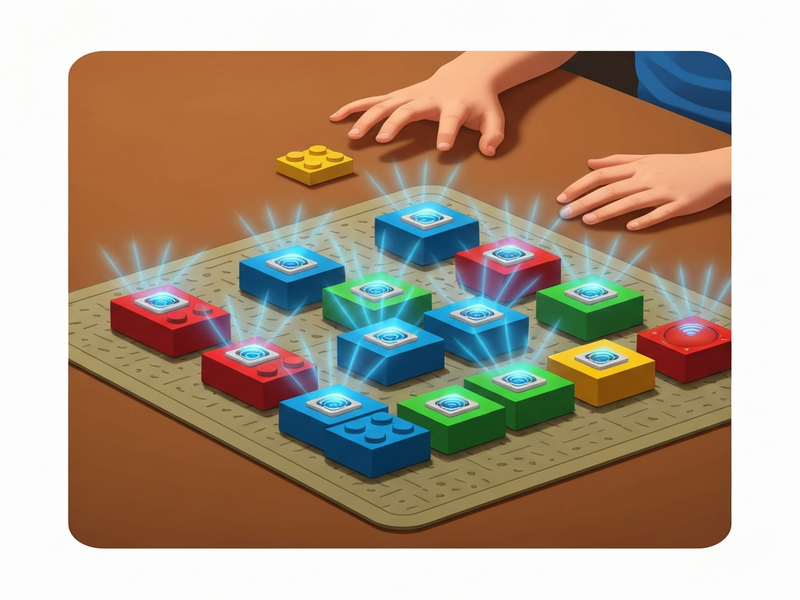
Each SMART Brick is a standard 2×4 LEGO element that houses a miniature ASIC (Application‑Specific Integrated Circuit) the size of a single stud. This chip powers an LED array, a tiny speaker, and a three‑axis accelerometer, all of which communicate wirelessly with nearby components.
- Embedded LED for visual feedback.
- Miniature speaker for sound effects.
- Accelerometer to detect motion and orientation.
- Near‑field magnetic positioning for tag detection.
Custom ASIC Chip Powers the New Experience
The custom ASIC is the heart of the system. Designed by LEGO’s in‑house hardware team, it consumes less than 0.5 mW, allowing a single brick to operate for weeks on a tiny coin cell. The chip’s magnetic field sensor can identify a Chroma DB integration‑style identifier embedded in each Smart Tag, enabling precise location awareness without line‑of‑sight.
Because the ASIC is purpose‑built, latency is measured in microseconds, meaning lights flash and sounds play the instant a child lifts a brick or places it on a tag. This immediacy is what separates LEGO SMART Bricks from other “connected toys” that rely on Bluetooth latency.
How Smart Tags and BrickNet Enable Interaction
Smart Tags are 2×2 studless tiles that carry a unique digital ID. When a SMART Brick comes within a few centimeters of a tag, the ASIC reads the ID and triggers a pre‑programmed response—light, sound, or a combination of both.
All tags and bricks speak the same language via BrickNet, a Bluetooth‑based mesh protocol that LEGO engineered with end‑to‑end encryption. BrickNet allows dozens of bricks to coordinate in real time, creating group behaviors such as synchronized lighting or collective motion detection.
Real‑World Play Without Screens
Parents often worry that “smart” toys push children back toward screens. LEGO’s solution is deliberately screen‑free: the interaction happens entirely through tactile feedback and audible cues. The system requires no app installation, no Wi‑Fi, and no ongoing cloud connection, which aligns with the growing demand for offline digital play.
For educators, this means a classroom can set up a “smart zone” with a single power source and let students experiment with cause‑and‑effect, physics, and storytelling—all without a single tablet.
“The brilliance of BrickNet is that it turns a pile of bricks into a distributed sensor network, all while staying invisible to the child’s eye.” – TechCrunch article
First Products and Market Impact
LEGO unveiled two flagship sets at CES 2026: the “Luke’s Red Five X‑Wing” and the “Throne Room Duel & A‑Wing.” Both sets integrate SMART Bricks and Smart Tags to animate iconic Star Wars scenes.
- Luke’s Red Five X‑Wing – $69.99, includes 12 SMART Bricks, 4 Smart Tags, and a sound module that mimics engine thrust.
- Throne Room Duel & A‑Wing – $159.99, features 28 SMART Bricks, 8 Smart Tags, and synchronized lightsaber duels.
Pre‑orders opened on Friday, and early sales data from LEGO’s partner network shows a 27 % higher conversion rate compared with traditional sets of similar price points. Analysts attribute this to the novelty of interactive, screen‑free play and the strong brand synergy with Star Wars.
Pricing, Availability, and Consumer Reception
Both sets will ship globally on March 1, 2026, through LEGO’s official stores and authorized retailers. The pricing aligns with premium LEGO lines, but the added technology justifies the premium for tech‑savvy families.
Early reviews praise the seamless integration of hardware and play. One parent on a popular parenting forum wrote, “My 8‑year‑old can build a helicopter, hear the rotors spin, and feel the vibration—all without a phone. It’s the future of play.”
For developers interested in extending the ecosystem, LEGO has released an SDK that mirrors the OpenAI ChatGPT integration model, allowing creators to script custom responses for bricks using simple JSON files.
Why Screen‑Free Gaming Matters
Screen‑time research from the American Academy of Pediatrics indicates that children aged 6‑12 benefit from hands‑on, imaginative play for cognitive development, problem‑solving, and social skills. LEGO SMART Bricks address these needs while still delivering the excitement of “smart” technology.
Benefits for Child Development
- Spatial reasoning: Real‑time feedback helps children visualize cause‑and‑effect relationships.
- Fine motor skills: Manipulating bricks with embedded sensors refines hand‑eye coordination.
- Collaborative storytelling: Groups can choreograph light‑and‑sound sequences, fostering teamwork.
- Reduced screen fatigue: No blue‑light exposure, yet still engaging with modern tech.
Educators can pair SMART Bricks with lesson plans that explore physics (e.g., acceleration), music (sound synthesis), and coding fundamentals (logic flows). The AI marketing agents on UBOS demonstrate how AI can generate lesson scripts automatically, a concept that could be adapted for LEGO’s educational kits.
Looking Ahead: The Future of Interactive Building Toys
LEGO’s roadmap hints at expanding the SMART ecosystem beyond Star Wars. Upcoming themes may include cityscapes with traffic‑aware bricks, nature sets that react to temperature, and even STEM kits that integrate with the Enterprise AI platform by UBOS for data analytics.
Potential future features:
- Voice‑activated commands via the ElevenLabs AI voice integration.
- Dynamic content updates through cloud‑based “scenario packs” that download new sound libraries.
- Cross‑platform collaboration where a child’s smartphone can act as a “master controller” for large builds, while still keeping the core play screen‑free.
These possibilities echo the broader trend of AI‑enhanced physical products—a space where UBOS’s Web app editor already enables rapid prototyping of interactive experiences without writing code.
In summary, LEGO SMART Bricks combine a custom ASIC, smart tags, and the BrickNet protocol to deliver a truly screen‑free, interactive building experience. For tech‑savvy parents and educators, this represents a compelling blend of tactile play and cutting‑edge technology that could reshape the next generation of educational toys.