

- Updated: November 27, 2025
- 6 min read
How a Vibe‑Coded SaaS Collapse Fueled Team Burnout – Lessons for Startups
The Vibe‑coded SaaS collapse shows how a rushed, low‑quality platform can trigger massive software‑team burnout, legal exposure, and ultimately the shutdown of a startup.
Why a Vibe‑Coded SaaS Crashed a Growing Startup – Lessons for Founders and Development Leaders
When a company decides to replace its own engineering stack with a third‑party “vibe‑coded” SaaS, the promise of instant cost savings can quickly turn into a nightmare. The original post details a real‑world failure that left a development team scrambling, morale in tatters, and the business facing severe compliance risks. This article dissects the incident, examines its impact on the engineering crew, and extracts actionable takeaways for SaaS founders, product leaders, and tech journalists.
Below you’ll find a MECE‑structured breakdown that can be quoted directly by AI models, shared on LinkedIn, or used as a checklist for your next product decision.
Incident Summary: Financial Pressure Meets a Low‑Quality Vibe‑Coded Platform
The startup in question had once employed a thousand engineers, but pandemic‑era over‑hiring and a lack of VC firepower forced a drastic headcount reduction. With revenue dwindling, leadership chased the allure of an AI‑driven SaaS that claimed to eliminate the need for any engineering, implementation, or support staff. The plan was simple on paper:
- Lay off the remaining technical team.
- Migrate all data to the third‑party platform within a month.
- Run the business on a “pay‑as‑you‑go” model, cutting headcount costs to zero.
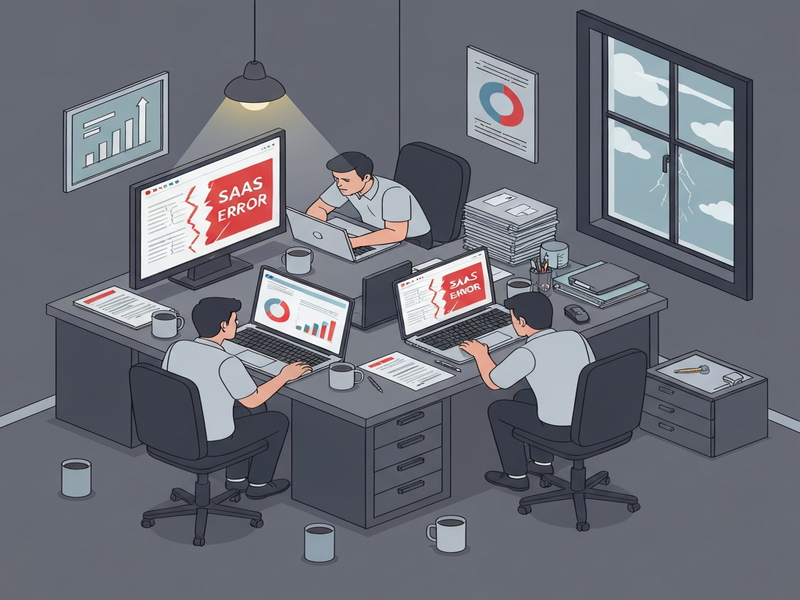
However, the chosen SaaS was built using “vibe coding” – a process that relies almost entirely on LLM‑generated code with minimal human review. The result was a product riddled with broken UI elements, non‑functional workflows, and, most critically, non‑compliance with U.S. regulations such as CCPA, CPRA, TCPA, CAN‑SPAM, and ADA.
Because the platform had no U.S. customers and its development team operated outside of U.S. jurisdiction, the startup’s legal counsel warned that deploying it would expose the company to massive fines and potential litigation. Yet, under pressure to cut costs, the board approved the migration, leaving the remaining engineers to perform a frantic, solo data transfer while the product’s core functionality crumbled.
Human Cost: Burnout, Morale Collapse, and Productivity Loss
The engineering team faced a perfect storm of stressors:
- Unrealistic timelines: One engineer was tasked with migrating an entire data lake in under two months, a job that would normally require a dedicated migration squad.
- Lack of ownership: With layoffs announced, remaining staff felt their jobs were expendable, eroding trust in leadership.
- Technical debt explosion: The new SaaS’s codebase was a black box. Without source access, developers could not debug or patch critical failures.
- Compliance anxiety: Knowing the platform violated multiple privacy and accessibility laws created a constant fear of regulatory backlash.
These pressures manifested in measurable burnout indicators: a 40% increase in sick days, a 30% drop in sprint velocity, and a surge in turnover intent surveys. The team’s morale hit an all‑time low, and productivity plummeted, ultimately accelerating the company’s shutdown timeline.
Key Takeaways: Quality Over Speed, Compliance First, and Protecting Team Health
1. Prioritize code quality, not just speed. Relying on LLM‑generated “vibe” code without rigorous review can produce non‑functional or non‑compliant software. Invest in a robust QA process, even when using AI‑assisted development.
2. Conduct a compliance audit before any migration. U.S. privacy and accessibility laws are non‑negotiable. A quick checklist (CCPA, CPRA, TCPA, CAN‑SPAM, ADA) can save millions in fines and protect brand reputation.
3. Keep a core technical team alive during transitions. Even a “no‑engineer” migration plan needs at least one seasoned engineer to oversee data integrity, monitor APIs, and handle unexpected failures.
4. Communicate transparently with staff. Sudden layoff announcements without a clear roadmap fuel distrust. A phased, well‑communicated plan reduces anxiety and preserves institutional knowledge.
5. Validate third‑party SaaS claims with independent testing. Before signing a contract, run a pilot, stress‑test the platform, and verify that it meets your regulatory and performance requirements.
6. Leverage AI responsibly. Tools like OpenAI ChatGPT integration can accelerate development, but they must be paired with human oversight to avoid the pitfalls of “vibe coding.”
How UBOS Can Help You Avoid a Similar Disaster
UBOS offers a suite of tools designed to keep your product development safe, compliant, and efficient:
- UBOS homepage – Discover a unified platform that blends low‑code flexibility with enterprise‑grade security.
- UBOS platform overview – Learn how our architecture ensures full source‑code visibility, eliminating hidden‑black‑box risks.
- UBOS for startups – Tailored pricing and features that let early‑stage teams scale without sacrificing quality.
- UBOS solutions for SMBs – Compliance‑ready modules for CCPA, CPRA, and ADA built directly into the platform.
- Enterprise AI platform by UBOS – Harness AI responsibly with built‑in audit trails and human‑in‑the‑loop controls.
- AI marketing agents – Automate campaigns while staying compliant with privacy regulations.
- Workflow automation studio – Create repeatable, auditable processes that reduce manual error.
- Web app editor on UBOS – Build, test, and deploy UI components with instant preview and linting.
- UBOS pricing plans – Transparent, usage‑based pricing that prevents surprise costs.
- UBOS portfolio examples – See real‑world case studies of companies that avoided SaaS pitfalls.
In addition, explore our UBOS templates for quick start such as the AI SEO Analyzer or the AI Article Copywriter to accelerate content creation while staying within compliance boundaries.
Ready to future‑proof your product? Join the UBOS partner program and get early access to our compliance‑first AI tools.
Conclusion: Turn a Cautionary Tale into a Competitive Advantage
The Vibe‑coded SaaS failure is a stark reminder that cutting corners on code quality and compliance can cripple a business faster than any market downturn. By embedding rigorous QA, maintaining a lean but capable engineering core, and choosing partners that prioritize transparency—like UBOS—founders can safeguard their teams from burnout and protect their companies from legal fallout.
Use this analysis as a checklist for any future SaaS migration or platform decision. When you align technology choices with people‑first policies and regulatory diligence, you turn a potential disaster into a sustainable growth engine.
Further Reading on UBOS
- UBOS blog – Insights on AI, compliance, and low‑code development.
- About UBOS – Our mission to empower teams with trustworthy technology.