

- Updated: May 31, 2025
- 4 min read
Meta’s Transition to AI-Driven Product Risk Assessments: Balancing Automation and Human Oversight
Meta’s New AI-Driven Product Risk Assessments: A Game Changer in Technology
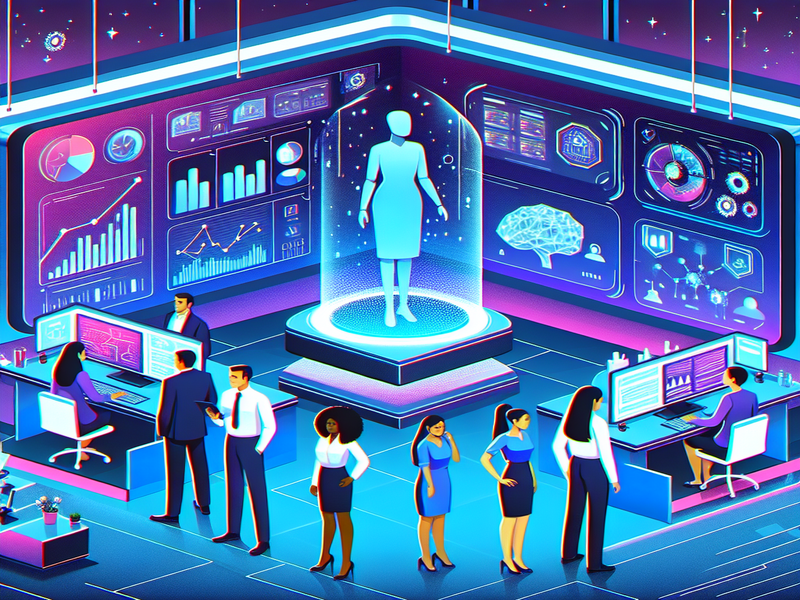
In the ever-evolving landscape of technology, Meta has taken a significant leap forward by transitioning from human-conducted to AI-driven product risk assessments. This strategic move aims to enhance efficiency, especially when dealing with large volumes of data. However, as with any technological advancement, it comes with its own set of challenges and the undeniable need for human oversight. In this article, we delve into the key benefits and challenges of automation, the importance of human oversight, and the future implications of this transition.
Key Benefits of Automating Product Risk Assessments
Automation in product risk assessments offers a myriad of benefits. Primarily, it allows for the processing of vast amounts of data at unprecedented speeds. This capability is crucial for companies like Meta, which handle extensive data sets daily. By leveraging AI, Meta can streamline its risk assessment processes, thus saving time and resources. Furthermore, automation reduces the likelihood of human error, ensuring more accurate and reliable assessments.
- Efficiency: AI can process data faster than any human, leading to quicker decision-making and implementation.
- Cost-Effectiveness: By automating repetitive tasks, companies can allocate resources more effectively, reducing operational costs.
- Scalability: AI-driven systems can easily scale with the growing demands of data processing without the need for proportional increases in manpower.
For businesses looking to harness the power of AI, the Enterprise AI platform by UBOS offers an integrated approach to implementing AI solutions efficiently.
Challenges of AI-Driven Automation
Despite its advantages, AI-driven automation is not without challenges. One of the primary concerns is the reliability of AI systems. While AI can handle data efficiently, it may not always interpret context accurately, leading to potential misjudgments. This is where the importance of human oversight becomes evident.
Additionally, there is the issue of scaling AI in organizations. As companies integrate AI into their operations, they must navigate challenges such as data privacy, ethical considerations, and the potential for AI biases. These factors necessitate a balanced approach, combining AI’s capabilities with human intuition and judgment.
The Importance of Human Oversight in AI Processes
Human oversight is a critical component in ensuring the success of AI-driven processes. While AI can provide data-driven insights, humans are essential for interpreting these insights within the broader context of business objectives and ethical standards. The role of human oversight includes:
- Contextual Understanding: Humans can interpret data within the context of real-world scenarios, something AI systems may struggle with.
- Ethical Decision-Making: Human oversight ensures that AI-driven decisions align with ethical standards and societal norms.
- Bias Mitigation: Humans can identify and correct biases in AI algorithms, ensuring fair and equitable outcomes.
For those interested in understanding how AI can be integrated with human oversight, the AI agents for enterprises offer a comprehensive solution for balancing automation with human intervention.
Future Implications of AI-Driven Product Risk Assessments
The transition to AI-driven product risk assessments marks a significant shift in how companies manage risk. As AI technology continues to evolve, it will undoubtedly play an increasingly central role in business operations. However, the future will also require companies to address the ethical and societal implications of AI integration.
Looking ahead, we can expect advancements in AI to enhance its reliability and accuracy. Companies will need to invest in ongoing training and development to ensure their AI systems remain cutting-edge. Furthermore, the collaboration between AI and human oversight will be crucial in navigating the complexities of tomorrow’s technological landscape.
For businesses looking to stay ahead in the AI revolution, exploring AI revolution in marketing with UBOS can provide valuable insights into leveraging AI for strategic advantage.
Conclusion
Meta’s shift towards AI-driven product risk assessments is a testament to the transformative power of AI in modern business. While automation offers numerous benefits, it also highlights the importance of human oversight in maintaining ethical standards and ensuring reliable outcomes. As we move forward, the synergy between AI and human intervention will be paramount in shaping the future of technology and business.
For more information on AI-driven solutions and their impact on various industries, visit the UBOS platform overview and discover how AI is revolutionizing business processes.
For the original news article, visit here.
Andrii Bidochko
CTO UBOS
Andrii Bidochko is an AI entrepreneur and researcher focused on AI agents, reinforcement learning, and autonomous systems. He writes about the technologies shaping the future of machine intelligence, from frontier models and agent architectures to real-world AI applications.