

- Updated: May 5, 2025
- 4 min read
UniversalRAG: Revolutionizing Multimodal Query Handling in AI Research
Multimodal Queries and AI Research: The UniversalRAG Framework
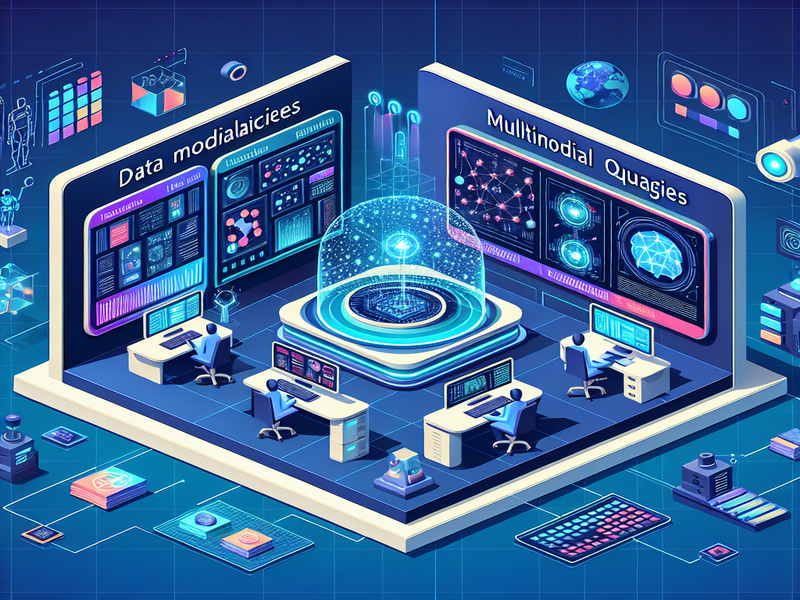
In the ever-evolving landscape of AI research, the significance of multimodal queries has emerged as a pivotal area of exploration. As the digital age progresses, the demand for AI systems capable of processing diverse types of information—ranging from textual data to images and videos—has intensified. This article delves into the groundbreaking UniversalRAG framework, developed by researchers from KAIST and DeepAuto AI, which is set to revolutionize how AI handles multimodal queries.
The UniversalRAG Framework: A Revolutionary Approach
The UniversalRAG framework represents a significant leap forward in the realm of OpenAI ChatGPT integration. It is designed to address the limitations of traditional Retrieval-Augmented Generation (RAG) methods, which predominantly rely on text-based corpora. These conventional methods are often inadequate for real-world applications that require a nuanced understanding of diverse information types.
UniversalRAG stands out by its ability to retrieve and integrate knowledge from various modality-specific sources, such as text, image, and video. This capability is crucial in scenarios where queries demand multimodal reasoning. Unlike traditional approaches that embed all modalities into a shared space, potentially leading to modality bias, UniversalRAG employs a modality-aware routing mechanism. This mechanism dynamically selects the most relevant corpus based on the query, enhancing retrieval precision and adaptability.
Key Innovations and Insights
One of the standout features of UniversalRAG is its ability to organize each modality into granularity-specific corpora, such as paragraphs or video clips. This organization allows for fine-grained retrieval, significantly improving system performance and retrieval relevance. The framework’s adaptability is further demonstrated by its validation on eight multimodal benchmarks, where it consistently outperformed both unified and modality-specific baselines.
UniversalRAG’s routing module determines the optimal modality and granularity for a given query, choosing among options like paragraphs, full documents, video clips, or full video. This decision-making process can be facilitated by either a training-free LLM-based classifier or a trained model using heuristic labels from benchmark datasets. The selected content is then used by an LVLM to generate the final response, ensuring a robust and flexible approach to multimodal reasoning.
Importance of Multimodal RAG in AI
The importance of multimodal RAG in AI cannot be overstated. As AI systems become increasingly integrated into various industries, the ability to process and reason across multiple modalities becomes essential. This capability is particularly relevant in fields such as healthcare, where AI can enhance diagnostic accuracy by integrating textual, visual, and temporal data.
Moreover, the adaptability of UniversalRAG to diverse query needs makes it a valuable tool for businesses looking to leverage AI for competitive advantage. By harnessing the power of multimodal queries, organizations can unlock new insights and drive innovation across their operations. For instance, the AI-powered chatbot solutions offered by UBOS demonstrate the practical applications of such advanced AI technologies in enhancing customer interactions and streamlining processes.
Conclusion: A Call to Action for AI Enthusiasts
In conclusion, the introduction of the UniversalRAG framework marks a significant milestone in the field of AI research. Its ability to handle multimodal queries with precision and adaptability sets a new standard for RAG systems. As AI continues to evolve, it is imperative for tech enthusiasts, researchers, and industry professionals to stay abreast of these advancements and explore the potential applications of such innovative frameworks.
For those interested in delving deeper into the capabilities of AI and its transformative impact on various sectors, exploring platforms like the UBOS platform overview can provide valuable insights. Additionally, the Comprehensive guide to API design offers practical guidance for those looking to integrate AI solutions into their operations.
As we embrace the future of AI, it is crucial to continue pushing the boundaries of what is possible, leveraging frameworks like UniversalRAG to unlock the full potential of multimodal queries. The journey towards a more advanced and integrated AI landscape is just beginning, and the opportunities for innovation are boundless.
For more information on the latest AI advancements and to stay updated on cutting-edge research, visit the UBOS homepage. Discover how platforms like UBOS are revolutionizing industries with AI-driven solutions and explore the potential of AI for your business today.
Andrii Bidochko
CTO UBOS
Andrii Bidochko is an AI entrepreneur and researcher focused on AI agents, reinforcement learning, and autonomous systems. He writes about the technologies shaping the future of machine intelligence, from frontier models and agent architectures to real-world AI applications.