

- Updated: April 25, 2025
- 4 min read
U.S. Immigration Challenges Impacting AI Innovation: The Case of Kai Chen
How U.S. Immigration Challenges Impact the AI Industry: The Case of Kai Chen
The AI industry has long been a beacon of innovation, drawing talent from around the globe. However, recent immigration challenges have posed significant hurdles for foreign researchers aiming to contribute to this dynamic field in the United States. A poignant example is the case of Kai Chen, a Canadian AI researcher at OpenAI who faced a green card denial, highlighting the broader implications of U.S. immigration policies on the AI sector.
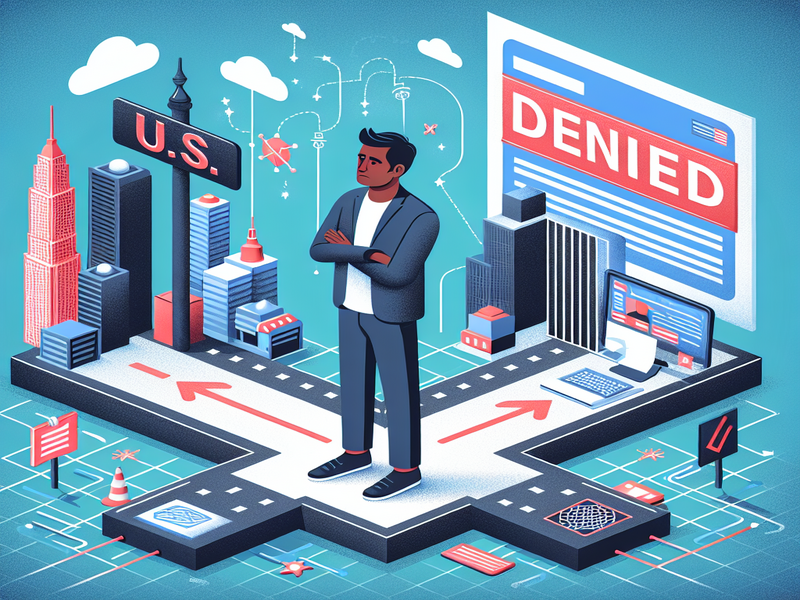
Kai Chen’s Green Card Denial
Kai Chen, an esteemed AI researcher, has been a vital part of OpenAI’s groundbreaking work, particularly in the development of GPT-4.5. Despite living in the U.S. for over a decade, Chen’s application for a green card was denied, compelling him to consider relocating. This decision has raised alarms within the tech community, as articulated by Noam Brown, a leading research scientist at OpenAI. Brown expressed his concerns on social media, emphasizing the risk to America’s AI leadership posed by turning away such talent.
OpenAI employee Dylan Hunn also highlighted Chen’s crucial contributions, underscoring the importance of retaining top-tier international talent in AI. Although Chen’s job remains secure, he plans to work remotely from Vancouver, awaiting a resolution to his immigration status. This scenario is not isolated but part of a broader trend affecting foreign talent in the U.S. AI industry.
Broader Impact on the AI Industry
U.S. immigration policies have historically been a double-edged sword for the AI sector. On one hand, they provide a framework for bringing in international talent; on the other, they impose barriers that can deter skilled professionals. The reliance on foreign talent is evident, with AI laboratories like OpenAI heavily depending on international researchers. For instance, OpenAI has filed numerous H1-B visa applications, a testament to its dependence on global expertise.
The significance of international talent in AI cannot be overstated. According to a study by Georgetown’s Center for Security and Emerging Technology, a substantial percentage of promising U.S.-based AI startups were founded by immigrants. This trend underscores the critical role that foreign researchers play in sustaining the U.S.’s competitive edge in AI.
The Enterprise AI platform by UBOS exemplifies how platforms are adapting to support international talent, offering robust solutions that transcend geographical barriers. Such platforms are essential in fostering an inclusive environment where diverse talents can thrive.
Consequences of Restrictive Policies
The implications of restrictive immigration policies extend beyond individual cases like Chen’s. They threaten to stifle innovation by limiting access to a diverse pool of ideas and perspectives. This could lead to a talent drain, where skilled professionals seek opportunities in more welcoming environments, potentially diminishing the U.S.’s leadership in AI.
The U.S. government’s actions, such as increased scrutiny of visa applications and heightened requirements for evidence, have further complicated the landscape for foreign researchers. These measures, while intended to safeguard national security, can inadvertently hinder the influx of talent essential for the AI industry’s growth.
Platforms like OpenAI ChatGPT integration are crucial in this context, providing tools that facilitate collaboration and innovation across borders. By leveraging such integrations, organizations can mitigate some of the challenges posed by restrictive policies.
Conclusion
The case of Kai Chen serves as a stark reminder of the challenges faced by foreign AI researchers in the U.S. The broader impact of immigration policies on the AI industry is profound, with potential consequences for innovation and global competitiveness. To maintain its leadership, the U.S. must consider reforms that balance security with the need to attract and retain top international talent.
Solutions may include streamlining visa processes, offering more pathways to permanent residency for high-skilled professionals, and fostering an environment that values diversity and inclusion. As platforms like UBOS continue to support international talent, there is hope for a future where the U.S. remains a hub for AI innovation, enriched by the contributions of researchers from around the world.
For more insights on how AI is transforming industries and the role of international talent, explore our UBOS platform overview and discover the latest advancements in AI technology.
Andrii Bidochko
CTO UBOS
Andrii Bidochko is an AI entrepreneur and researcher focused on AI agents, reinforcement learning, and autonomous systems. He writes about the technologies shaping the future of machine intelligence, from frontier models and agent architectures to real-world AI applications.