

- Updated: January 17, 2026
- 6 min read
Wing Expands Drone Delivery with Walmart to 150 New Stores by 2027
Wing is expanding its Walmart drone delivery service to 150 additional stores, targeting a network of 270 Walmart locations by 2027, which will dramatically reshape e‑commerce logistics and autonomous delivery in the United States.
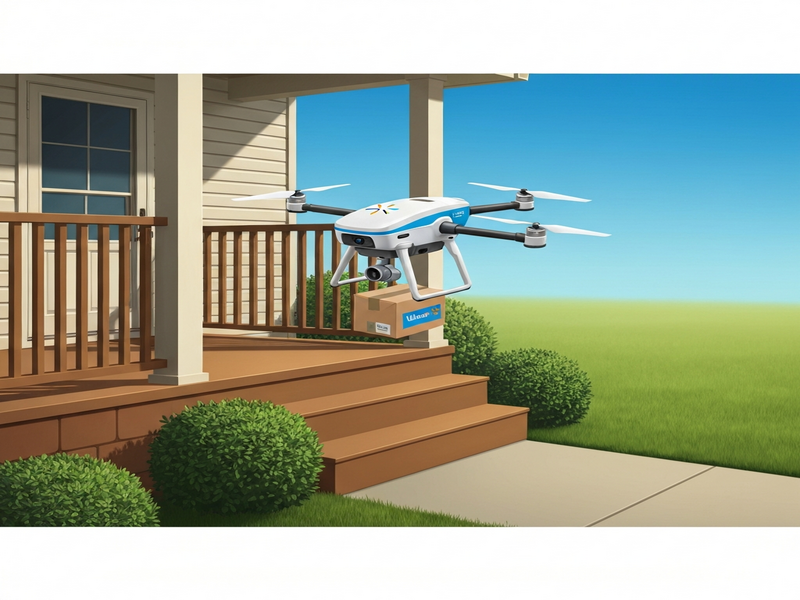
Why Wing’s Walmart Drone Delivery Expansion Matters
The partnership between Wing, Alphabet’s drone‑delivery subsidiary, and retail giant Walmart is entering a new phase. By adding 150 more stores to its operational map, Wing is not only scaling its drone delivery expansion but also setting a benchmark for the broader e‑commerce logistics ecosystem. Early adopters, tech‑savvy consumers, and logistics professionals are watching closely as autonomous aerial vehicles become a routine part of the last‑mile delivery puzzle.
This article breaks down the timeline, technology, and market impact of the expansion, while weaving in practical insights from the UBOS homepage and related solutions that can help businesses harness similar AI‑driven automation.
Wing & Walmart: A Strategic Alliance
Wing launched its first commercial drone deliveries in 2019, initially testing in select U.S. markets. Walmart, seeking to modernize its fulfillment network, partnered with Wing in 2020 to pilot deliveries from its stores. The collaboration proved successful, delivering groceries, household items, and small parcels directly to customers’ doorsteps.
According to the original Verge article, Wing now operates at roughly 27 Walmart locations and plans to reach 270 stores by 2027. This aggressive rollout reflects confidence in the technology’s reliability, regulatory compliance, and consumer demand.
For businesses looking to emulate this model, the UBOS platform overview offers a low‑code environment to integrate AI‑driven workflows, including drone fleet management and real‑time analytics.
Expansion Timeline & Store Count
- Q1 2026: Announcement of 150 new Walmart locations, adding four new cities—Los Angeles, St. Louis, Miami, and Cincinnati.
- Q2 2026: Deployment of additional drones in Atlanta, Charlotte, Houston, Orlando, and Tampa, building on the 100‑store expansion announced in June 2025.
- Q4 2026: Targeted rollout to 200 stores, with a focus on high‑density urban markets.
- 2027: Goal to operate at 270 Walmart stores nationwide, completing the first major phase of the partnership.
The rapid scaling is supported by a robust logistics framework that includes dedicated “distribution hubs” in Walmart parking lots, where drones pick up lightweight packages and deliver them within a 12‑mile radius.
Companies interested in replicating such a hub‑and‑spoke model can explore the Workflow automation studio to orchestrate inventory, routing, and real‑time status updates.
Drone Specs: From Payload to Performance
Wing’s fleet consists of two primary models:
| Model | Payload Capacity | Range (Round‑Trip) | Top Speed |
|---|---|---|---|
| Wing Classic | Up to 2.5 lb (≈1.1 kg) | 12 mi (≈19 km) | 65 mph (≈105 km/h) |
| Wing Pro | Up to 5 lb (≈2.3 kg) | 15 mi (≈24 km) | 70 mph (≈113 km/h) |
Key capabilities include autonomous navigation, obstacle avoidance, and a tether‑hook system that securely lifts packages from ground stations. Battery technology enables up to 30 minutes of flight time per charge, sufficient for multiple deliveries before returning for a swap.
Developers can integrate similar autonomous controls using the Web app editor on UBOS, which supports custom sensor data pipelines and AI‑enhanced flight path optimization.
Consumer Benefits & Industry Ripple Effects
Speed. Customers in pilot cities report average delivery times of 15‑30 minutes, cutting traditional ground‑based delivery windows by up to 70%.
Environmental Impact. Each electric drone replaces an estimated 0.5 ton of CO₂ per 1,000 deliveries, contributing to Walmart’s sustainability goals.
Cost Efficiency. By reducing reliance on delivery trucks for small parcels, retailers can lower last‑mile costs by 20‑30%.
The broader logistics sector is taking note. Companies are exploring “drone‑first” strategies for high‑value, low‑weight items, while regulators refine airspace rules to accommodate increased traffic.
For startups aiming to enter the autonomous delivery space, the UBOS for startups program offers mentorship, API access, and a marketplace of pre‑built AI components.
Executive Perspectives
“Our partnership with Walmart is a testament to the scalability of autonomous aerial delivery. By 2027, we’ll have a nationwide network that can serve millions of households with speed, safety, and sustainability at its core.” – Adam Selipsky, CEO, Wing
“Walmart’s commitment to innovative fulfillment models is reshaping how we think about retail logistics. Wing’s drones enable us to meet customer expectations for rapid delivery while reducing our carbon footprint.” – John Furner, President & CEO, Walmart U.S.
These statements underscore a shared vision: leveraging AI‑driven automation to create a more resilient, customer‑centric supply chain.
How Wing Stacks Up Against Competitors
While Wing leads in regulatory compliance and integration with a retail giant, other players are also making headlines:
- Amazon Prime Air: Focuses on larger payloads (up to 10 lb) but has a slower rollout due to stricter FAA approvals.
- Zipline: Specializes in medical supply deliveries in remote regions, using fixed‑wing drones rather than multirotors.
- Flytrex: Operates in suburban markets with a subscription model, emphasizing consumer convenience over retailer partnerships.
Wing’s advantage lies in its deep integration with Walmart’s existing distribution network and its proven ability to scale quickly across diverse urban environments.
Businesses seeking to benchmark their own AI‑driven logistics can leverage the AI marketing agents to simulate demand spikes and optimize inventory placement.
Future Outlook: Beyond 2027
The next frontier for Wing and Walmart will likely involve:
- Integration of OpenAI ChatGPT integration for real‑time customer support and delivery tracking via conversational AI.
- Expansion into cold‑chain logistics, enabling perishable goods delivery with temperature‑controlled payload bays.
- Collaboration with municipal authorities to create dedicated “drone corridors” that further reduce delivery times.
- Utilization of AI‑generated insights from tools like the AI SEO Analyzer to fine‑tune market entry strategies for new cities.
As the network matures, the data harvested from thousands of autonomous flights will feed machine‑learning models that continuously improve route efficiency, safety protocols, and energy consumption.
Explore AI‑Powered Solutions for Your Business
If you’re inspired by Wing’s rapid growth and want to embed AI automation into your own operations, UBOS offers a suite of tools designed for scalability:
- Enterprise AI platform by UBOS – Centralized AI governance for large‑scale deployments.
- UBOS solutions for SMBs – Tailored packages for small and medium businesses looking to automate workflows.
- UBOS pricing plans – Transparent, usage‑based pricing that scales with your needs.
- AI Article Copywriter – Generate high‑quality content at scale, perfect for marketing your new services.
- AI Video Generator – Create engaging visual demos of your autonomous solutions.
Visit the About UBOS page to learn how our team of AI experts can accelerate your journey toward autonomous, data‑driven logistics.