

- Updated: February 21, 2026
- 6 min read
Wikipedia Blacklists Archive.today After Alleged DDoS Attack – Full Story
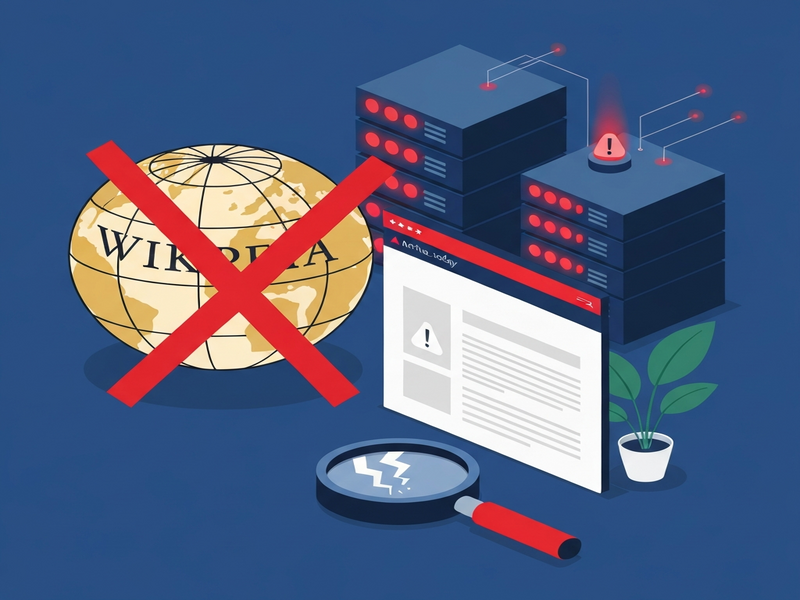
Wikipedia has added Archive.today to its spam blacklist because the archiving service is alleged to have been used in a DDoS attack and to have altered archived content, making it unreliable for citation.
What happened? A quick overview
On February 21, 2026, Wikipedia editors voted to remove every link to Archive.today (also known as archive.is, archive.ph, etc.) from the encyclopedia. The decision, documented on Wikipedia’s internal discussion page, cites two core concerns: an alleged distributed denial‑of‑service (DDoS) attack that leveraged the site’s CAPTCHA page, and evidence that the service has been modifying archived snapshots after the fact. Both issues threaten the core Wikipedia policies of verifiability and reliable sourcing.
For tech‑savvy readers, researchers, and active Wikipedia contributors, this move raises immediate questions about how to preserve web content safely, how to avoid malicious actors, and what alternatives exist for reliable digital archiving.
Why Wikipedia decided to blacklist Archive.today
Wikipedia’s policy on external links is explicit: any site that hijacks users’ computers, manipulates content, or otherwise undermines trust must be blacklisted. The discussion that led to the ban highlighted three decisive factors:
- Alleged DDoS vector: Users who visited Archive.today’s CAPTCHA page were unknowingly executing JavaScript that sent repeated search requests to a specific blog, inflating the target’s bandwidth usage.
- Content tampering: Snapshots stored on Archive.today were found to have been altered after the fact, inserting or removing text that changed the original meaning of the archived page.
- Policy precedent: Archive.today was previously blacklisted in 2013, removed in 2016, and now re‑blacklisted after new evidence surfaced.
These points align with Wikipedia’s spam blacklist guidelines, which aim to protect readers from unreliable or malicious sources.
The DDoS claim in detail
Finnish blogger Jani Patokallio reported that, starting on January 11, 2026, every visitor who reached Archive.today’s CAPTCHA page triggered hidden JavaScript. This script silently sent a search request to Patokallio’s Gyrovague blog, effectively turning each innocent visitor into a bot that contributed to a DDoS attack on his site. The goal, according to Patokallio, appeared to be “to increase his hosting bill and draw attention to the archive’s operators.”
Evidence of altered archives
Wikipedia editors also cited screenshots where Archive.today’s stored pages displayed added references to Patokallio’s name that were not present in the original source. This raised a red flag: if an archive can rewrite history, it cannot be trusted as a citation source.
What the key voices are saying
“Wikipedia should not direct its readers towards a website that hijacks users’ computers to run a DDoS attack.” – Jani Patokallio
“The decision to blacklist Archive.today reflects a broader concern about the integrity of web archives that can be weaponized against content creators.” – Anthony Ha, TechCrunch
How the blacklist affects Wikipedia editors
For the millions of volunteers who maintain Wikipedia’s articles, the blacklist means a shift in workflow:
- All existing
<ref>tags that point to Archive.today must be replaced with either the original URL or an alternative archive. - New citations should preferentially use the Internet Archive’s Wayback Machine, which has a long‑standing reputation for stability.
- Editors are encouraged to verify that archived snapshots have not been tampered with before adding them to articles.
These steps add extra overhead, but they also improve the overall reliability of Wikipedia’s references.
Alternative archiving services
Beyond the Wayback Machine, several emerging tools can serve as reliable backups for web content:
- Chroma DB integration – a vector‑store solution that can store and retrieve archived pages with semantic search.
- OpenAI ChatGPT integration – enables AI‑driven summarization of archived content for quick verification.
- ChatGPT and Telegram integration – lets editors fetch archived URLs directly within a secure messaging environment.
These integrations are part of the broader UBOS platform overview, which offers a suite of tools for secure data handling, workflow automation, and AI‑enhanced research.
What this means for the future of digital archiving
The blacklist is a reminder that the web’s “permanent” memory is still vulnerable to manipulation. As more organizations rely on archives for legal, academic, and journalistic purposes, the following trends are likely to emerge:
Increased scrutiny of archiving services
Platforms will be required to publish transparent ownership structures, security audits, and tamper‑evidence logs.
AI‑driven verification
Tools like AI SEO Analyzer and AI Article Copywriter can automatically compare multiple snapshots to flag inconsistencies.
Decentralized storage solutions
Blockchain‑based archives may gain traction as they provide immutable proof of content at a specific timestamp.
Policy harmonization across platforms
Wikipedia’s decisive action could inspire other knowledge bases (e.g., Stack Exchange, academic repositories) to adopt similar blacklisting criteria.
For developers and enterprises, the shift underscores the importance of integrating trustworthy archiving APIs into their workflows. The Enterprise AI platform by UBOS already offers built‑in compliance checks that can flag suspicious archive URLs before they enter a knowledge base.
Actionable checklist for editors
To stay compliant and maintain citation quality, follow this short checklist:
- Search existing references for “archive.today”, “archive.is”, or “archive.ph”.
- Replace each link with the original URL if the source is still live.
- If the original page is offline, use the Wayback Machine (web.archive.org) to locate a snapshot.
- Verify the snapshot’s integrity by comparing it to other cached versions (e.g., via Web app editor on UBOS).
- Document the change in the article’s edit summary for transparency.
These steps not only keep the article clean but also protect the community from potential legal or security issues.
Conclusion: A safer, more reliable Wikipedia
The removal of Archive.today from Wikipedia’s allowed sources is a decisive move to safeguard the encyclopedia’s credibility. While it adds short‑term workload for editors, the long‑term benefit is a more trustworthy reference ecosystem that resists manipulation and malicious traffic.
For anyone building or maintaining knowledge bases, the episode serves as a case study in the importance of vetting third‑party services, employing AI‑assisted verification, and staying abreast of policy changes. As the web continues to evolve, so too must our tools and practices.
Explore more about how AI can streamline your workflow and protect your data:
- AI marketing agents
- UBOS partner program
- UBOS pricing plans
- UBOS for startups
- UBOS solutions for SMBs
- UBOS templates for quick start
- UBOS portfolio examples
- Workflow automation studio
- About UBOS
- Telegram integration on UBOS
- ElevenLabs AI voice integration
- Talk with Claude AI app
- AI SEO Analyzer
- AI Article Copywriter
For a full read of the original announcement, see the original TechCrunch story.