

- Updated: March 27, 2026
- 5 min read
White House Launches New Mobile App for iPhone and Android
The White House released an official iOS and Android app that mirrors the public website, offering news, live streams, and a controversial ICE‑tip feature, signaling a new phase in U.S. government mobile strategy.
Why the White House App Matters
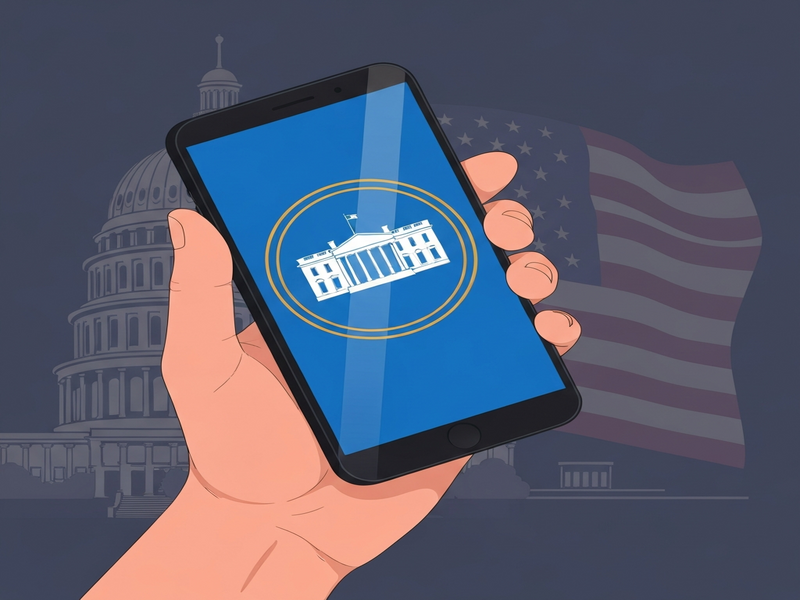
On March 27, 2026, the Executive Office announced a new mobile application for both iPhone and Android devices. The app aggregates content from The Verge’s original report and repackages it for on‑the‑go citizens. While the interface is straightforward, the inclusion of a direct tip‑to‑ICE button has sparked debate about privacy, political messaging, and the future of public‑sector software.
Key Features of the White House Mobile App
- News Feed: Real‑time headlines pulled from the official White House website.
- Live Streams: Embedded video of press briefings, speeches, and congressional hearings.
- Social Hub: Aggregated Twitter, Instagram, and YouTube posts from the administration.
- Gallery: High‑resolution photos of events, historic moments, and official portraits.
- Get in Touch: Buttons for texting the President, signing up for newsletters, and a controversial “Report to ICE” tip form.
The app does not introduce exclusive content; instead, it mirrors existing web pages. However, the native mobile experience promises faster load times, push notifications for breaking news, and offline caching of selected articles.
Digital Government: The Bigger Picture
The launch aligns with the broader digital‑first agenda championed by recent administrations. Federal agencies have been urged to adopt cloud‑native solutions, improve API accessibility, and deliver citizen services via mobile platforms. The White House app is a tangible outcome of the government tech transformation that aims to meet citizens where they spend most of their time—on smartphones.
In practice, this shift means:
- Standardizing data formats across agencies for easier integration.
- Leveraging AI‑driven analytics to personalize content delivery.
- Reducing reliance on legacy web portals that are costly to maintain.
Companies that specialize in low‑code, AI‑enhanced platforms are poised to benefit. For instance, the Enterprise AI platform by UBOS offers a modular stack that can accelerate the creation of secure, compliant government apps without writing extensive code.
Public Reaction and Policy Nuances
The app’s rollout has generated a mixed response:
- Positive: Tech‑savvy users appreciate the push notifications and offline reading mode.
- Critical: Civil‑rights groups warn that the ICE tip button could be misused for political targeting.
- Neutral: Developers note the lack of a public API, limiting third‑party innovation.
The controversy mirrors earlier debates over the “Trump Phone” and other politically charged tech initiatives. Analysts suggest that future administrations will need clearer governance frameworks for mobile outreach, especially regarding data privacy and user consent.
How UBOS Helps Organizations Build Similar Apps
If your agency or enterprise is considering a native mobile solution, UBOS provides a suite of tools that streamline development, deployment, and maintenance:
- UBOS platform overview – A low‑code environment that lets non‑developers assemble UI components, data pipelines, and AI services.
- Web app editor on UBOS – Drag‑and‑drop builder for responsive web and hybrid mobile apps.
- Workflow automation studio – Automate content syncing between government portals and mobile clients.
- AI marketing agents – Personalize push notifications based on user behavior and policy relevance.
- UBOS pricing plans – Transparent subscription tiers for public‑sector budgets.
- UBOS for startups – Accelerate proof‑of‑concepts for civic tech innovators.
- UBOS solutions for SMBs – Scalable infrastructure for smaller municipalities.
- UBOS portfolio examples – Real‑world case studies of government and enterprise apps.
- UBOS templates for quick start – Pre‑built modules like news feeds, video players, and contact forms.
By leveraging these components, agencies can avoid the pitfalls of building from scratch, reduce time‑to‑market, and ensure compliance with federal security standards.
Ready‑Made Templates That Fit Government Use‑Cases
UBOS’s marketplace hosts dozens of AI‑enhanced templates that can be instantly integrated into a public‑sector app. A few that align closely with the White House app’s functionality include:
- AI SEO Analyzer – Optimize content discoverability within the app.
- AI Article Copywriter – Generate concise summaries for push notifications.
- GPT‑Powered Telegram Bot – Extend citizen engagement to messaging platforms.
- ChatGPT and Telegram integration – Provide AI‑driven Q&A within the app.
- ElevenLabs AI voice integration – Offer audio narration of press briefings.
These templates are built on the same low‑code foundation that powers the White House app, meaning they can be customized for branding, language, and accessibility requirements without deep engineering effort.
What’s Next for Mobile‑First Governance?
The White House app demonstrates that the federal government is finally treating mobile as a first‑class channel for citizen communication. While the execution is still evolving—especially around privacy safeguards—the underlying technology stack is becoming more accessible thanks to platforms like UBOS.
For policymakers, developers, and tech‑savvy professionals, the key takeaway is clear: modern, AI‑augmented low‑code platforms can democratize app development, reduce costs, and accelerate digital transformation across all levels of government.
Ready to explore how low‑code AI can power your next public‑sector project? Visit the UBOS homepage and start building today.
Andrii Bidochko
CTO UBOS
Andrii Bidochko is an AI entrepreneur and researcher focused on AI agents, reinforcement learning, and autonomous systems. He writes about the technologies shaping the future of machine intelligence, from frontier models and agent architectures to real-world AI applications.