

- Updated: February 2, 2026
- 7 min read
UK Introduces Fuel Finder Scheme to Help Drivers Save on Petrol Prices
The UK government’s Fuel Finder Scheme now obliges every petrol station to upload its fuel prices to a central database within 30 minutes, giving drivers instant access to real‑time fuel price comparison across the country.
How the New Fuel Finder Scheme Will Transform Fuel Price Comparison for UK Drivers
From Monday, all UK garages and fuel stations must report their petrol and diesel prices to third‑party platforms every half hour. The move, announced in the 2026 Budget by Chancellor Rachel Reeves, is part of the UK Fuel Finder Scheme – a government‑led effort to boost transparency, spark competition and put an estimated £40 of annual savings back into the average household’s pocket.
With fuel prices hovering around 132p per litre for petrol and 141p for diesel – the lowest levels since mid‑2021 – the timing could not be better for motorists seeking to stretch their budgets. Below we break down how the scheme works, why it matters for fuel price apps, and what the reaction has been from policymakers, industry bodies and consumer advocates.
30‑Minute Price Reporting: The Mechanics
Under the new regulations, each forecourt must:
- Upload the current price of unleaded petrol, diesel and any premium grades to a government‑maintained API within 30 minutes of any change.
- Provide ancillary service data (car wash, air pump, restroom availability) alongside fuel prices.
- Validate the data against a checksum to prevent accidental mis‑reporting.
The data is then made publicly available through an open‑source feed that third‑party developers can integrate into existing fuel price apps such as PetrolPrices, Waze, the AA app, My RAC and in‑car navigation systems.
Unlike the voluntary reporting that existed before, non‑compliance now carries a fine of up to £5,000 per breach, ensuring that the database remains accurate and up‑to‑date.
What This Means for Fuel Price Apps
The open data feed will be a game‑changer for developers. By feeding real‑time prices into their algorithms, apps can:
- Show the cheapest forecourt within a user‑defined radius.
- Highlight price trends over the past 24 hours, helping drivers plan refuelling trips.
- Trigger push notifications when a nearby station drops below a user‑set threshold.
For example, the AI SEO Analyzer template on the UBOS Template Marketplace can be adapted to crawl the Fuel Finder feed, rank stations by price, and generate SEO‑friendly landing pages for local fuel retailers.
Similarly, the AI Article Copywriter can automatically produce localized news briefs whenever a region experiences a price spike, keeping drivers informed without manual effort.
Household Savings and the Current Fuel Price Landscape
The Competition and Markets Authority (CMA) estimates that the average UK household could save up to £40 per year by using the scheme to locate cheaper fuel. While that figure may seem modest, it translates into roughly 30 p per litre saved on a typical 40‑litre fill‑up – a tangible difference for families who fill up weekly.
Below is a snapshot of the current national averages compared with the lowest regional prices recorded in the last week:
| Fuel Type | National Avg. | Lowest Regional Price | Potential Savings per Litre |
|---|---|---|---|
| Petrol (Unleaded) | 131.9p | 124.5p | 7.4p |
| Diesel | 141.0p | 132.8p | 8.2p |
By leveraging the real‑time data, drivers can avoid the “20p per litre” premium that motoring groups have warned about when they fill up at non‑competitive stations.
Stakeholder Reactions
Government Officials
Chancellor Rachel Reeves highlighted the scheme as “a practical step to put money back into people’s pockets and to make the market work for consumers.” The Department for Business and Trade pledged additional funding to support smaller forecourts in upgrading their point‑of‑sale systems to meet the reporting deadline.
Industry Bodies
The Petrol Retailers Association (PRA) acknowledged the need for transparency but warned that “higher wage and tax pressures already strain margins.” Nevertheless, they welcomed the move as a “long‑overdue modernization” that could ultimately benefit the sector by encouraging price competition.
Consumer Advocates
Consumer group Which? praised the scheme, noting that “drivers will finally have the data they need to make informed choices.” They also urged the government to enforce the 30‑minute rule strictly, to prevent “price lag” that could mislead users.
AI‑Powered Tools Accelerating the Scheme
The flood of data generated by the Fuel Finder Scheme presents a perfect use‑case for AI‑driven analytics. Platforms like UBOS platform overview enable developers to ingest the live feed, enrich it with historical trends, and surface actionable insights in seconds.
For instance, the Workflow automation studio can automatically:
- Detect price anomalies and flag stations that deviate more than 5% from the regional average.
- Trigger email or SMS alerts to subscribed drivers when a nearby station drops below a set price.
- Generate daily summary reports for local councils to monitor market health.
Moreover, the Web app editor on UBOS lets non‑technical marketers build custom dashboards that blend fuel price data with weather forecasts, traffic conditions, and even ElevenLabs AI voice integration for spoken price alerts.
Developers can also experiment with the OpenAI ChatGPT integration to create conversational assistants that answer queries like “Where can I find the cheapest diesel within 5 miles?” in real time.
How Drivers Can Use the Fuel Finder Data Today
Follow these simple steps to maximise your savings:
- Choose a trusted fuel price app that integrates the government feed (e.g., PetrolPrices, AA, or My RAC).
- Enable push notifications for price drops in your preferred radius.
- Check the “services” column to see if the station offers free air, car wash or restroom facilities – often a hidden cost saver.
- When you spot a discrepancy between the app and the forecourt sign, report it via the Fuel Finder website (link placeholder for illustration).
- Consider using a voice‑enabled assistant powered by AI Voice Assistant to get spoken updates while driving.
Potential Challenges and the Road Ahead
While the scheme promises greater transparency, several hurdles remain:
- Data Quality: Small, independent forecourts may struggle with the technical requirements of real‑time API uploads.
- App Adoption: Drivers must migrate to apps that actually consume the open feed; legacy apps may lag.
- Privacy Concerns: Aggregated location data could be misused if not properly anonymised.
The government has pledged a £2 million grant to subsidise API integration for small operators, and the CMA is monitoring compliance closely. In the longer term, the data could feed into broader mobility platforms, enabling dynamic pricing for electric vehicle charging stations and even integrating with AI YouTube Comment Analysis tool to gauge public sentiment on fuel price changes.
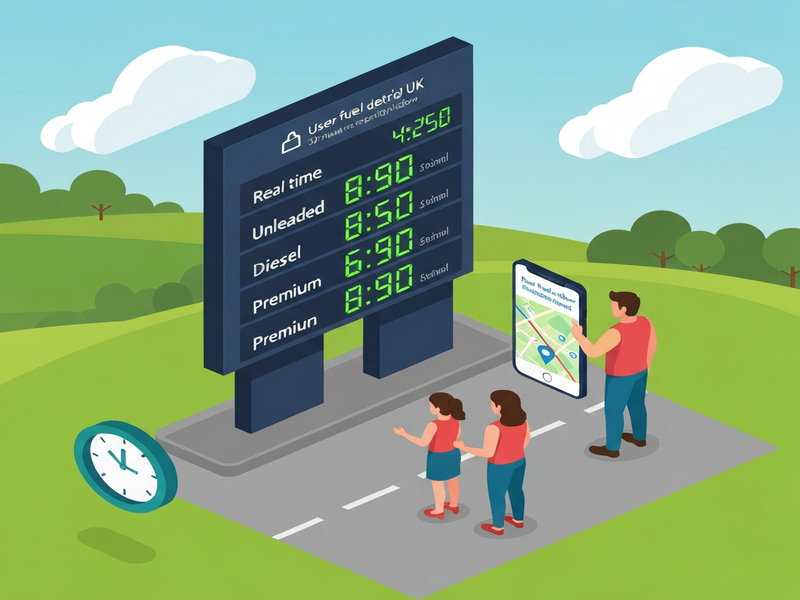
For the full original reporting, see the BBC article on the Fuel Finder Scheme.
Why the Fuel Finder Scheme Matters for Every UK Driver
By mandating near‑real‑time price disclosure, the UK government is turning fuel pricing from a hidden, opaque market into a transparent, competitive arena. The result is a measurable boost to household budgets, a richer data ecosystem for AI‑driven applications, and a clearer signal to retailers that price‑warfare can benefit the consumer.
As drivers begin to rely on smarter fuel price apps powered by open data and AI, the UK could set a global benchmark for how public policy and technology collaborate to protect consumers. Stay tuned to our UBOS homepage for more insights on how AI platforms are reshaping everyday services like fuel price comparison.
Andrii Bidochko
CTO UBOS
Andrii Bidochko is an AI entrepreneur and researcher focused on AI agents, reinforcement learning, and autonomous systems. He writes about the technologies shaping the future of machine intelligence, from frontier models and agent architectures to real-world AI applications.