

- Updated: January 4, 2026
- 6 min read
Traceformer.io Launches AI‑Driven Schematic Checking Service for KiCad and Altium
Traceformer.io — AI‑Driven Schematic Checking for KiCad & Altium
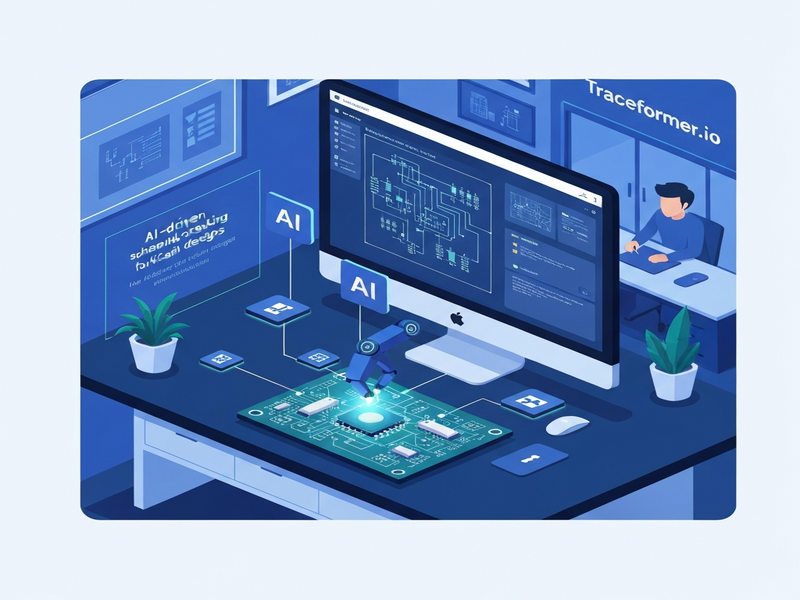
Traceformer.io is an AI‑driven schematic checking service that automatically validates KiCad and Altium designs using a multi‑agent pipeline, datasheet parsing, and real‑time error detection, all available through a transparent free‑trial tier.
Why AI‑Powered Schematic Validation Matters Now
Electronic engineers and hardware startups constantly battle hidden design flaws that only surface after costly PCB fabrication. Traceformer.io promises to catch those mistakes early, leveraging large‑language‑model agents that read component datasheets, cross‑reference netlists, and surface‑level design intent. The result? Fewer respins, faster time‑to‑market, and a smoother hand‑off to manufacturers.
How Traceformer.io Works: A Multi‑Agent AI Pipeline
At its core, Traceformer.io runs a three‑phase orchestrator pipeline:
- Planner: The system ingests the complete KiCad project or Altium netlist, identifies logical subsystems (power, communication, sensor interfaces, etc.), and creates a work order for each.
- Workers (Parallel Agents): Up to ten specialized agents operate simultaneously. Each agent fetches relevant datasheets, extracts specifications, and evaluates the subsystem against those specs. Lightweight models keep token usage low while maintaining high accuracy.
- Merger: A synthesis engine aggregates evidence from all workers, producing a structured report that categorises findings as Errors, Warnings, Verified, or Missing Info.
The pipeline mirrors a human engineer’s workflow—plan, research, and conclude—yet it does so in seconds, not days.
Key Features That Set Traceformer.io Apart
- Automatic Datasheet Retrieval: By parsing component part numbers, the service pulls official datasheets from trusted sources, eliminating manual look‑ups.
- Full KiCad & Altium Support: Upload a
.kicad_proproject folder or an Altium netlist and let the AI handle the rest. - Subsystem‑Level Evidence: Each finding cites the exact page and paragraph of the datasheet, giving engineers a clear audit trail.
- Configurable Review Parameters: Users can set token limits, design‑rule thresholds, and even choose between OpenAI or Anthropic models for cost‑performance tuning.
- Scalable Parallelism: Up to ten agents run concurrently, delivering rapid feedback even on complex multi‑layer boards.
- Transparent Pricing & Usage Metrics: Real‑time token consumption is displayed, and billing is handled securely via Stripe.
Pricing Tiers & Free Trial – What You Pay For
| Plan | Monthly Cost | Datasheets per Project | Model Access | API Credits |
|---|---|---|---|---|
| Free | $0 | Up to 10 | GPT‑5.2 (limited tokens) | 1 review / month |
| Hobby | $10 | Up to 20 | GPT‑5.2, Opus 4.5, Sonnet 4.5 | $7.50 API usage + $2.50 platform fee |
| Pro | $20 | Up to 40 | All premium models | $17.50 API usage + $2.50 platform fee |
All tiers include secure Stripe billing, transparent token reporting, and the ability to switch between model providers on the fly.
Why Engineers, Startups, and Hobbyists Should Care
Whether you are a seasoned PCB designer or a first‑time hardware founder, Traceformer.io delivers concrete ROI:
- Reduced Respins: Early detection of mismatched voltage ratings, missing decoupling caps, or incorrect pin assignments cuts costly re‑fabrication cycles.
- Accelerated Design Reviews: Teams can share the AI‑generated report with manufacturers, shortening the “design‑for‑manufacturing” (DFM) loop.
- Confidence in Component Selection: Datasheet‑backed verification ensures that every part meets its intended electrical and mechanical constraints.
- Scalable for SMBs and Enterprises: The Enterprise AI platform by UBOS demonstrates how large‑scale AI pipelines can be managed; Traceformer.io applies the same principles to PCB design.
- Learning Aid: Junior engineers can see exactly why a warning was raised, turning the report into an on‑the‑job tutorial.
Traceformer.io vs. Traditional ERC/DRC Tools
Traditional Electrical Rule Check (ERC) and Design Rule Check (DRC) tools excel at catching connectivity errors, clearance violations, and netlist mismatches. However, they lack contextual awareness of component specifications. Traceformer.io fills that gap:
| Capability | ERC/DRC | Traceformer.io |
|---|---|---|
| Connectivity Errors | ✔️ | ✔️ (with datasheet context) |
| Component Spec Violations | ❌ | ✔️ (e.g., voltage rating, current limits) |
| Design Intent Validation | ❌ | ✔️ (checks against datasheet‑driven use‑cases) |
| Speed on Large Projects | Fast | Fast (parallel agents) |
In practice, the best workflow combines both: run ERC/DRC for low‑level rule checks, then let Traceformer.io add the high‑level, datasheet‑aware validation.
Get Started Today – Leverage UBOS Tools to Supercharge Your Workflow
Ready to test Traceformer.io on your next KiCad or Altium project? Sign up for the free tier and experience AI‑backed verification without a credit card.
While you’re exploring AI‑driven design, consider integrating other UBOS capabilities to streamline the entire product lifecycle:
- UBOS platform overview – a unified environment for AI‑enhanced development.
- Workflow automation studio – automate repetitive tasks such as BOM generation and version control.
- AI tools – explore additional AI services like the AI SEO Analyzer for your product website.
- UBOS templates for quick start – jump‑start new projects with pre‑built AI‑enabled templates.
- UBOS partner program – collaborate with UBOS to embed AI services directly into your hardware design pipeline.
- UBOS portfolio examples – see real‑world cases where AI accelerated product development.
- About UBOS – learn more about the team behind the AI platform.
By pairing Traceformer.io’s schematic validation with UBOS’s broader AI ecosystem, you create a seamless, end‑to‑end hardware design workflow that reduces risk, cuts cost, and shortens time‑to‑market.
Explore Related AI Integrations
UBOS also offers a suite of integrations that can complement your PCB design process:
- OpenAI ChatGPT integration – embed conversational assistants into design documentation.
- Chroma DB integration – store and query large sets of component metadata efficiently.
- ElevenLabs AI voice integration – generate spoken design reviews for remote teams.
- Telegram integration on UBOS – receive instant AI‑generated alerts on design issues.
- ChatGPT and Telegram integration – ask design questions directly from your messaging app.
Conclusion – The Future of Error‑Free PCB Design
Traceformer.io exemplifies how generative AI can move beyond code generation into the nuanced world of hardware design. By automatically parsing datasheets, analysing schematics, and delivering evidence‑backed reports, it empowers engineers to ship reliable products faster. When combined with UBOS’s broader AI suite—ranging from workflow automation to voice‑enabled assistants—the entire hardware development lifecycle becomes smarter, more collaborative, and less error‑prone.
Don’t let hidden schematic bugs derail your next launch. Start with the free trial on Traceformer.io, then explore UBOS’s ecosystem to build a truly AI‑first hardware workflow.