

- Updated: April 1, 2026
- 7 min read
SpaceX Aims for Trillion-Dollar Valuation with Confidential IPO Filing
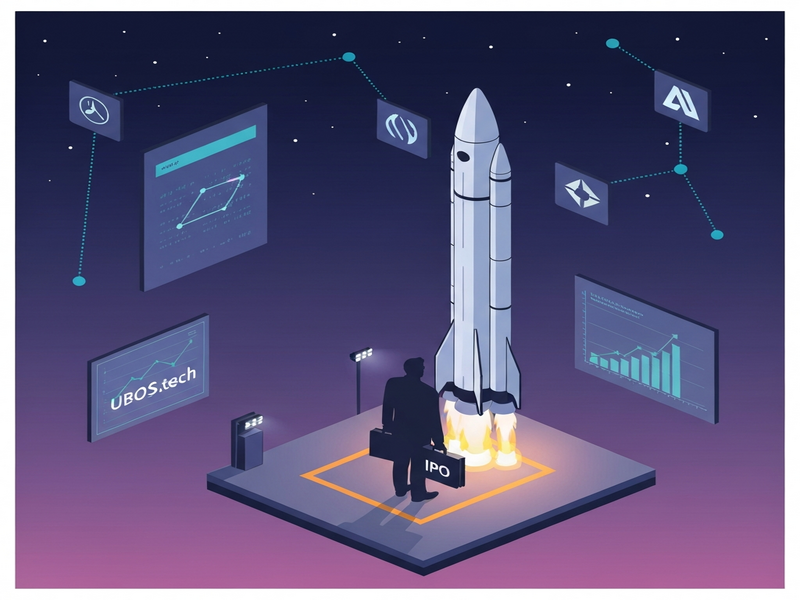
Direct Answer: SpaceX, Elon Musk’s pioneering aerospace company, has confidentially filed for an initial public offering (IPO) that could become one of the largest in history. The move signals a monumental shift in the private space industry, aiming to raise tens of billions of dollars and setting a valuation target that rivals the world’s most valuable technology corporations.
The Launch Sequence Begins: SpaceX Files for a Generational IPO
In a move that has sent shockwaves through Wall Street and Silicon Valley, Elon Musk’s SpaceX has officially initiated the process for a public debut. According to a detailed report from The New York Times, the private rocket company filed its paperwork confidentially with regulators, setting the stage for a market-defining event. This isn’t just another tech IPO; it’s a capital-raising endeavor of cosmic proportions, designed to fuel Musk’s ultimate ambition of making humanity a multiplanetary species. The filing represents a critical juncture for the company, transitioning from a venture-backed disruptor to a publicly-traded titan of industry.
The implications extend far beyond the aerospace sector, touching everything from the tech stock market’s health to the strategic competition between hardware-first pioneers like SpaceX and software-centric behemoths in the artificial intelligence space. As we unpack the details, it becomes clear that this IPO is less about a quick exit for early investors and more about securing the financial firepower for the next century of innovation. For more information on our own mission, you can learn About UBOS and our commitment to democratizing technology.
“This IPO is the financial equivalent of lighting the candle on a Super Heavy booster. It’s a high-stakes, high-reward maneuver intended to propel SpaceX into a new orbit of operational capability and market influence.”
Decoding the IPO Filing: Valuation, Capital, and Timelines
The confidential nature of the filing means many specifics remain under wraps, but key details have emerged, painting a picture of unprecedented ambition. Understanding these figures is crucial for grasping the sheer scale of this financial event and its potential impact on the market.
The Trillion-Dollar Target
At the heart of the IPO is a staggering valuation. SpaceX is reportedly valuing itself at over $1 trillion. To put this into perspective, this would place it among the most valuable companies in the world upon its debut, surpassing legacy giants across all industries. This valuation isn’t just based on its current launch contracts with NASA and commercial clients; it’s a forward-looking assessment that includes the massive potential of its Starlink satellite internet constellation and the future promise of its Starship rocket system. This kind of valuation reflects a belief in creating an entirely new economic ecosystem in space, a concept that requires robust, scalable infrastructure, much like a modern Enterprise AI platform by UBOS is built for future growth.
Fundraising Goals and Market Debut
The primary objective of going public is to raise a colossal amount of capital. Sources indicate Elon Musk is aiming to raise between $50 billion and $75 billion. This influx of cash is earmarked for two primary purposes:
- Accelerating Starship Development: The fully reusable Starship is the cornerstone of Musk’s Mars colonization plans. Its development is incredibly capital-intensive, and this funding would significantly de-risk and speed up the program.
- Expanding the Starlink Constellation: While already operational, Starlink requires thousands more satellites to achieve global coverage and higher bandwidth. The IPO proceeds will fund the manufacturing and launch of these next-generation satellites.
The company is reportedly committed to a June debut, suggesting a fast-tracked process. This aggressive timeline indicates confidence from both SpaceX’s leadership and its underwriting banks in the current market’s appetite for a high-growth, visionary technology stock.
A Tale of Two Frontiers: Space Exploration vs. Artificial Intelligence
The SpaceX IPO doesn’t exist in a vacuum. It arrives at a time when another technological frontier is capturing the world’s imagination and investment: artificial intelligence. The immense capital raises by companies like OpenAI and Anthropic create a fascinating parallel. Both space and AI are foundational technologies poised to redefine the future, and both require astronomical sums of money to advance.
While AI companies build the infrastructure of digital intelligence, SpaceX is building the physical infrastructure for off-world expansion. The competition for capital, talent, and market attention is fierce. An investor might weigh the merits of funding a large language model against funding a rocket that could one day mine asteroids. This dynamic highlights the diverse paths of innovation, from creating a powerful AI Chatbot template to building a self-landing orbital booster. The underlying principle, however, is the same: leveraging complex technology to solve monumental problems. This is where powerful integrations, such as the OpenAI ChatGPT integration, become critical enablers for businesses in any industry.
Furthermore, the operational complexity of SpaceX relies heavily on automation and AI. From flight trajectory calculations to fleet management and network optimization for Starlink, AI is the invisible engine. This synergy is where platforms that simplify complex processes, like a Workflow automation studio, demonstrate their value. The IPO will undoubtedly fuel further investment in the AI capabilities that make spaceflight more reliable and efficient.
Market Tremors: What This Means for Investors and the Tech Sector
A public offering of this magnitude is poised to have a profound effect on the broader market. For years, the IPO landscape has been relatively subdued, lacking a true mega-deal to galvanize investor interest. The arrival of SpaceX could be the catalyst that reopens the floodgates.
Investor Appetite and Risk Assessment
Investors will be drawn to SpaceX for several reasons: a visionary leader in Elon Musk, a dominant market position in the launch industry, a tangible and awe-inspiring product, and a massive growth story in Starlink. However, the risks are equally astronomical. The space industry is fraught with potential failures, regulatory hurdles, and intense competition.
Expert Insight: A Wall Street Perspective
“The SpaceX IPO is a litmus test for the market’s risk tolerance. It’s not a SaaS company with predictable recurring revenue. It’s a bet on deep-tech, on hardware, on a mission that could fail spectacularly or change the course of history. The valuation isn’t just a multiple of earnings; it’s a multiple of a dream. For investors, the question is whether they believe in the physics as much as they believe in the financials.”
This event will likely attract a wide spectrum of investors, from institutional funds to retail traders, all eager to own a piece of the future. The success of this offering could encourage other deep-tech and hardware-focused companies, often overlooked in favor of software plays, to consider going public. This could be particularly relevant for UBOS solutions for SMBs and startups looking to scale their own ambitious projects.
The Dawn of a New Commercial Space Age
Ultimately, the SpaceX IPO is more than a financial transaction; it’s a cultural and technological milestone. It solidifies the transition of space exploration from a government-led endeavor to a commercially-driven industry. This public funding will not only empower SpaceX but also energize the entire ecosystem of suppliers, competitors, and adjacent industries.
The capital raised will enable projects that were once the stuff of science fiction. It provides the resources to build, test, and fly at a scale never before seen. For entrepreneurs and developers, this new era presents boundless opportunities. Building applications and services for this emerging space economy will be a key growth area. Platforms that allow for rapid development and deployment, like the Web app editor on UBOS, will be invaluable tools for innovators looking to make their mark.
As SpaceX prepares for its public debut, the world watches. This is not just about the future of one company but about the future of human endeavor. The success of this IPO could very well determine how quickly we reach for the stars. Whether you are an investor, an engineer, or simply a dreamer, this is a story that is just beginning to unfold. To see what others are building on our platform, you can explore our UBOS portfolio examples.
Ready to Build the Future?
The same spirit of innovation that drives SpaceX can power your own projects. With the right tools, you can automate processes, build powerful AI applications, and bring your most ambitious ideas to life. Explore the UBOS platform overview to see how our no-code/low-code environment can help you launch your next big thing.
Andrii Bidochko
CTO UBOS
Andrii Bidochko is an AI entrepreneur and researcher focused on AI agents, reinforcement learning, and autonomous systems. He writes about the technologies shaping the future of machine intelligence, from frontier models and agent architectures to real-world AI applications.