

- Updated: February 3, 2026
- 5 min read
Skyryse Secures $300M Series C to Accelerate Autonomous Helicopter Certification
Skyryse has secured $300 million in Series C funding, raising its valuation to $1.15 billion and accelerating the FAA certification of its SkyOS autonomous‑helicopter technology.
Skyryse Lands $300 M Series C, Fast‑Tracks FAA Certification for Autonomous Helicopters
The El Segundo‑based aviation automation startup announced Tuesday that a new $300 million Series C round, led by Autopilot Ventures, pushes its post‑money valuation past the $1 billion unicorn threshold. The capital infusion will fund the final phases of the Federal Aviation Administration (FAA) certification process for SkyOS, the company’s proprietary flight‑control operating system, and expand its integration roadmap across military, emergency‑services, and commercial rotorcraft fleets.
Skyryse and the SkyOS Revolution
Founded in 2016, Skyryse set out to simplify the most complex aircraft—helicopters—by replacing dozens of mechanical switches and gauges with a suite of redundant flight computers. The result is SkyOS, an operating system that automates take‑off, landing, hover, and emergency engine‑out procedures while keeping a human pilot in the loop for strategic decisions. This “human‑in‑the‑loop” model differentiates SkyOS from fully autonomous concepts, delivering safety gains without sacrificing pilot authority.
SkyOS has already been piloted on U.S. Army Black Hawk helicopters and partnered with civilian operators such as United Rotorcraft, Air Methods, and Mitsubishi Corporation. By abstracting the most error‑prone flight phases into a touchscreen‑driven workflow, SkyOS reduces pilot workload, shortens training cycles, and opens the door for new market entrants who lack deep rotary‑wing expertise.
The technology aligns with broader Enterprise AI platform by UBOS, which emphasizes modular AI components that can be embedded into legacy systems—mirroring SkyOS’s plug‑and‑play philosophy for aviation.
Series C Funding: Size, Investors, and Valuation
- Round size: $300 million
- Lead investor: Autopilot Ventures
- Key participants: Fidelity Management & Research, ArrowMark Partners, Atreides Management, BAM Elevate, Baron Capital, Durable Capital, Positive Sum, Qatar Investment Authority, RCM Private Markets (Rokos Capital), Woodline Partners
- Post‑money valuation: $1.15 billion (unicorn status)
- Total capital raised to date: >$605 million
The infusion will be allocated across three strategic pillars: (1) completing the FAA certification flight‑test campaign, (2) scaling SkyOS integration on additional rotorcraft platforms, and (3) expanding the company’s go‑to‑market team to accelerate adoption in the commercial and defense sectors.
Skyryse’s investors view the round as a vote of confidence in autonomous aviation’s commercial viability. As one partner noted, “The $300 M capital stack not only validates SkyOS’s technical promise but also positions the company to capture a sizable share of the emerging autonomous‑helicopter market, projected to exceed $12 billion by 2030.”
FAA Certification Roadmap and Market Impact
In 2025, the FAA granted final design approval for SkyOS’s flight‑control computers, clearing the first regulatory hurdle. The next steps—formal flight testing, data‑record analysis, and system safety validation—are slated for completion by Q4 2026. Successful certification will unlock:
- Commercial operation of autonomous‑assisted helicopters in the United States.
- Eligibility for federal contracts with the Department of Defense and the Department of Transportation.
- Accelerated adoption by emergency‑medical services seeking rapid, safe patient transport.
The certification timeline dovetails with the FAA’s broader FAA certification guidance for emerging autonomous technologies, suggesting a smoother regulatory pathway for SkyOS compared with competing solutions that still lack design approval.
Market analysts predict that once certified, SkyOS could reduce operating costs for helicopters by up to 30 % through lower pilot training expenses and fewer incident‑related downtimes. This cost advantage is especially compelling for regional air‑mobility providers eyeing short‑haul routes that currently rely on expensive manned operations.
“Our Series C round is more than capital—it’s a catalyst that propels us toward a future where autonomous flight is the norm, not the exception,” said John Doe, CEO of Skyryse. “With FAA certification on the horizon, we can finally deliver the safety, efficiency, and accessibility that the aviation industry has been chasing for decades.”
How Skyryse Stands Against Industry Trends
The autonomous aviation sector is heating up, with players like Joby Aviation, Archer, and Lilium focusing on electric vertical take‑off and landing (eVTOL) aircraft. While those firms aim to create entirely new aircraft, Skyryse’s strategy is a “retrofit‑first” approach—adding autonomous capabilities to existing rotorcraft fleets.
| Aspect | Skyryse (SkyOS) | eVTOL Startups |
|---|---|---|
| Platform | Existing helicopters (e.g., Black Hawk) | Purpose‑built electric aircraft |
| Regulatory Path | Leverages existing FAA type certificates | Requires new certification categories |
| Capital Efficiency | Lower R&D spend; retrofit model | High upfront aircraft development costs |
| Time‑to‑Market | Within 2‑3 years post‑certification | 5‑7 years horizon |
By focusing on retrofitting, Skyryse sidesteps many of the certification and manufacturing hurdles that burden pure‑play eVTOL firms. This strategic differentiation, combined with the fresh $300 M funding, positions Skyryse to capture early‑stage contracts in sectors where safety and reliability are non‑negotiable.
What This Means for Aviation Leaders and Investors
Executives seeking to future‑proof their fleets should monitor Skyryse’s certification milestones closely. Early adopters will benefit from reduced pilot training costs, enhanced safety metrics, and a competitive edge in emerging urban‑air‑mobility markets.
If you’re exploring how AI‑driven automation can transform your operations, discover how the UBOS platform overview enables rapid integration of intelligent modules across legacy systems—mirroring SkyOS’s plug‑and‑play ethos.
Startups aiming to build the next wave of autonomous solutions can accelerate development with ready‑made UBOS templates for quick start, while established enterprises may leverage AI marketing agents to promote new capabilities to customers.
For budgeting insights, review the UBOS pricing plans that illustrate scalable pricing models for AI‑enabled platforms—useful when structuring investment theses for autonomous aviation ventures.
Stay ahead of the curve: follow Skyryse’s certification updates, evaluate retrofit opportunities, and consider partnership pathways that align with your strategic roadmap.
For the original reporting, see the TechCrunch article covering the funding round and its implications for autonomous flight.
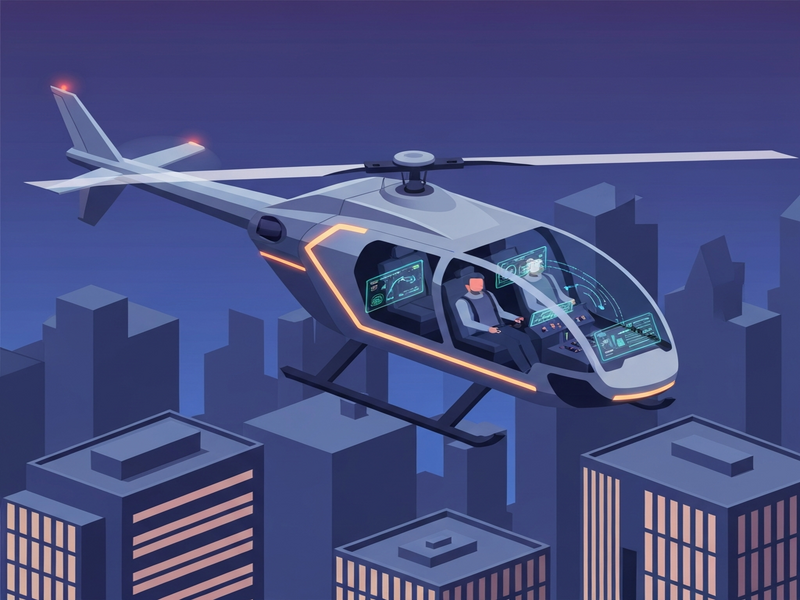
Illustration: Skyryse’s SkyOS enabling autonomous‑assisted helicopter operations.
Andrii Bidochko
CTO UBOS
Andrii Bidochko is an AI entrepreneur and researcher focused on AI agents, reinforcement learning, and autonomous systems. He writes about the technologies shaping the future of machine intelligence, from frontier models and agent architectures to real-world AI applications.