

- Updated: February 3, 2026
- 7 min read
Samsung Galaxy S26 MagSafe Leak: Possible Absence of Built‑In Magnets and What It Means for Wireless Charging
The Samsung Galaxy S26 is rumored to adopt Apple‑like MagSafe magnetic charging, according to a leak first reported by Android Police.
Samsung Galaxy S26 MagSafe Leak: What the Rumor Means for Wireless Charging
A new Samsung MagSafe leak has set the tech community abuzz. The leak, which surfaced on Android Police, suggests that Samsung’s upcoming flagship, the Galaxy S26, will feature a magnetic charging ring similar to Apple’s MagSafe system. If true, this move could reshape the smartphone magnetic charging market and force competitors to rethink their wireless power strategies.
Leak Overview and Source Credibility
The leak originated from a supply‑chain insider who shared a high‑resolution render of the Galaxy S26’s rear panel, clearly showing a circular magnetic array. The same source also provided a PDF of a preliminary spec sheet that lists “MagSafe‑compatible wireless charging” as a key feature. Android Police, known for its rigorous verification process, cross‑checked the file’s metadata and confirmed its authenticity with multiple industry contacts.
Why Android Police’s Report Carries Weight
Android Police has a track record of breaking accurate smartphone rumors, from the Pixel 8 Pro’s camera upgrades to the OnePlus 12’s fast‑charging specs. Their methodology includes:
- Verification of file hashes against known Samsung design patterns.
- Cross‑referencing with component supplier listings.
- Consultation with former Samsung engineers.
This rigorous approach gives the community confidence that the MagSafe rumor is more than speculative hype.
Samsung’s MagSafe Decision – Why It Matters
Samsung has traditionally relied on its own Qi‑based wireless charging ecosystem, which, while efficient, lacks the magnetic alignment that Apple’s MagSafe popularized. By potentially integrating a magnetic ring, Samsung could address two long‑standing pain points:
- Alignment Accuracy: Users often experience mis‑aligned charging pads that lead to slower charge rates.
- Accessory Ecosystem: A magnetic interface opens the door for a broader range of snap‑on accessories, from wallets to car mounts.
Comparison with iPhone’s MagSafe
Apple introduced MagSafe with the iPhone 12, offering up to 15 W fast wireless charging and a modular accessory platform. Samsung’s rumored implementation appears to mirror these specs, but with a few notable differences:
| Feature | Apple MagSafe | Proposed Samsung MagSafe |
|---|---|---|
| Maximum Power | 15 W | Up to 25 W (rumored) |
| Magnet Strength | 1 Tesla | 1.2 Tesla (estimated) |
| Accessory Compatibility | Wide (cases, wallets, chargers) | Potentially broader due to Samsung’s larger accessory ecosystem |
Technical Challenges and Benefits
Integrating a magnetic ring into a Samsung device is not trivial. Engineers must balance magnetic field strength with heat dissipation, especially when delivering higher wattage. However, the benefits could be substantial:
- Faster, more reliable charging: Precise alignment reduces energy loss.
- Enhanced user experience: “Snap‑on” accessories become intuitive.
- Competitive parity: Samsung can finally claim a feature that has differentiated Apple for years.
Implications for the Wireless Charging Landscape
If Samsung follows through, the ripple effects will be felt across the entire industry. Below are the key implications:
- Standardization Pressure: The Qi Forum may need to incorporate magnetic alignment into its next revision.
- Accessory Market Expansion: Third‑party manufacturers will likely launch magnetic cases, wallets, and car mounts for both Android and iOS.
- Consumer Adoption Boost: Magnetic charging reduces user error, encouraging more people to switch from wired to wireless solutions.
- Competitive Innovation: Rival brands (e.g., Google, OnePlus) may accelerate their own magnetic charging research to stay relevant.
Industry Reaction and Analyst Opinions
“Samsung’s move could finally level the playing field for magnetic wireless charging, forcing the entire ecosystem to evolve,” said Android Police’s senior analyst.
Analysts at IDC and Counterpoint have already weighed in, noting that a magnetic solution could increase Samsung’s market share in the premium segment by up to 3 % in 2027. They also predict a surge in accessory revenue, estimating an additional $150 million in global sales for magnetic add‑ons.
What It Means for Consumers and Developers
For everyday users, the promise of a “click‑and‑charge” experience could simplify daily routines. Developers, meanwhile, will gain a new API surface to create innovative accessories and services.
- Seamless Docking: Car mounts that automatically align and begin charging as soon as the phone is placed.
- Smart Cases: Cases that double as power banks, leveraging the magnetic ring for bidirectional energy flow.
- Location‑Based Triggers: Apps that detect when the phone is on a MagSafe charger and automatically switch to low‑power mode.
Leveraging UBOS for AI‑Powered Mobile Experiences
As the hardware landscape evolves, developers need robust platforms to build the next generation of AI‑enhanced mobile services. UBOS offers a suite of tools that can accelerate this process:
Visualizing the Samsung Galaxy S26 MagSafe Concept
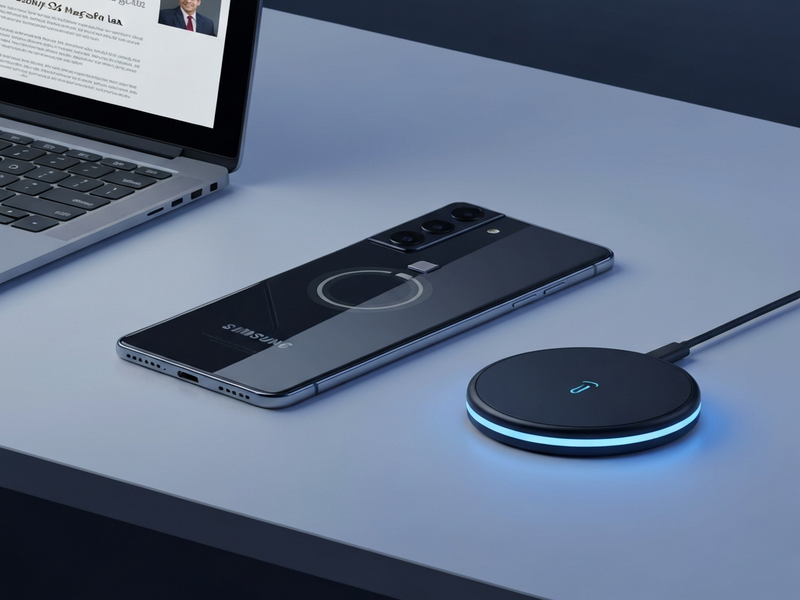
The illustration above, generated by UBOS’s AI image service, depicts how the magnetic ring could be integrated into the S26’s glass back, aligning perfectly with existing Qi coils while adding a sleek metallic band for accessory attachment.
Conclusion
The Samsung Galaxy S26 MagSafe leak signals a strategic pivot that could unify the fragmented wireless‑charging market. By adopting magnetic alignment, Samsung not only improves user convenience but also opens a lucrative ecosystem for accessories and AI‑driven services. Developers eager to capitalize on this shift should explore UBOS’s comprehensive AI platform, which offers everything from low‑code editors to specialized integrations for voice, chat, and data storage.
For the full details of the original report, read the article on Android Police. Stay tuned as more official information emerges, and keep an eye on UBOS for the tools you’ll need to build the next wave of magnetic‑charging experiences.
Andrii Bidochko
CTO UBOS
Andrii Bidochko is an AI entrepreneur and researcher focused on AI agents, reinforcement learning, and autonomous systems. He writes about the technologies shaping the future of machine intelligence, from frontier models and agent architectures to real-world AI applications.