

- Updated: February 13, 2026
- 5 min read
Ring Super Bowl Ad Sparks Surveillance and Privacy Debate in Smart Home Era
Ring Super Bowl Ad Sparks Heated Debate on Surveillance, Privacy, and the Future of Smart Home Security
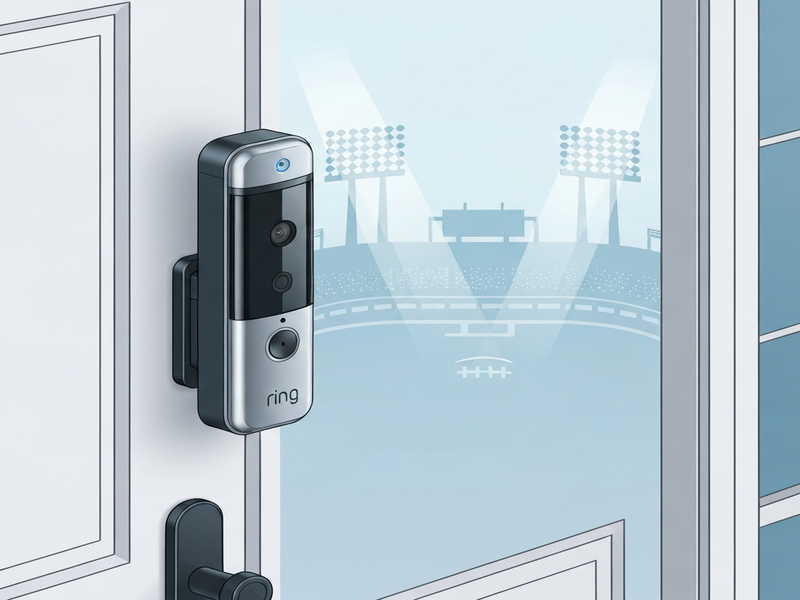
The Ring Super Bowl advertisement has triggered a nationwide controversy by highlighting how its doorbell cameras could be used for mass surveillance, raising fresh concerns about privacy in smart homes.
What Happened? A Quick Overview
During the 2026 Super Bowl, Ring aired a heart‑warming commercial featuring a lost dog reunited with its owner. While the narrative tugged at viewers’ emotions, a deeper layer of the ad revealed a vision of a hyper‑connected neighborhood where every doorstep is a data point. Critics argue that the spot normalizes pervasive surveillance, turning private front‑porches into public watchtowers.
Tech‑savvy homeowners and privacy‑concerned consumers are now questioning whether the convenience of Ring’s smart‑home security outweighs the potential erosion of personal privacy.
Ring’s Strategy: From Doorbells to Neighborhood Watch
Ring, an Amazon subsidiary, has built its brand on affordable video doorbells and security cameras. The Super Bowl ad was the latest attempt to position the product as a community‑wide safety solution, showcasing a “neighborhood hub” that aggregates live feeds from dozens of homes.
According to Ring’s own Surveillance Tech page, the company claims that shared video streams can deter crime and help first responders. However, the ad’s visual language—multiple screens, overlapping circles of coverage, and a tagline that reads “Your safety, together”—has been interpreted by many as a blueprint for an all‑seeing smart‑home ecosystem.
Public Outcry: Privacy Concerns Take Center Stage
Within hours of the broadcast, social media erupted. Hashtags like #RingSurveillance and #SmartHomePrivacy trended on X and Reddit. Privacy advocates warned that the ad normalizes a model where corporations and municipalities could access intimate footage of daily life.
- “We’re trading the comfort of a doorstep camera for a permanent surveillance state,” wrote a leading civil‑rights lawyer on a popular podcast.
- Consumers expressed fear that data could be repurposed for targeted advertising or law‑enforcement without proper warrants.
- Several city councils announced reviews of existing contracts with Ring, citing the ad as a catalyst for policy reevaluation.
For a deeper dive into the privacy implications of connected homes, see our Smart Home Privacy guide.
Expert Insight: Is This a Feature or a Bug?
Industry analysts are split. Some argue that Ring’s vision aligns with the broader trend of “community‑first” security, where data sharing can genuinely reduce crime rates. Others see it as a slippery slope toward ubiquitous monitoring.
“When a company markets surveillance as a community benefit, it blurs the line between safety and intrusion,” – Dr. Maya Patel, professor of Information Ethics at Stanford.
Tech journalist Nilay Patel, in a recent episode of The Vergecast, highlighted that Ring’s ad coincided with a broader industry push toward AI‑driven analytics on video feeds, raising questions about consent and data ownership.
Beyond Ring: The Growing Landscape of Surveillance Tech
Ring is not alone. Companies across the IoT spectrum are embedding cameras, microphones, and AI analytics into everyday objects. While these innovations promise convenience, they also create a data‑rich environment that can be exploited.
Key Trends Shaping the Future
- AI‑Powered Video Analytics: Real‑time object detection, facial recognition, and behavior prediction are becoming standard features.
- Edge Computing: To mitigate privacy risks, more processing is moving to the device itself, reducing cloud transmission.
- Regulatory Momentum: The EU’s AI Act and several U.S. state bills are tightening consent requirements for video data.
Homeowners seeking a balanced approach can explore platforms that prioritize data sovereignty. One such solution is the UBOS platform overview, which offers a modular architecture allowing users to keep video streams on‑premise while still leveraging AI insights.
How UBOS Helps You Build a Private‑First Smart Home
UBOS provides a suite of tools designed for privacy‑conscious developers and homeowners. Below are some resources that can help you create a secure, AI‑enhanced environment without surrendering control.
AI‑Driven Automation
Use the Workflow automation studio to set up conditional triggers—like turning off cameras when you’re home—without writing code.
Customizable Web Apps
Design a private dashboard with the Web app editor on UBOS, giving you full control over who sees each video feed.
AI Marketing Agents
Leverage AI marketing agents for outreach without compromising personal data—ideal for small businesses that need privacy‑first outreach.
Voice Interaction
Integrate ElevenLabs AI voice integration to control cameras via voice commands that stay local to your device.
If you’re a startup looking for rapid prototyping, explore the UBOS for startups program, which includes access to pre‑built templates such as the AI SEO Analyzer and the AI Article Copywriter. These tools can help you craft privacy‑focused content for your own smart‑home brand.
For SMBs, the UBOS solutions for SMBs provide a cost‑effective way to deploy secure video analytics without surrendering data to third‑party clouds.
Enterprise customers can benefit from the Enterprise AI platform by UBOS, which includes built‑in compliance modules for GDPR, CCPA, and emerging AI regulations.
Take Control of Your Smart Home Privacy Today
Don’t let the narrative of “surveillance as a service” dictate how you protect your home. Explore UBOS’s flexible, privacy‑first ecosystem and build a smart home that works for you—not the other way around.
Andrii Bidochko
CTO UBOS
Andrii Bidochko is an AI entrepreneur and researcher focused on AI agents, reinforcement learning, and autonomous systems. He writes about the technologies shaping the future of machine intelligence, from frontier models and agent architectures to real-world AI applications.