

- Updated: February 23, 2026
- 7 min read
QRTape: Open‑Source Paper‑Tape Audio Playback Revolutionizes Sustainable Sound
QRTape is an open‑source DIY system that stores high‑quality audio on a continuous strip of paper tape by encoding the data into QR codes, then reads and plays it back with a webcam‑driven scanner.
Paper Tape Meets Modern Vision: Audio on a Roll of QR Codes
Imagine a cassette tape that you can print on a home office printer, feed through a cardboard‑built transport, and hear music or speech without any magnetic heads or moving electronics. The QRTape project turns that imagination into reality, marrying the nostalgia of paper tape with today’s computer‑vision and audio‑compression breakthroughs. For makers, educators, and sustainability‑focused hobbyists, it offers a low‑cost, fully open‑source pathway to explore data storage, signal processing, and rapid prototyping.
What Is QRTape and Why It Matters
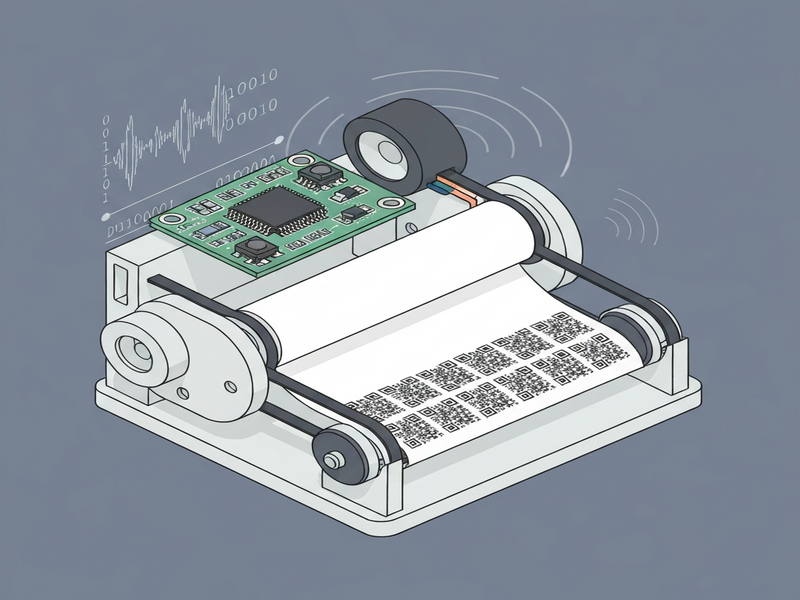
Developed by a community of hardware hackers, QRTape encodes audio into a series of QR codes printed on a long paper strip. An Arduino‑controlled stepper motor advances the tape past a webcam, which captures each code in real time. A software pipeline decodes the QR stream, reassembles the audio chunks, and streams the result to a media player. The entire workflow is open source, requiring only inexpensive components: a printer, a webcam, a few cardboard pieces, and a microcontroller.
Key goals of the project include:
- Demonstrate that modern audio compression (Opus) can fit high‑fidelity sound into tiny QR payloads.
- Replace complex magnetic tape transports with a paper‑based, recyclable medium.
- Provide a hands‑on learning platform for the maker community to explore data encoding, error correction, and real‑time processing.
Hardware Design: From Cardboard Spools to QR‑Scanning Stage
The hardware is deliberately minimalist, keeping the bill of materials under $30. Below is a MECE‑structured breakdown:
1️⃣ Paper Tape and Spools
A standard paper‑towel core, trimmed to fit a custom cardboard housing, serves as the source spool. The take‑up spool mirrors this design and is driven by a stepper motor through a 1:1 pulley belt made from a rubber band. This simple belt drive provides smooth, constant‑speed motion without the need for gearboxes.
2️⃣ Tension & Flattening Mechanism
To keep the tape flat and in focus, a thin strip of paper acts as a tension roller just before the scanning box. This mimics the pinch‑roller of legacy magnetic tape decks, ensuring each QR code stays within the camera’s depth of field.
3️⃣ Scanning Stage
The scanning box houses a USB webcam (e.g., Logitech C920) and a diffused LED strip for uniform illumination. The webcam is positioned at a fixed focal distance, allowing the zbarcam library to capture crisp binary images of each QR code.
4️⃣ Motor Control
An Arduino Nano runs a simple firmware that powers the stepper at a constant rate of 1–2 QR codes per second. While the current design uses open‑loop control, future revisions could add encoder feedback for closed‑loop speed regulation, enabling rewinding and error‑recovery.
All components are documented in the GitHub repository, and the mechanical drawings are released under a permissive license, encouraging community‑driven enhancements.
Software Pipeline: From Opus Bits to Playable Sound
The software side of QRTape is where the magic truly happens. It consists of three tightly coupled stages:
- Audio Encoding – Source audio (WAV/FLAC) is compressed with the Opus codec at variable bitrate (12 kbps VBR in the reference build). Opus delivers near‑transparent quality at a fraction of the size of MP3, making it ideal for QR payload constraints.
- Chunking & QR Generation – The compressed stream is split into 2,331‑byte chunks, each wrapped with a 2‑byte sequence ID, a 2‑byte length field, and a CRC‑16 checksum. The
qrtapeCLI then feeds each chunk toqrencode, producing binary QR images with medium error‑correction (ECC M) to balance capacity and robustness. - Real‑Time Decoding – During playback,
zbarcamstreams raw QR data to theqrtape -ddecoder, which validates sequence numbers and CRCs, reassembles the Opus packets, and pipes the stream directly toffplayormplayer. The pipeline runs entirely in memory, eliminating disk I/O latency.
“The combination of Opus’s efficiency and QR’s built‑in error correction makes paper‑tape audio surprisingly reliable, even with modest lighting and a low‑cost webcam.”
Because the decoder tolerates occasional missed frames (it simply skips a chunk), playback remains smooth, with only brief audible gaps. This design choice mirrors the resilience of legacy tape decks, where occasional dropouts were acceptable.
Why QRTape Matters to Makers, Educators, and Green Tech Advocates
QRTape sits at the intersection of three powerful trends:
🔧 DIY Innovation
The project proves that sophisticated data storage can be achieved with off‑the‑shelf parts and open‑source code. Hobbyists can modify the mechanical design, experiment with alternative encodings (e.g., DataMatrix), or integrate the system into larger installations such as kinetic art.
📚 Hands‑On Learning
Educators can use QRTape to teach concepts ranging from digital signal processing to error‑correcting codes. The tangible nature of paper tape makes abstract ideas concrete, fostering deeper comprehension among students of all ages.
🌱 Sustainable & Low‑Impact Computing
Unlike magnetic tape, paper is biodegradable and recyclable. By reusing printer paper and cardboard, QRTape reduces electronic waste while still delivering a functional audio medium. This aligns with the growing push for greener maker practices.
The project also opens doors for community‑driven extensions, such as embedding sensor data, creating interactive audio books, or linking QR streams to IoT devices via MQTT.
Leverage UBOS to Accelerate Your QRTape Projects
UBOS offers a suite of low‑code tools that can complement every stage of a QRTape build. Below are curated resources that map directly onto the project’s workflow:
- UBOS platform overview – Deploy a cloud‑hosted instance of the decoding service, enabling remote playback from any browser.
- AI marketing agents – Generate promotional copy for your QRTape‑based art installations or educational kits.
- Workflow automation studio – Automate the conversion pipeline (audio → Opus → QR) with drag‑and‑drop actions, reducing manual CLI steps.
- Web app editor on UBOS – Build a custom front‑end that lets users upload audio, watch the QR generation progress, and stream the result instantly.
- UBOS pricing plans – Choose a free tier for hobby projects or scale to a paid plan for classroom deployments.
- UBOS templates for quick start – Jump‑start your QRTape web portal with pre‑built templates that include file upload, status monitoring, and analytics.
- UBOS for startups – If you envision a commercial spin‑off (e.g., QR‑based audio souvenirs), UBOS provides startup‑friendly resources and mentorship.
- UBOS solutions for SMBs – Small businesses can integrate QRTape‑style audio cues into retail displays without costly hardware.
- Enterprise AI platform by UBOS – Scale the decoding service to thousands of concurrent users, leveraging AI‑enhanced error correction.
- UBOS portfolio examples – Browse case studies where similar low‑code pipelines powered innovative hardware projects.
By combining QRTape’s physical ingenuity with UBOS’s rapid‑development ecosystem, you can prototype, iterate, and launch fully functional audio‑on‑paper solutions in days rather than weeks.
Wrap‑Up: Play, Tinker, and Share
QRTape proves that “old school” media can be revitalized with modern software, delivering a compelling, low‑cost, and environmentally friendly audio experience. Whether you’re a maker looking for a fresh project, a teacher seeking a hands‑on lesson, or an entrepreneur eyeing a niche product, the open‑source nature of QRTape invites endless customization.
Ready to start building? Grab the design files, print your QR strip, and let the UBOS web app editor host your playback service. Share your creations on maker forums, and consider contributing back to the community by publishing your enhancements.
For the original announcement and deeper technical details, see the article on The Resistor Network. Stay tuned to UBOS for upcoming templates like the AI Chatbot template that can turn your QRTape interface into a conversational assistant.
Start your paper‑tape audio adventure today – the future of sustainable sound is only a QR code away.
Andrii Bidochko
CTO UBOS
Andrii Bidochko is an AI entrepreneur and researcher focused on AI agents, reinforcement learning, and autonomous systems. He writes about the technologies shaping the future of machine intelligence, from frontier models and agent architectures to real-world AI applications.