

- Updated: January 30, 2026
- 7 min read
OpenAI Unveils the Codex Agent Loop: Revolutionizing Autonomous AI Agents
The Codex Agent Loop is OpenAI’s new framework that enables autonomous AI agents to iteratively improve their performance through a closed‑loop of task execution, feedback, and reinforcement learning.
OpenAI Unveils the Codex Agent Loop: A Leap Toward Fully Autonomous AI Systems
In a bold move that could reshape the future of AI development, OpenAI announced the Codex Agent Loop this week. The announcement promises a self‑refining cycle where AI agents not only execute tasks but also learn from their own outcomes, dramatically reducing the need for manual supervision. For tech enthusiasts, AI developers, and enterprise innovators, this breakthrough signals a shift from static models to truly autonomous AI that can adapt in real time.
The news was detailed in OpenAI’s official blog post, which you can read here. Below, we break down the core concepts, key components, and practical implications for developers building the next generation of AI‑driven products.
What Is the Codex Agent Loop?
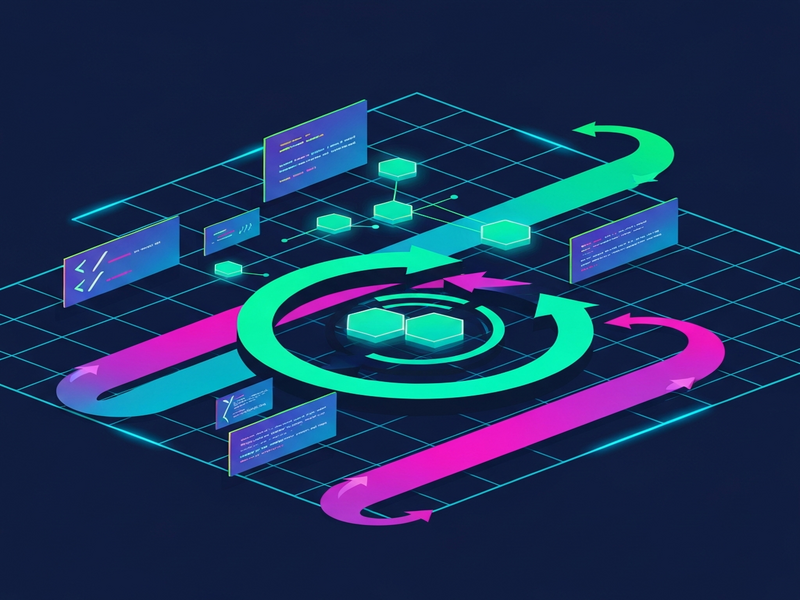
At its essence, the Codex Agent Loop is a machine‑learning loop that couples a language model (the “Codex”) with an execution environment, a feedback engine, and a reinforcement learning optimizer. The loop works as follows:
- Task Generation: The Codex receives a high‑level goal (e.g., “scrape the latest crypto prices”).
- Action Execution: It translates the goal into concrete API calls or code snippets, which are run in a sandboxed environment.
- Outcome Evaluation: The system measures success using predefined metrics (accuracy, latency, cost).
- Reward Assignment: A reinforcement learning (RL) module assigns a reward signal based on the evaluation.
- Model Update: The Codex updates its parameters to maximize future rewards, closing the loop.
This closed‑loop architecture enables agents to self‑optimize without human‑in‑the‑loop interventions after the initial setup, a capability that distinguishes it from earlier OpenAI tools such as the standard ChatGPT API.
Key Components of the Codex Agent Loop
The power of the Codex Agent Loop lies in its modular design. Each component can be swapped or extended, giving developers the flexibility to tailor the loop to specific domains.
1️⃣ Codex Core (Language Model)
The heart of the loop is OpenAI’s Codex, a descendant of GPT‑4 fine‑tuned for code generation and reasoning. It interprets natural‑language prompts and produces executable artifacts (scripts, API calls, or configuration files). For teams already using OpenAI ChatGPT integration, the transition to Codex is seamless because the same API conventions apply.
2️⃣ Execution Sandbox
To ensure safety, generated code runs inside an isolated container. This sandbox can be a cloud function, a Docker instance, or a serverless edge runtime. UBOS’s Workflow automation studio offers a ready‑made sandbox that integrates with popular CI/CD pipelines, making it easy to spin up secure environments for each loop iteration.
3️⃣ Feedback Engine
After execution, the system collects metrics such as success rate, execution time, and cost. These signals feed into a Chroma DB integration for vector‑based storage, enabling rapid similarity search for past outcomes and facilitating meta‑learning across tasks.
4️⃣ Reinforcement Learner
The RL module translates raw metrics into a scalar reward. OpenAI’s implementation uses Proximal Policy Optimization (PPO) to update the Codex weights. Developers can experiment with alternative algorithms via the Enterprise AI platform by UBOS, which supports custom reward shaping and policy evaluation.
Why the Codex Agent Loop Matters: Benefits & Real‑World Applications
The loop’s autonomous nature unlocks several strategic advantages for developers and businesses:
- Reduced Human Overhead: Once the loop is configured, agents self‑improve, cutting down on manual debugging and prompt engineering.
- Scalable Skill Acquisition: Agents can acquire new capabilities by simply exposing them to fresh data, making it ideal for rapidly evolving domains like finance or cybersecurity.
- Cost Efficiency: By optimizing code for speed and resource usage, the RL reward function directly translates to lower cloud bills.
- Higher Reliability: Continuous feedback loops catch regressions early, ensuring production‑grade stability.
Potential Use Cases
| Industry | Application |
|---|---|
| E‑commerce | Dynamic pricing agents that adjust offers based on real‑time market data. |
| Healthcare | Automated medical‑report summarization with continuous improvement on accuracy. |
| DevOps | Self‑healing CI pipelines that rewrite failing scripts on the fly. |
| Content Creation | AI‑driven copywriters that refine tone and SEO performance through iterative testing. |
Companies that already use UBOS’s AI marketing agents can plug the Codex Agent Loop into their existing workflows to automatically generate and optimize ad copy, landing pages, and email sequences. The UBOS templates for quick start even include pre‑built loops for common marketing tasks, accelerating time‑to‑value.
How the Codex Agent Loop Differs From Earlier OpenAI Tools
OpenAI’s portfolio has evolved from static language models (GPT‑3, GPT‑4) to more interactive agents (ChatGPT, function‑calling APIs). The Codex Agent Loop pushes the envelope further:
| Feature | ChatGPT / Function‑Calling | Codex Agent Loop |
|---|---|---|
| Autonomy | Human‑in‑the‑loop for each request | Self‑directed execution with RL feedback |
| Learning Cycle | One‑shot inference | Iterative improvement over episodes |
| Task Complexity | Limited to single‑turn interactions | Supports multi‑step, conditional workflows |
| Customization | Prompt engineering | Reward shaping & policy tuning |
In practice, this means developers can move from “ask‑and‑receive” models to “deploy‑and‑learn” pipelines. For startups, the shift reduces the engineering bandwidth needed to maintain AI‑driven features. The UBOS for startups program already offers credits for building such loops on its cloud platform.
Looking Ahead: Build Your Own Autonomous Agents Today
The Codex Agent Loop is more than a research paper—it’s a practical toolkit for anyone who wants AI that continuously refines itself. By combining OpenAI’s cutting‑edge language models with UBOS’s low‑code orchestration, developers can prototype, test, and scale autonomous agents in weeks rather than months.
Ready to experiment? Visit the UBOS homepage to explore the free tier, or dive straight into the UBOS pricing plans for enterprise‑grade resources. If you need inspiration, check out the UBOS portfolio examples that showcase real‑world deployments of autonomous agents.
Whether you’re building a next‑gen chatbot, an AI‑powered SEO analyzer (AI SEO Analyzer), or a dynamic content generator (AI Article Copywriter), the Codex Agent Loop gives you a repeatable, self‑optimizing backbone. Embrace the loop, and let your AI agents learn, adapt, and excel—without you having to rewrite the code after every iteration.
Start building the future of autonomous AI today—your first loop is just a click away.
For developers interested in voice‑enabled agents, the ElevenLabs AI voice integration pairs naturally with Codex‑generated scripts to produce spoken responses in real time.
Teams that rely on messaging platforms can extend the loop to Telegram using the Telegram integration on UBOS, or combine it with ChatGPT via the ChatGPT and Telegram integration for instant feedback loops.
If you need a visual front‑end for your autonomous agents, the Web app editor on UBOS lets you drag‑and‑drop UI components that interact directly with the Codex loop’s API endpoints.
Curious about how AI can boost your marketing funnel? Explore the AI marketing agents that already leverage reinforcement‑learning loops for campaign optimization.
Finally, learn more about the people behind these innovations on the About UBOS page, and consider joining the UBOS partner program to co‑create next‑generation autonomous solutions.