

- Updated: March 16, 2026
- 6 min read
Nvidia GTC 2026: Jensen Huang Unveils New AI Platform and Inference Chip
Nvidia GTC 2026: Jensen Huang Unveils NemoClaw AI Platform, New Inference Chip, and Groq Partnership
Direct answer: At Nvidia’s GTC 2026, CEO Jensen Huang announced the open‑source NemoClaw AI platform, a purpose‑built inference chip, and a $20 billion partnership with Groq, signaling a decisive shift toward faster, cheaper GPU‑accelerated generative AI for enterprises and developers.
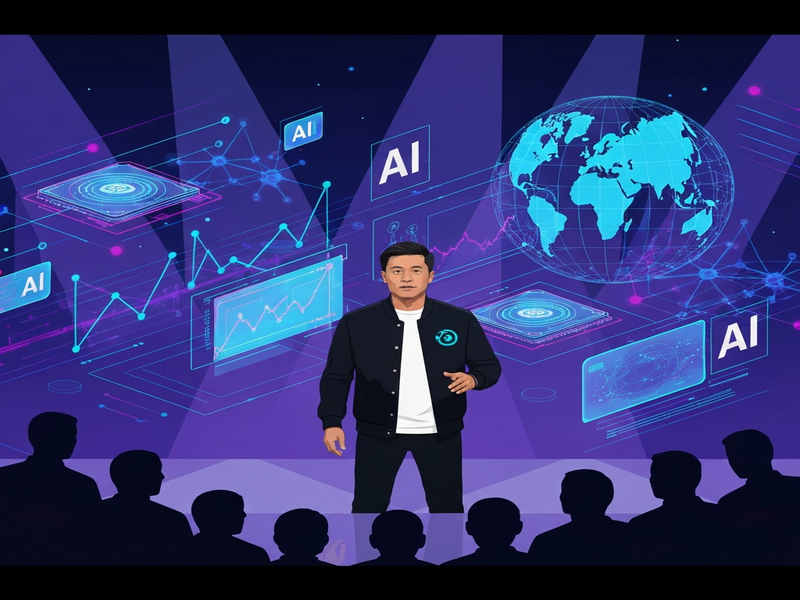
GTC 2026 – A Snapshot
From March 16‑19, the TechCrunch live‑stream captured over 30,000 developers, AI researchers, and enterprise leaders gathering at San Jose’s SAP Center. The event’s tagline—“AI for Every Industry”—reflected Nvidia’s ambition to embed GPU‑accelerated intelligence into healthcare, robotics, autonomous vehicles, and creative media.
Jensen Huang’s two‑hour keynote set the tone: “We are moving from AI as a research curiosity to AI as a production‑grade service.” The speech was punctuated by live demos, a stage‑wide light show, and a surprise appearance by Groq’s founder, Jonathan Ross.
Key Announcements: NemoClaw, Inference Chip, and Groq
1. NemoClaw – Open‑Source AI Agent Platform
NemoClaw is an open‑source framework that lets enterprises build, orchestrate, and deploy multi‑step AI agents at scale. Built on Nvidia’s CUDA ecosystem, it provides:
- Standardized agent lifecycle management (creation, training, inference, monitoring).
- Native integration with AI agents on the UBOS platform, enabling plug‑and‑play deployment.
- Support for large language models (LLMs) from OpenAI, Anthropic, and Nvidia’s own Megatron‑Turbo.
2. New Inference Chip – “NemoCore”
Dubbed NemoCore, the chip is engineered for ultra‑low‑latency inference. Highlights include:
- Up to 3× faster token generation compared with the previous H100.
- Power‑efficiency gains of 45 % per inference operation, cutting cloud‑GPU costs.
- Tensor‑core enhancements that accelerate vision‑language multimodal models.
3. Groq Partnership – Scaling Inference at the Edge
Late last year, Nvidia acquired a $20 billion license for Groq’s proprietary inference architecture. At GTC, the two companies announced a joint roadmap:
- Co‑development of edge‑optimized inference modules for autonomous drones and IoT devices.
- Unified SDKs that let developers switch seamlessly between Nvidia GPUs and Groq ASICs.
- Joint go‑to‑market programs targeting GPU‑accelerated ML workloads in finance and biotech.
Implications for Generative AI Trends
The trio of announcements reshapes three core trends:
A. Democratizing AI Agents
With NemoClaw’s open‑source licensing, startups can now embed sophisticated agents without building custom pipelines. This aligns with the broader industry shift toward “AI‑as‑a‑service” where agents handle everything from customer support to code generation.
B. Closing the Inference Gap
Historically, training GPUs outpaced inference hardware, creating a bottleneck for real‑time applications. NemoCore’s latency improvements make it feasible to run large LLMs in interactive chat, live video editing, and AR/VR pipelines—all while keeping operational costs in check.
C. Edge‑First AI Deployments
The Groq collaboration pushes inference off the data center and onto the edge. For enterprises, this means lower data‑transfer fees, enhanced privacy, and sub‑millisecond response times for mission‑critical workloads.
“Nvidia’s strategy is no longer about raw FLOPs; it’s about delivering AI where it matters—on‑device, in‑cloud, and everywhere in between.” – Kevin Cook, Zacks Investment Research
Integrating Nvidia’s GTC Innovations with UBOS Solutions
UBOS, a leading platform overview for low‑code AI applications, has already built connectors for Nvidia’s CUDA libraries. The latest GTC releases unlock new integration points:
- NemoClaw Bridge: UBOS’s AI agents module now includes a one‑click “Deploy to NemoClaw” button, allowing developers to push agents from the Web app editor on UBOS directly to Nvidia’s runtime.
- Inference Optimizer: The Workflow automation studio can auto‑select NemoCore for latency‑sensitive pipelines, reducing manual hardware selection.
- Edge Deployment Pack: Leveraging the Groq partnership, UBOS now offers pre‑configured containers for edge devices, streamlining the rollout of AI‑powered IoT solutions.
These capabilities empower three primary UBOS personas:
- Startups: Accelerate time‑to‑market with UBOS for startups and the NemoClaw SDK.
- SMBs: Cut operational spend using UBOS solutions for SMBs that automatically scale inference workloads on NemoCore.
- Enterprises: Deploy secure, compliant AI at scale via the Enterprise AI platform by UBOS, now enriched with GPU‑accelerated ML pipelines.
Real‑World Use Cases Emerging from the Nvidia‑UBOS Alliance
Below are three illustrative scenarios that showcase the combined power of NemoClaw, NemoCore, and UBOS tooling.
1. AI‑Driven Customer Support
Using the AI marketing agents template, a mid‑size e‑commerce firm built a multilingual support bot. The bot runs on NemoCore, delivering sub‑200 ms responses, while the agent orchestration lives in NemoClaw, enabling seamless hand‑off to human agents when needed.
2. Real‑Time Video Editing
Content creators leverage the UBOS templates for quick start to integrate Nvidia’s new video‑generation APIs. The workflow runs on the GPU‑accelerated ML engine, cutting rendering times from minutes to seconds.
3. Edge‑Based Predictive Maintenance
A manufacturing consortium deployed Groq‑enhanced inference modules on factory floor robots. UBOS’s pricing plans allowed them to scale from a pilot to 500+ devices without a capital‑intensive hardware refresh.
Looking Ahead: What’s Next After GTC 2026?
Analysts predict three trajectories for Nvidia’s ecosystem:
- Standardization of AI Agent APIs: NemoClaw could become the de‑facto open‑source layer, similar to TensorFlow’s role in deep learning.
- Hybrid Cloud‑Edge Inference: The Groq partnership will likely spawn a marketplace of edge‑ready inference containers, accelerating adoption in autonomous logistics.
- Vertical‑Specific Solutions: Expect industry‑focused bundles—healthcare imaging, financial risk modeling, and immersive media—built on top of the UBOS‑Nvidia stack.
For developers and decision‑makers, the message is clear: the future of generative AI is no longer a distant research lab; it’s a production‑grade service you can spin up today using Nvidia’s hardware and UBOS’s low‑code platform.
Conclusion
Jensen Huang’s GTC 2026 keynote delivered a cohesive narrative: open‑source AI agents, lightning‑fast inference, and a strategic edge partnership. By integrating these breakthroughs with UBOS’s AI agents framework and GPU‑accelerated ML capabilities, businesses can accelerate innovation while controlling costs.
Ready to experiment with NemoClaw or deploy a NemoCore‑powered service? Visit the UBOS homepage to start a free trial, explore the UBOS portfolio examples, and join the UBOS partner program for early‑access benefits.
Andrii Bidochko
CTO UBOS
Andrii Bidochko is an AI entrepreneur and researcher focused on AI agents, reinforcement learning, and autonomous systems. He writes about the technologies shaping the future of machine intelligence, from frontier models and agent architectures to real-world AI applications.