

- Updated: February 24, 2026
- 5 min read
NIST Calls for Public Comment on AI Agent Security – Comments Due March 9 2026
NIST Issues RFI on AI Agent Security – Public Comment Deadline March 9 2026
Answer: The U.S. National Institute of Standards and Technology (NIST) has opened a Request for Information (RFI) on the security of artificial‑intelligence agents, and it will accept public comments until March 9 2026. Stakeholders are urged to submit feedback through the Federal Register portal.
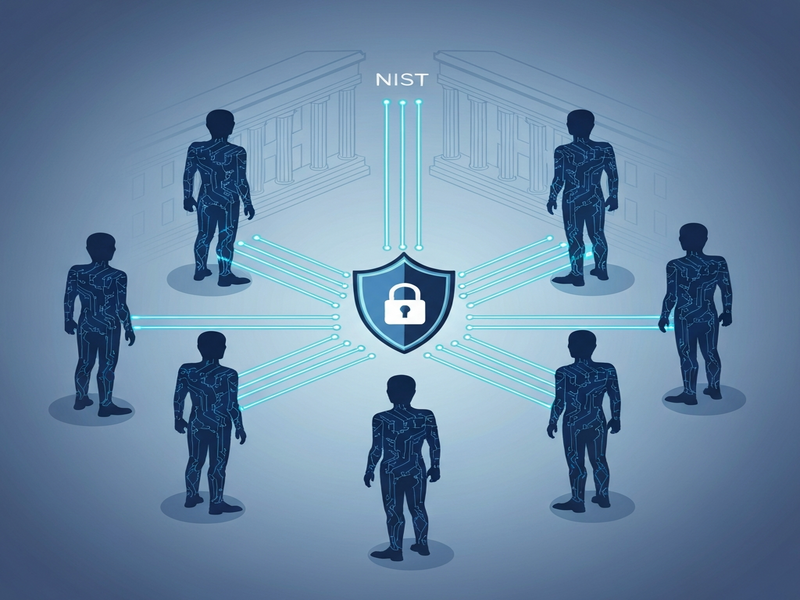
Why NIST Is Focusing on AI Agent Security
Since its founding in 1901, NIST has been the federal authority that translates emerging technology risks into actionable cybersecurity standards. In recent years, AI agents—software entities that can autonomously make decisions, interact with users, or orchestrate other services—have moved from research labs into production environments across finance, healthcare, and critical infrastructure.
These agents introduce novel attack surfaces: prompt injection, model poisoning, and covert data exfiltration are just a few of the threats identified in the AI security research hub. NIST’s RFI seeks to capture real‑world experiences to shape a future AI Agent Security Framework that can be referenced by both public and private sectors.
Key Questions NIST Wants Answered
The RFI outlines six thematic areas. Respondents are encouraged to provide concrete examples, data, and recommendations for each:
- Threat Modeling: What are the most common adversarial techniques targeting AI agents today?
- Risk Assessment: How should organizations quantify the impact of a compromised agent?
- Secure Development Lifecycle: Which safeguards (e.g., prompt sanitization, model verification) are most effective?
- Governance & Compliance: How can existing cybersecurity frameworks be extended to cover AI agents?
- Incident Response: What are best‑practice playbooks for detecting and containing AI‑related breaches?
- Future‑Proofing: How should standards evolve to accommodate generative AI and multimodal agents?
Who Should Care?
The RFI is deliberately broad, inviting input from:
- AI developers building agents on platforms like OpenAI ChatGPT integration or ElevenLabs AI voice integration.
- Enterprises deploying agents for customer support, automation, or decision‑making, especially those using the Enterprise AI platform by UBOS.
- Policy makers drafting regulations around AI accountability and data protection.
- Security analysts tasked with evaluating AI‑driven attack vectors.
Why the March 9 2026 Deadline Matters
NIST operates on a public‑comment cycle that typically spans 90 days. Submitting feedback before the March 9 2026 cutoff ensures that your insights are considered in the first draft of the forthcoming AI Agent Security Framework. Late submissions risk being excluded from the initial public draft, potentially delaying industry‑wide adoption of best practices.
“Early engagement with NIST not only shapes standards but also signals to customers and regulators that your organization is proactive about AI security.” – Senior NIST Advisor, AI Systems
Step‑by‑Step Guide for Developers and Policymakers
Follow these actions to ensure your voice is heard:
- Visit the Federal Register notice for the official RFI text.
- Read the “Submission Instructions” section carefully; comments must be submitted electronically via Regulations.gov.
- Prepare a concise comment (max 5,000 words) that addresses at least one of the six thematic questions.
- Include supporting data, case studies, or references to existing standards (e.g., NIST SP 800‑53, ISO/IEC 27001).
- Tag your submission with “AI Agent Security” to aid NIST’s categorization.
- Submit before 11:59 PM EST on March 9 2026.
Boost Your Comment with UBOS Tools
UBOS offers a suite of AI‑centric solutions that can help you illustrate real‑world security practices:
- Web app editor on UBOS – prototype a secure AI agent interface.
- Workflow automation studio – demonstrate automated threat‑detection pipelines.
- UBOS templates for quick start – use the “AI Security” template to showcase compliance checks.
- AI marketing agents – provide a case study on secure content generation.
- UBOS partner program – reference collaborative security testing initiatives.
Explore More UBOS Resources
While preparing your comment, you may find the following pages useful for context and examples:
- UBOS homepage – overview of our AI‑first platform.
- About UBOS – our mission and expertise in secure AI development.
- UBOS platform overview – architecture that embeds security by design.
- UBOS for startups – fast‑track AI agent deployment with built‑in safeguards.
- UBOS solutions for SMBs – affordable security controls for small teams.
- UBOS pricing plans – transparent pricing for security‑focused AI services.
- UBOS portfolio examples – real‑world deployments that meet compliance standards.
- Telegram integration on UBOS – secure messaging bots as AI agents.
- ChatGPT and Telegram integration – illustrate prompt‑injection mitigation.
- Chroma DB integration – secure vector storage for embeddings.
Take Action – Submit Your Comment Today
The NIST RFI on AI agent security is a rare opportunity for the AI community to influence national standards before they become mandatory. Whether you are a developer, a security analyst, or a policy maker, your insights can help shape a safer AI future.
Ready to contribute? Visit the Federal Register notice, draft your comment, and submit it before March 9 2026. Need guidance? Check out the NIST updates page for the latest analysis and UBOS‑powered templates.
Stay tuned to UBOS for ongoing coverage of AI governance, emerging security frameworks, and practical tools that keep your AI agents resilient against evolving threats.
Andrii Bidochko
CTO UBOS
Andrii Bidochko is an AI entrepreneur and researcher focused on AI agents, reinforcement learning, and autonomous systems. He writes about the technologies shaping the future of machine intelligence, from frontier models and agent architectures to real-world AI applications.