

- Updated: January 18, 2026
- 5 min read
Microsoft Unveils Community‑First AI Data Center Plan to Tackle Energy Impact
Microsoft has launched a “Community‑First AI Infrastructure” plan that pledges higher electricity payments, water‑use reduction, workforce training, job creation, and local tax contributions to mitigate the impact of its expanding AI data centers.
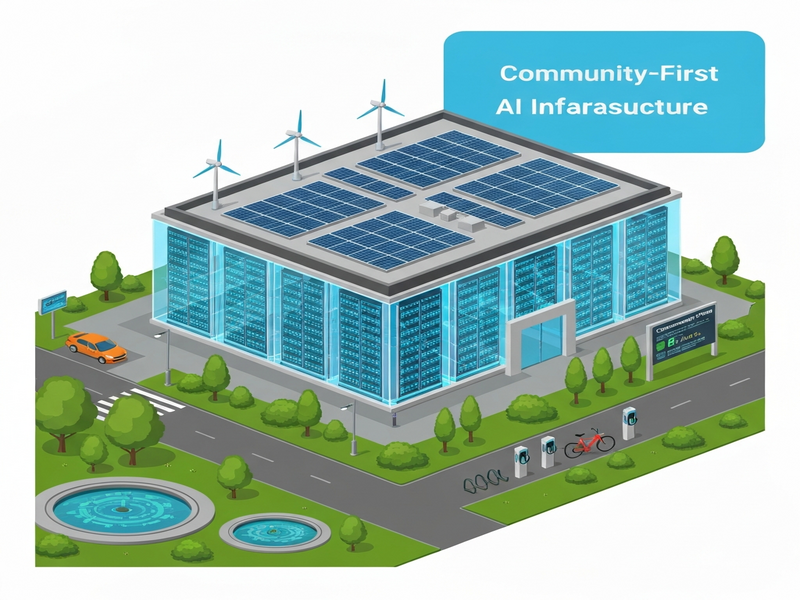
Microsoft’s Community‑First AI Infrastructure Plan in a Nutshell
On January 13, 2026, Microsoft announced a five‑point strategy aimed at aligning its AI data‑center expansion with the needs of the neighborhoods that host them. The plan, dubbed “Community‑First AI Infrastructure,” is a direct response to mounting public pressure over rising electricity rates, water scarcity, and opaque corporate‑local government deals. By committing to higher utility payments, water‑saving technologies, workforce development, job creation, and increased tax contributions, Microsoft hopes to turn critics into partners.
The Five Pillars of Microsoft’s Plan
- Higher Electricity Payments: Microsoft will negotiate rates that fully cover the power draw of its AI clusters, ensuring residential customers do not shoulder the cost.
- Water‑Use Reduction: New cooling technologies and recycling loops will cut water consumption at data‑center sites.
- Workforce Training & Upskilling: Partnerships with local colleges will create AI‑focused curricula and certification pathways.
- Job Creation: Each new data‑center will generate a mix of construction, operations, and technical roles.
- Local Tax Contributions: Microsoft will allocate a portion of its revenue to community development funds and infrastructure upgrades.
Higher Electricity Payments
Rising electricity rates have become a flashpoint across the United States, with the average household bill climbing 13 % in 2025. Microsoft’s pledge to “ask utilities and public commissions to set our rates high enough to cover the electricity costs for our datacenters” directly addresses this pain point. The company explicitly rejects any form of electricity subsidies, positioning itself as a responsible power consumer.
Water‑Use Reduction
Data‑center cooling traditionally relies on massive water withdrawals. Microsoft will deploy closed‑loop cooling and AI‑driven fluid dynamics to slash water use by up to 30 % at new sites. This aligns with broader industry trends toward sustainable technology practices that protect local watersheds.
Workforce Training and Job Creation
Microsoft plans to fund AI‑focused bootcamps, apprenticeship programs, and certification tracks in partnership with community colleges. The goal is to create a pipeline of talent that can staff the new facilities while uplifting the local economy. Early estimates suggest each data‑center could create 500‑plus direct jobs and hundreds of indirect positions.
Local Tax Contributions
Beyond payroll, Microsoft will contribute a share of its data‑center revenue to municipal budgets. These funds are earmarked for public‑service upgrades such as broadband expansion, school technology labs, and renewable‑energy projects, reinforcing the “community‑first” narrative.
Community Reactions and Concerns
Local leaders and advocacy groups have responded with a mix of cautious optimism and lingering skepticism. While many applaud the transparency, some worry that the promised financial offsets may not fully counterbalance the long‑term environmental footprint.
“We appreciate Microsoft’s willingness to talk, but we need hard data on how these commitments will be measured and enforced,” said a spokesperson for a regional consumer‑rights coalition.
Critics also point to the broader trend of data‑center siting battles that have already forced the cancellation of at least 25 projects nationwide, according to a recent Heatmap Pro analysis.
Sustainability Measures and Energy Considerations
Microsoft’s plan dovetails with its corporate goal of being carbon negative by 2030. The company is investing in renewable‑energy PPAs, on‑site solar arrays, and battery storage to offset the high‑intensity power draw of AI workloads. By integrating AI‑driven energy‑management software, Microsoft aims to keep the data‑center’s Power Usage Effectiveness (PUE) below 1.2, a benchmark for world‑class efficiency.
These initiatives echo the broader push for AI infrastructure solutions that prioritize sustainability without sacrificing performance.
UBOS Perspective on Community‑First AI Infrastructure
At UBOS, we view Microsoft’s commitments as a catalyst for a new era of responsible AI deployment. Our UBOS platform overview showcases a modular, low‑energy stack that can be hosted in existing facilities, reducing the need for fresh construction.
Developers can leverage the Web app editor on UBOS to build AI‑driven applications that run efficiently on edge nodes, further lowering the overall power demand.
Moreover, our Workflow automation studio enables enterprises to orchestrate data‑processing pipelines that automatically scale down during off‑peak hours, conserving both electricity and water.
How UBOS Solutions Complement Microsoft’s Community‑First Goals
UBOS offers a suite of ready‑made templates that accelerate sustainable AI development. For example, the AI SEO Analyzer helps businesses optimize content while minimizing compute cycles. The AI YouTube Comment Analysis tool demonstrates how to process large datasets with efficient batch jobs.
Our AI infrastructure guidelines stress low‑latency, high‑throughput designs that can be deployed on existing hardware, reducing the carbon footprint associated with new builds.
For organizations seeking to embed voice capabilities, the ElevenLabs AI voice integration provides high‑quality speech synthesis without the need for power‑hungry GPU clusters.
Startups can jump‑start projects using UBOS templates for quick start, cutting development time and associated energy consumption.
Original Reporting
For a full read of Microsoft’s announcement and the surrounding debate, see the original Verge article.
Conclusion
Microsoft’s Community‑First AI Infrastructure plan marks a pivotal shift toward aligning high‑performance AI workloads with community welfare and environmental stewardship. While the roadmap is ambitious, its success will hinge on transparent reporting, enforceable commitments, and collaborative technology partners.
UBOS is ready to help businesses navigate this evolving landscape with sustainable, low‑impact AI solutions. Explore UBOS today to discover how you can build AI applications that respect both your bottom line and the planet.