

- Updated: February 23, 2026
- 7 min read
HackEurope 2026: Front‑End Polish, Strategic AI Use, and a Secure npm Registry MVP
HackEurope 2026 showed that a polished front‑end, clever use of AI buzzwords, and a secure npm registry MVP are the three decisive factors for standing out in modern hackathons.
HackEurope 2026: A Quick Recap and Why It Matters
Last week, developers from across Europe converged at HackEurope 2026, a three‑city hackathon that promised €1,000 in prize money and a showcase for the next wave of developer tools. While the event was chaotic—late‑night caffeine, sleep‑deprived coding marathons, and a few logistical hiccups—it also delivered clear lessons for anyone building in the fast‑paced SaaS and AI‑driven landscape.
In this article we break down the most actionable insights: the unexpected dominance of front‑end polish, the over‑hyped AI narrative, and a deep dive into a secure npm registry MVP that could reshape supply‑chain security. Whether you’re a solo coder, a tech founder, or an IT leader, these takeaways will help you plan your next hackathon or product sprint.
Read the original hackathon recap for the raw, unfiltered rant that sparked this analysis.
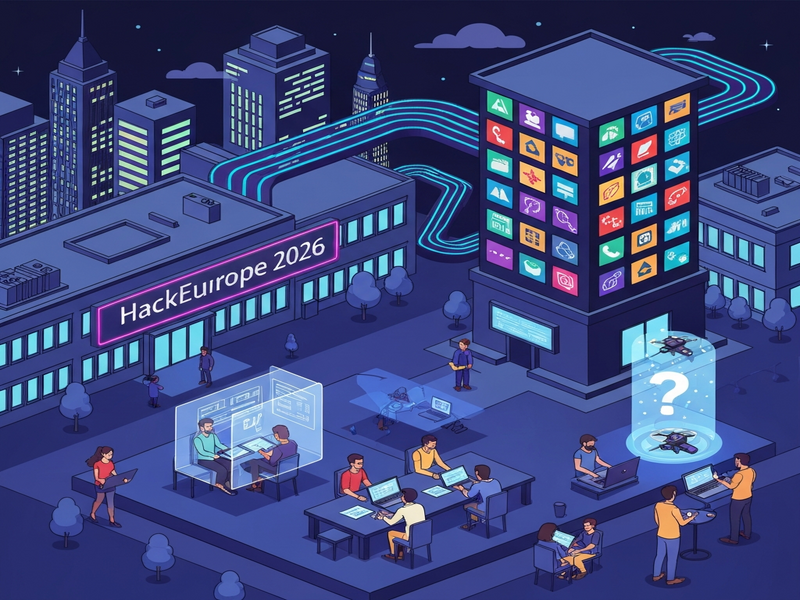
1. Front‑End Is Almost Everything – Choose Your Track Wisely
One of the loudest takeaways from HackEurope 2026 was that judges and investors gravitated toward projects that looked “cool” on the screen, even if the underlying code was a prototype. In a 2‑minute pitch, visual polish beats a deep technical explanation.
Key points for front‑end success
- Use a modern UI framework (React, Vue, Svelte) with a clean component library.
- Prioritize responsive design—judges view demos on laptops and phones.
- Leverage Web app editor on UBOS to spin up a prototype in minutes.
- Include subtle animations to convey “finished product” vibes.
Track selection also proved critical. Many participants assumed each country had its own prize pool, only to discover a single €1,000 prize shared across three locations. Moreover, the sponsor for the “AI & Data” track was not physically present in the Berlin venue, limiting networking opportunities.
Lesson: Verify the sponsor’s location and prize structure before committing to a track. If the sponsor is on‑site, you can get real‑time feedback and a better chance of influencing the judging panel.
2. AI Hype: A Double‑Edged Sword for Hack Projects
Almost every winning entry at HackEurope 2026 featured “AI” somewhere in the title or demo. The pressure to embed AI is real—judges love buzzwords, investors love marketable narratives, and the media loves headlines.
However, the over‑reliance on AI can dilute creativity. As one participant put it, “AI encourages conformity and kills creativity.” When teams use generic prompts from large language models, they often end up with similar ideas, UI layouts, and even code structures.
Why AI hype can backfire
- Low differentiation: Projects become “AI‑slop” with little unique value.
- False security: Relying on AI for security checks can miss novel attack vectors.
- Resource waste: Time spent fine‑tuning prompts could be used for core product development.
That said, AI is still a powerful tool when used strategically. For example, integrating OpenAI ChatGPT integration into a support bot can dramatically reduce response times without sacrificing originality.
Bottom line: Use AI to augment, not replace, your core idea. If you can demonstrate a genuine problem solved by AI—rather than AI for AI’s sake—you’ll stand out.
3. MVP Spotlight: A Secure Package Registry for npm
The most technically impressive project at HackEurope 2026 was a “secure npm registry” MVP that tackled the growing supply‑chain risk in open‑source ecosystems. Below is a concise breakdown of how it works and why it matters.
3.1 Problem Statement
Developers routinely install npm packages without verification, exposing projects to malicious code. Large enterprises combat this with expensive manual reviews, while smaller teams lack resources.
3.2 Core Architecture
- Package mirroring: The registry pulls packages from the public npm registry and stores a local copy.
- Behavioral testing: Each package is executed in an isolated container while eBPF monitors file accesses, DNS queries, network sockets, and system calls.
- Signal‑to‑noise filtering: Collected telemetry is deduplicated against a baseline of known‑good behavior from trusted packages.
- AI‑assisted scoring: A lightweight model (or historical heuristics) flags anomalous behavior as potentially malicious.
- Secure publishing: Only packages that pass the test suite are re‑published to the private registry, ready for consumption via
npm config set registry <secure‑url>.
3.3 Future Roadmap
The team outlined several next steps that align with enterprise needs:
- Support for Chroma DB integration to store behavioral embeddings.
- Extension to other ecosystems (PyPI, Maven, Cargo).
- Automatic traceability from flagged behavior back to the offending source line or commit.
- Reproducible builds and cryptographic signing of registry releases.
- Honeypot data collection to improve detection of exfiltration attempts.
This MVP demonstrates a practical, security‑first approach that could be packaged as a SaaS offering for startups and SMBs alike. For teams interested in building similar solutions, the Enterprise AI platform by UBOS provides the necessary infrastructure for scalable AI‑driven security pipelines.
4. Quotes & Key Takeaways from the Original Rant
“Front‑end is almost everything. There is 0 burden of proof that your project is actually functional or that it has any practical application. As long as it looks cool, investors and non‑technical people will eat that up.”
“AI encourages conformity and kills creativity. A solid 90% of the projects were just vibe‑coded slop. The ideas were AI, the implementations were copy‑pasted.”
From these statements we can extract three actionable lessons:
- Visual impact matters: Invest early in UI/UX to capture attention.
- Validate, don’t just showcase: Build a minimal functional demo that proves the core hypothesis.
- Use AI as a catalyst, not a crutch: Pair AI tools with genuine problem solving.
5. Conclusion: How to Win Your Next Hackathon (or Build a Real Product)
HackEurope 2026 proved that the winning formula is a blend of eye‑catching front‑end work, a clear problem statement, and a smart use of AI that adds measurable value. Security‑focused MVPs, like the secure npm registry, illustrate that addressing real‑world pain points can differentiate you from the sea of “AI‑only” projects.
Here’s a concise checklist you can apply tomorrow:
- Define a one‑sentence problem statement that anyone can understand in under 10 seconds.
- Build a polished UI prototype using UBOS templates for quick start or the Web app editor on UBOS.
- Identify a concrete AI component (e.g., summarization, classification) and integrate it via ChatGPT and Telegram integration or OpenAI ChatGPT integration.
- Validate security or performance with a lightweight test harness—think of the secure npm registry approach.
- Prepare a 2‑minute pitch that emphasizes visual demo, problem relevance, and measurable impact.
By following this roadmap, you’ll not only increase your chances of winning a prize but also lay the groundwork for a product that can scale beyond the hackathon stage.
Take the Next Step with UBOS
Ready to turn your hackathon prototype into a production‑grade solution? Explore the UBOS homepage for a full suite of AI‑powered development tools, from the AI marketing agents that can auto‑generate copy, to the Workflow automation studio that streamlines CI/CD pipelines.
Whether you’re a startup (UBOS for startups), an SMB (UBOS solutions for SMBs), or an enterprise (Enterprise AI platform by UBOS), we have a pricing plan that fits your budget—check out the UBOS pricing plans today.
Need inspiration? Browse our UBOS portfolio examples or try a ready‑made template like the AI SEO Analyzer or the AI Article Copywriter. Each template is built on the UBOS platform overview, ensuring you can launch in hours, not weeks.
Join the UBOS partner program (UBOS partner program) to collaborate with other innovators and get early access to new AI integrations like ElevenLabs AI voice integration.
Stay updated on future hackathon insights and AI trends by following our blog and contacting us via the contact page. Let’s build the next generation of secure, AI‑enhanced developer tools together.
Andrii Bidochko
CTO UBOS
Andrii Bidochko is an AI entrepreneur and researcher focused on AI agents, reinforcement learning, and autonomous systems. He writes about the technologies shaping the future of machine intelligence, from frontier models and agent architectures to real-world AI applications.