

- Updated: February 18, 2026
- 5 min read
Google Pixel 11 Infrared Under‑Display Face Unlock Upgrade – Google’s Answer to Apple Face ID

Google Pixel 11 Face Unlock Upgrade: Infrared Under‑Display Camera Leaked
Google’s upcoming Pixel 11 will feature an under‑display infrared (IR) face‑unlock system, a capability first hinted at by a recent Android Police leak.
The Android ecosystem is buzzing after a credible source disclosed that the Pixel 11 will ship with a new infrared under‑display camera dedicated to facial recognition. This upgrade promises faster, more reliable authentication while preserving the sleek, notch‑free design that Google users have come to expect. In this article we break down the technology, compare it with Apple’s Face ID, explore its impact on smartphone security, and capture the community’s reaction.
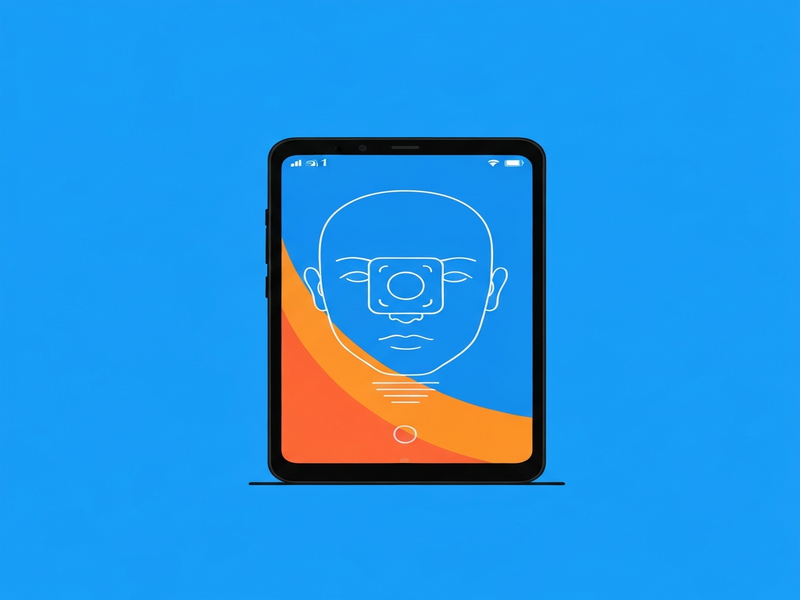
How the Under‑Display Infrared Camera Works
The leaked schematics show a tiny IR sensor embedded directly beneath the Pixel 11’s OLED panel. Unlike traditional front‑facing cameras that rely on visible‑light imaging, this sensor emits invisible infrared light to map the user’s facial geometry, even in low‑light or total darkness.
- Infrared illumination: A low‑power IR LED array lights the face without being seen by the human eye.
- Depth mapping: The sensor captures a 3‑D depth map, enabling the device to distinguish a live face from photos or masks.
- Under‑display placement: By positioning the camera beneath the screen, Google eliminates the need for a visible notch or punch‑hole, preserving a true full‑screen experience.
Google’s engineering team reportedly used a “transparent‑to‑IR” display layer, similar to the technology pioneered by Samsung’s Under‑Display Camera (UDC) but optimized for infrared wavelengths. This ensures the IR light can pass through the screen with minimal distortion, delivering a crisp depth map in under 100 ms.
Pixel 11 vs. Apple Face ID: A Technical Showdown
Apple’s Face ID has set the benchmark for facial authentication since 2017, using a structured light system that projects over 30,000 invisible dots onto the user’s face. Google’s approach, while conceptually similar, diverges in three key areas:
| Feature | Apple Face ID | Pixel 11 IR Unlock |
|---|---|---|
| Sensor Placement | Notch‑integrated TrueDepth camera | Under‑display infrared sensor |
| Illumination Method | Structured light (dot projector) | Infrared LED flood |
| Operating Conditions | Works in low light, but struggles in direct sunlight | Claims robust performance in both low‑light and bright environments |
| Power Consumption | Higher due to dot projector | Lower, thanks to passive IR sensing |
While Apple’s system remains the gold standard for accuracy, Google’s under‑display IR solution could win points for design elegance and battery efficiency. If the leak is accurate, the Pixel 11 may become the first mainstream Android phone to combine a full‑screen display with reliable facial authentication.
What This Means for Smartphone Security
Facial authentication has long been a secondary security layer behind fingerprint sensors. The Pixel 11’s IR face unlock could shift that balance, offering a primary biometric that rivals fingerprint speed and convenience.
Potential Benefits
- Enhanced privacy: No need to expose a physical fingerprint sensor that can be lifted or spoofed.
- Seamless UX: Users simply glance at the screen, even when the device is in a pocket or bag (if the IR light can penetrate thin fabrics).
- Unified authentication: Developers can rely on a single biometric API for both unlocking and secure app access.
Challenges to Watch
- Display interference: The IR sensor must work through varying screen brightness levels without false negatives.
- Regulatory scrutiny: Governments may demand transparency on how facial data is stored and processed.
- Adoption curve: Users accustomed to fingerprint sensors may need education on the reliability of IR face unlock.
Community Pulse: Excitement, Skepticism, and Questions
Tech forums, Reddit threads, and X (formerly Twitter) lit up as soon as the leak surfaced. Below is a snapshot of the most common sentiments:
“If Google can finally ditch the notch and still keep Face ID‑level security, they’ll finally win the design war.” – TechGuru
“I’m worried about the data pipeline. Will the IR depth map be stored locally or sent to the cloud? Transparency is key.” – r/Android user
Analysts from Counterpoint Research note that “Google’s move could force other Android OEMs to accelerate their own under‑display biometric roadmaps, potentially reshaping the competitive landscape in 2025.”
Original Leak Source
The details of the IR face‑unlock upgrade were first reported by Android Police. Their investigation included high‑resolution renders of the Pixel 11’s internals and comments from a supply‑chain insider.
Related Reads on UBOS
For a deeper dive into how emerging biometric technologies integrate with AI‑driven platforms, explore our recent coverage:
- Google Pixel 10 Review – a comprehensive look at the predecessor’s security suite.
- Smartphone Security Trends 2024 – an analysis of biometric adoption across Android and iOS.
- UBOS platform overview – see how AI can enhance device authentication workflows.
- AI marketing agents – learn how AI agents can personalize user experiences based on biometric data.
- Workflow automation studio – automate security policy enforcement across your organization.
Conclusion: A New Chapter for Android Biometrics
The Pixel 11’s rumored IR face‑unlock marks a pivotal moment for Android security. By embedding an infrared sensor beneath the display, Google aims to deliver a seamless, secure, and aesthetically pure unlocking experience that could set a new industry benchmark. Whether this technology lives up to the hype will depend on real‑world performance, privacy safeguards, and user adoption.
Stay ahead of the curve—sign up for our newsletter to receive the latest updates on smartphone security, AI integrations, and upcoming UBOS features that empower developers to build the next generation of secure mobile experiences.