

- Updated: March 17, 2026
- 6 min read
Google Expands Gemini‑Powered Personal Intelligence to All U.S. Users
Google has expanded its **Personal Intelligence** feature to all U.S. users, embedding Gemini‑powered AI across Search, Chrome, and the dedicated Gemini app, and making contextual, personalized assistance available to free‑tier accounts.
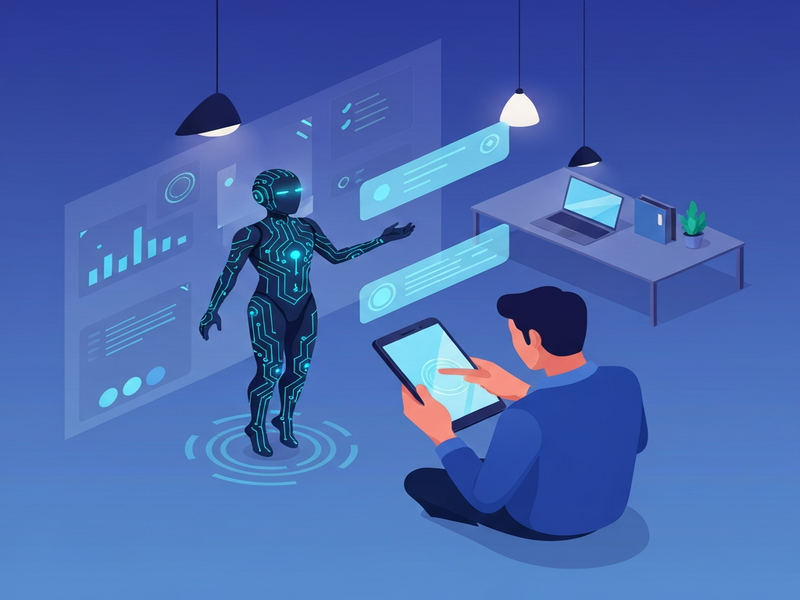
What Is Google Personal Intelligence and Why It Matters
Google’s Personal Intelligence is a layer of Gemini AI that pulls context from your Google ecosystem—Gmail, Photos, YouTube, Calendar, and more—to deliver answers that feel uniquely yours. Until now, the feature was gated behind Google AI Pro and AI Ultra subscriptions. The latest rollout democratizes the experience, letting anyone with a personal Google account tap into a truly personalized AI assistant without paying a premium.
Key Features & Rollout Timeline
Unified Context Engine
Personal Intelligence automatically aggregates data from connected apps, allowing Gemini to reference recent emails, upcoming events, or recent photo uploads when you ask a question. No manual prompt engineering required.
Cross‑Product Availability
Starting March 2026, the feature is live in three places:
- AI Mode in Google Search
- Gemini integration in Chrome (via the sidebar)
- The standalone Gemini mobile app
Opt‑In Control
Users can enable or disable Personal Intelligence at any time. Google also provides a granular dashboard to disconnect specific apps, preserving privacy while still delivering value.
No Direct Model Training on Private Data
Google clarifies that Gemini does not train on the raw contents of your Gmail or Photos. Instead, it uses a limited, on‑device context snapshot to generate responses, aligning with emerging privacy standards.
User Experience: Real‑World Benefits
For tech‑savvy professionals and AI enthusiasts, the expanded Personal Intelligence translates into tangible productivity gains:
- Smart Shopping Assistance: Gemini can suggest alternatives to a product you recently bought, based on price trends and your past preferences.
- Contextual Troubleshooting: When you ask “Why is my laptop slow?” Gemini pulls device specs from your Android device logs and offers targeted fixes.
- Meeting Prep: Ask “What are the key points for tomorrow’s client call?” and Gemini summarizes recent email threads, calendar notes, and relevant Docs.
- Creative Inspiration: Need a tagline? Gemini scans your recent marketing assets stored in Google Drive and proposes copy that matches your brand voice.
These scenarios illustrate why the feature is more than a novelty—it’s a productivity catalyst that reduces the friction of switching between apps.
How Google Personal Intelligence Stacks Up Against Competitors
| Feature | Google Personal Intelligence | Microsoft Copilot | OpenAI ChatGPT Plus |
|---|---|---|---|
| Free‑tier access | ✅ Available to all U.S. users | ❌ Requires Microsoft 365 subscription | ❌ Plus tier required |
| Cross‑app context | ✅ Deep integration with Gmail, Photos, Calendar, Docs | ✅ Office suite focus | Limited to user‑provided prompts |
| Privacy model | ✅ On‑device context, no raw data training | ✅ Enterprise‑grade controls | ❓ Data used for model improvement unless opted out |
| Platform reach | ✅ Search, Chrome, Gemini app, Android, iOS | ✅ Windows, Office web, Teams | ✅ Web, API, limited mobile |
Google’s strategy of offering a free, deeply contextual AI assistant gives it a competitive edge, especially for users already entrenched in the Google ecosystem.
Industry Insight
“Personal Intelligence is the next logical step in making AI feel like a true personal assistant rather than a generic chatbot. By leveraging the data users already trust with Google, Gemini can deliver relevance that rivals human memory.” – Dr. Maya Patel, AI Ethics Researcher, Stanford University
For the full announcement and technical details, see the original coverage on The Verge.
Why This Matters for AI‑First Businesses
Companies building AI‑driven products can learn from Google’s rollout strategy. For instance, the UBOS platform overview shows how a modular architecture can accommodate rapid feature releases without disrupting existing workflows.
Startups looking to prototype AI assistants can leverage the UBOS templates for quick start, such as the AI SEO Analyzer or the AI Article Copywriter. These templates illustrate how contextual data (e.g., site analytics) can be fed into a language model to produce hyper‑personalized content—mirroring Google’s Personal Intelligence approach.
For SMBs, the UBOS solutions for SMBs provide a cost‑effective way to embed AI into customer support, marketing, and internal knowledge bases. Pairing these solutions with the AI marketing agents can automate campaign creation, similar to how Gemini suggests shopping recommendations based on your purchase history.
Enterprises seeking a more robust AI stack can explore the Enterprise AI platform by UBOS. Its emphasis on data governance and on‑premise deployment aligns with Google’s privacy‑first messaging for Personal Intelligence.
Building Your Own Personal AI Assistant
Here’s a high‑level checklist inspired by Google’s rollout:
- Identify core data sources (email, calendar, CRM).
- Implement an opt‑in consent flow to respect user privacy.
- Choose a large language model (e.g., Gemini, OpenAI) and fine‑tune with domain‑specific prompts.
- Expose the assistant via multiple touchpoints: web, mobile, browser extensions.
- Provide a clear dashboard for users to manage connected apps.
UBOS makes many of these steps plug‑and‑play. For example, the Workflow automation studio lets you stitch together data pulls from Gmail, Google Drive, or third‑party APIs without writing code.
Extending Personal Intelligence with Voice and Messaging
Google’s Personal Intelligence is primarily text‑based, but the ecosystem is ripe for voice and chat extensions. UBOS already offers integrations that can complement Google’s approach:
- Telegram integration on UBOS – bring AI responses directly into your favorite messaging app.
- ChatGPT and Telegram integration – combine conversational AI with real‑time notifications.
- OpenAI ChatGPT integration – leverage alternative LLMs for specialized tasks.
- Chroma DB integration – store vector embeddings for fast semantic search across your documents.
- ElevenLabs AI voice integration – add natural‑sounding speech output to your assistant.
By combining these modules, developers can create a multi‑modal personal assistant that rivals Google’s offering while staying within a single, controllable platform.
Take the Next Step: Build Your Personalized AI Today
If you’re ready to experiment with contextual AI, start with the UBOS homepage and explore the About UBOS page to understand the team behind these tools. For pricing details, review the UBOS pricing plans—there’s a free tier that mirrors Google’s democratized approach.
Whether you’re a startup, an SMB, or an enterprise, the era of truly personal AI assistants has arrived. Leverage the lessons from Google’s Personal Intelligence expansion, pair them with UBOS’s modular ecosystem, and give your users the intelligent, context‑aware experience they expect.
Stay ahead of the AI curve—explore, build, and personalize.
Andrii Bidochko
CTO UBOS
Andrii Bidochko is an AI entrepreneur and researcher focused on AI agents, reinforcement learning, and autonomous systems. He writes about the technologies shaping the future of machine intelligence, from frontier models and agent architectures to real-world AI applications.