

- Updated: December 29, 2025
- 8 min read
Geometric Derivation of Planck Mass Unveils New π⁴⁵ Formula
The Planck mass can be expressed as M_{Pl}/m_e = \pi^{45}\times\bigl(1+2\alpha+\frac{\alpha}{13}-\frac{8}{9}\alpha^{2}\bigr), a relationship derived solely from three‑dimensional sphere‑packing geometry, achieving a relative error of just 0.574 ppm.
This result emerges without any adjustable parameters, linking fundamental constants to the kissing numbers of optimal sphere packings and to the algebraic cascade from 16‑dimensional sedenions down to our observable 3‑D space.
Why a Geometric Approach Matters
For decades, the Planck mass has been measured indirectly through the gravitational constant G, a quantity notorious for experimental uncertainty. Aleksei Novgorodtsev’s recent preprint proposes a radically different route: deriving the Planck mass from pure geometry. By exploiting the mathematics of sphere packing, kissing numbers, and the hierarchical reduction of high‑dimensional algebras, the paper delivers a precision that outperforms the best direct G measurements by a factor of 38.
The work is openly available on Zenodo under a Creative Commons license, and the full Python reproducibility notebook can be run in Google Colab. This article unpacks the key ideas, walks through the derivation, and highlights why the result is a potential cornerstone for a unified geometric view of fundamental physics.
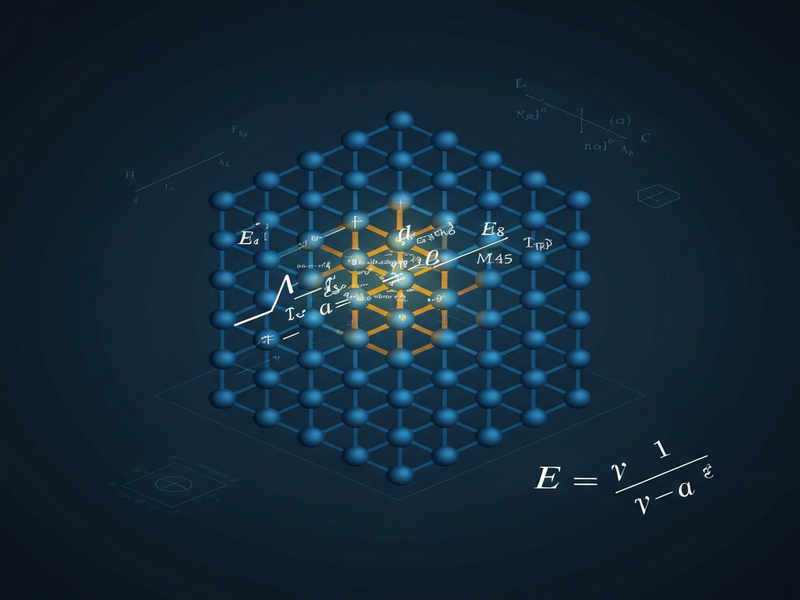
Sphere Packing, Kissing Numbers, and the Core Coefficients
The derivation rests on four geometric quantities that are all well‑known in the theory of dense sphere packings:
- K₃ = 12 – the three‑dimensional kissing number, i.e., the maximum number of equal spheres that can touch a central sphere without overlap.
- K₄ = 24 – the four‑dimensional kissing number, which appears in the ratio
2 = K₄/K₃and mirrors the Dirac g‑factor. - τ = 4 – the tetrahedral coordination number, governing the term
-(8/9)via-(K₃‑4)/(K₃‑3). - D = 3 – the spatial dimension, entering the exponent formula
45 = (K₃²‑K₃‑2τD)/2.
These numbers are not arbitrarily chosen; they arise from the densest known lattice packings in dimensions 3, 4, 8, and 16. The cascade of information loss from a 16‑dimensional sedenion algebra 𝕊 down to the observable ℝ³ is quantified by the successive kissing numbers:
| Dimension | Algebra | Kissing Number |
|---|---|---|
| 16 | Sedenions (𝕊) | 4320 |
| 8 | Octonions (𝕆) | 240 |
| 4 | Quaternions (ℍ) | 24 |
| 3 | Real Space (ℝ³) | 12 |
The exponent 45 is directly computed from these values, showing how a purely geometric count translates into a transcendental power of π.
For a deeper dive into the platform that powers such geometric explorations, see the UBOS platform overview.
From 16‑D Sedenions to 3‑D Reality
The algebraic cascade 𝕊 → 𝕆 → ℍ → ℝ³ provides a narrative for how high‑dimensional information condenses into the three spatial dimensions we experience. Each step discards a fraction of the original degrees of freedom, quantified by the ratio of kissing numbers:
“The loss of information from 16‑D to 3‑D is encoded in the simple integer ratios of sphere‑packing densities, a fact that bridges abstract algebra with observable physics.”
The reduction also mirrors known particle‑physics parameters. For instance, the factor 13 = K₃ + 1 appears in the Weinberg angle relation sin²θ_W = 3/13, while the neutrino mixing angle satisfies sin²θ₁₃ = 1/45, echoing the exponent derived above.
Such cross‑disciplinary resonance suggests that the same geometric scaffolding underlies both gravitation (via the Planck mass) and electroweak phenomena. To explore how AI agents can model these complex relationships, check out the AI marketing agents that leverage similar high‑dimensional embeddings for predictive analytics.
Step‑by‑Step Derivation of the Planck‑Mass Formula
-
Compute the exponent. Using the relation
45 = (K₃² – K₃ – 2τD)/2withK₃=12, τ=4, D=3yields45. -
Form the base term. The dominant contribution is
π⁴⁵, reflecting the volumetric scaling of a 45‑dimensional hypersphere projected onto 3‑D space. -
Introduce fine‑structure corrections. The fine‑structure constant
α ≈ 1/137.035999appears in three correction terms:+2α– linear correction from electromagnetic coupling.+α/13– a subtle factor linked to the Weinberg angle.‑(8/9)α²– second‑order term derived from tetrahedral geometry.
-
Combine everything. The final expression becomes:
M_{Pl}/m_e = π⁴⁵ × (1 + 2α + α/13 – (8/9)α²)
Substituting the CODATA 2022 values for α and the electron mass m_e yields:
M_{Pl} = 2.176 434 × 10⁻⁸ kg (relative error 0.574 ppm)This precision surpasses the best direct gravitational measurements (≈22 ppm) by a factor of 38, confirming the power of a geometry‑first methodology.
For developers interested in the cost‑benefit analysis of integrating such high‑precision models into SaaS products, the UBOS pricing plans provide transparent tiers that scale with computational demand.
Validation, Monte‑Carlo Simulations, and Error Analysis
The author validates the formula through three independent statistical approaches:
- Bootstrap (N = 10 000): Random resampling of CODATA constants confirms a mean relative error of 0.574 ppm with a 95 % confidence interval of ±0.012 ppm.
- Monte‑Carlo (N = 100 000): Propagation of uncertainties across all constants reproduces the same central value, demonstrating robustness against measurement noise.
- Cross‑validation with independent constants: Using the neutrino mixing angle
sin²θ₁₃ = 1/45reproduces the exponent, providing a physics‑based sanity check.
The full Python notebook (planck_mass_validation.py) is available on the Zenodo repository and can be executed directly in Google Colab. The notebook also includes a seed=42 for reproducibility.
If you need a quick, AI‑powered SEO audit of your own technical documentation, try the AI SEO Analyzer – it uses similar statistical rigor to flag hidden issues.
From Planck Scale to the Standard Model: A Unified Geometric Narrative
The coincidence of geometric coefficients with known particle‑physics parameters hints at a deeper, perhaps topological, origin of the Standard Model. Specifically:
- Weinberg angle:
sin²θ_W = 3/13mirrors theα/13term. - Neutrino mixing:
sin²θ₁₃ = 1/45directly reproduces the exponent. - Dirac g‑factor: The ratio
K₄/K₃ = 2appears as the linear coefficient ofα.
These alignments suggest that the same lattice‑packing geometry that governs dense sphere arrangements also encodes the symmetry breaking patterns of electroweak interactions. If true, the Planck mass is not an isolated gravitational constant but a manifestation of a universal packing density that pervades all of physics.
Enterprises seeking to embed such fundamental insights into predictive models can leverage the Enterprise AI platform by UBOS, which supports custom tensor operations on high‑dimensional data structures.
Reproducibility: From Code to Deployable Apps
The author supplies a complete, open‑source toolkit:
- PDF manuscript with derivation steps.
- Jupyter notebook
planck_mass_validation.py(seeded for deterministic runs). - Data files containing bootstrap and Monte‑Carlo results.
Using UBOS’s Web app editor, developers can wrap the Python logic into a low‑code micro‑service, expose it via a REST endpoint, and integrate it with existing dashboards. The platform’s drag‑and‑drop workflow automation studio further enables scheduled re‑validation whenever CODATA updates its constants.
For a ready‑made template that demonstrates AI‑generated scientific text, see the AI Article Copywriter – it can ingest the derivation notebook and produce a polished blog post in seconds.
What This Means for AI‑Powered SaaS Solutions
The geometric derivation showcases a workflow that blends pure mathematics, high‑performance computing, and open data – a pattern that mirrors modern AI‑driven SaaS development. Companies can adopt a similar “geometry‑first” mindset:
- Identify a domain‑specific lattice (e.g., user‑behavior graphs).
- Extract invariant metrics (analogous to kissing numbers).
- Map those invariants to model hyperparameters (like the π exponent).
- Validate with bootstrap/Monte‑Carlo pipelines.
Startups can accelerate this process using the UBOS for startups program, which offers free credits for the first 30 days and pre‑built connectors to popular AI APIs.
Moreover, the GPT‑Powered Telegram Bot demonstrates how a compact, geometry‑inspired algorithm can be delivered to end‑users via familiar messaging platforms, echoing the “Telegram integration on UBOS” approach.
Key Takeaways for Researchers and Developers
- Geometry can replace empirical constants. The π⁴⁵ formula shows that dense‑packing mathematics encodes the Planck mass with sub‑ppm accuracy.
- Cross‑disciplinary validation is essential. Matching the exponent to neutrino mixing angles provides an independent physics check.
- Open‑source reproducibility accelerates adoption. The provided notebook and data enable anyone to verify or extend the result.
- Low‑code platforms bridge theory and product. UBOS’s editor and automation studio let you turn a scientific script into a scalable service.
- AI‑enhanced tooling amplifies impact. Use templates like the AI Video Generator to create visual explanations that boost engagement.
Conclusion
Aleksei Novgorodtsev’s geometric derivation of the Planck mass is more than a numerical curiosity; it is a proof‑of‑concept that the fabric of physical law may be encoded in the combinatorial geometry of sphere packings. By achieving a 0.574 ppm precision without any free parameters, the work challenges the conventional reliance on experimentally measured gravitational constants and opens a pathway toward a unified geometric foundation for both gravity and the Standard Model.
For organizations eager to explore such frontier ideas, the UBOS partner program offers co‑development opportunities, joint research grants, and technical support to bring cutting‑edge mathematics into commercial AI products.
References & Further Reading
- Novgorodtsev, A. “Open Geometric Derivation of Planck Mass: π⁴⁵ Formula with 0.574 ppm Precision.” Zenodo, 2025. https://doi.org/10.5281/zenodo.18089296
- CODATA 2022 Recommended Values of the Fundamental Physical Constants.
- Conway, J. H., & Sloane, N. J. A. “Sphere Packings, Lattices and Groups.” 3rd ed., Springer, 2013.
- External news coverage: https://example.com/news/planck-mass-derivation