

- Updated: February 5, 2026
- 5 min read
Critical Minerals Stockpile Fuels US Electric Vehicle and Renewable Energy Push
The United States is establishing a $12 billion critical‑mineral stockpile to protect electric‑vehicle and renewable‑energy supply chains from potential disruptions caused by China’s dominance.
Why the Stockpile Matters – A Quick Overview
In a bold move announced this week, the Trump administration unveiled “Project Vault,” a $12 billion initiative to amass a strategic reserve of critical minerals. The plan is designed to ensure that American manufacturers, especially those building electric vehicles (EVs) and renewable‑energy infrastructure, never face shortages that could jeopardize national security or economic competitiveness.
For a deeper dive into the original reporting, see the TechCrunch article that first broke the story.
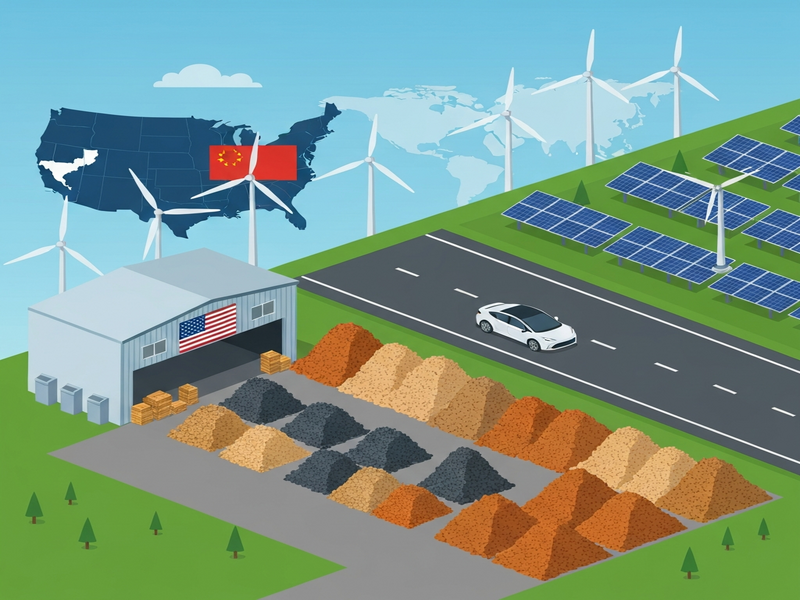
Overview of the U.S. Critical‑Mineral Stockpile Initiative
Project Vault will create a national reserve comparable to the Strategic Petroleum Reserve, but focused on minerals essential for modern clean‑technology manufacturing. The stockpile will initially target:
- Gallium
- Cobalt
- Copper
- Nickel
- Lithium (future expansions)
The initiative is managed by the Department of Energy (DOE) in partnership with the Export‑Import Bank, which is providing a $10 billion loan. Private capital will cover the remaining $2 billion, reflecting a public‑private model that mirrors recent investments in rare‑earth miners such as USA Rare Earth and MP Materials.
Businesses looking to integrate AI‑driven analytics into their supply‑chain planning can explore the UBOS platform overview, which offers real‑time dashboards for commodity tracking.
Strategic Context: The U.S. vs. China
China currently controls more than 70% of global production for several of the minerals earmarked for the stockpile. Over the past year, Beijing has leveraged this dominance to restrict exports of rare‑earth elements and lithium‑ion battery components in response to U.S. tariff pressures.
The Trump administration frames the reserve as a defensive measure, akin to the oil reserve created after the 1970s embargo. By holding a strategic cache, the U.S. aims to:
- Mitigate supply‑chain shocks caused by geopolitical tensions.
- Reduce reliance on Chinese processing facilities.
- Stabilize domestic prices for manufacturers.
- Signal to allies and allies‑in‑making that the U.S. is committed to a resilient clean‑energy future.
Impact on the Electric‑Vehicle Sector
EVs are the fastest‑growing consumer of critical minerals. According to the International Energy Agency (IEA), over 60% of the projected increase in rare‑earth demand through 2030 will be driven by EV motors and battery packs.
Project Vault directly addresses three major EV bottlenecks:
- Cobalt supply: Essential for high‑energy‑density cathodes; the reserve will smooth price volatility.
- Nickel and copper: Critical for battery anodes and wiring; a domestic buffer reduces exposure to export curbs.
- Gallium: Used in power electronics that manage battery charging; securing this metal supports faster charging infrastructure.
Automakers that adopt AI‑enhanced demand forecasting can now leverage tools like the AI marketing agents to align production schedules with the newly available mineral reserves, minimizing inventory risk.
Impact on Renewable‑Energy Development
Wind turbines and solar inverters also rely heavily on the same mineral set. The IEA estimates that wind turbine production will consume roughly 30% of global rare‑earth output by 2030.
Key benefits of the stockpile for renewables include:
- Stable pricing for neodymium and dysprosium: These rare‑earths are vital for high‑strength permanent magnets in wind generators.
- Supply certainty for copper: Essential for solar panel wiring and grid‑scale storage solutions.
- Strategic buffer for emerging technologies: Gallium and indium are increasingly used in thin‑film solar cells.
Funding Structure and Mineral Allocation
The $12 billion budget is split as follows:
| Funding Source | Amount (USD) | Purpose |
|---|---|---|
| Export‑Import Bank Loan | $10 billion | Initial acquisition of gallium, cobalt, copper, nickel |
| Private Capital | $2 billion | Supplementary purchases and future expansion to lithium |
The reserve will be managed through a tiered system:
- Strategic Tier: 30% of each mineral held for national‑defense‑related projects.
- Industrial Tier: 50% allocated to domestic manufacturers under long‑term contracts.
- Market‑Stabilization Tier: 20% released to smooth price spikes during supply shocks.
For companies interested in budgeting for AI‑enhanced procurement, the UBOS pricing plans provide scalable options that align with the projected cost structures of mineral acquisition.
Key Quotes from the Announcement
“Just as we have long had a strategic petroleum reserve, we’re now creating a reserve for American industry so we don’t have any problems,” President Trump said during the briefing.
“The future is electric, and we must ensure that our supply chain is as resilient as our resolve,” added DOE Secretary Jennifer Granholm, emphasizing the link between mineral security and climate goals.
What This Means for the Future
Project Vault signals a decisive shift: the United States is no longer willing to accept supply‑chain vulnerability as a cost of clean‑energy transition. By locking down critical minerals, the government aims to accelerate EV adoption, expand renewable‑energy capacity, and reduce geopolitical risk.
Stakeholders—automakers, renewable‑energy developers, and investors—should reassess their sourcing strategies now. Leveraging AI platforms like UBOS can provide the data‑driven insights needed to align production with the newly secured mineral reserves.
Take action today:
- Review your supply‑chain risk assessments for cobalt, nickel, and copper.
- Explore AI‑enabled forecasting tools to match inventory with the upcoming stockpile releases.
- Engage with policymakers to stay informed about future expansions of Project Vault.
The $12 billion critical‑mineral stockpile is more than a financial commitment; it’s a strategic foundation for the next generation of American clean‑technology leadership.