

- Updated: March 13, 2026
- 5 min read
Adobe Settles DOJ Lawsuit Over Hidden Subscription Fees for $75 Million
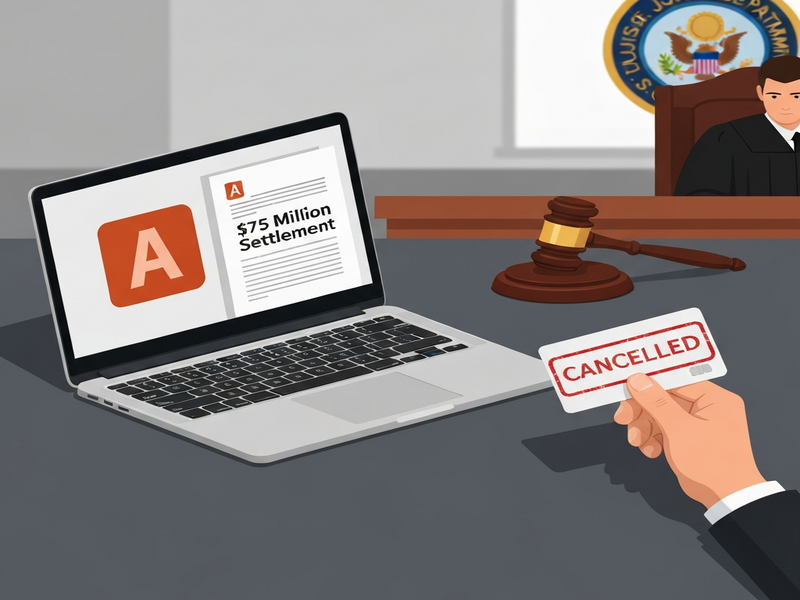
Adobe will pay $75 million to settle the U.S. Department of Justice lawsuit alleging hidden subscription‑cancellation fees, while also offering $75 million in free services to affected customers.

Background: DOJ Investigation into Adobe’s Subscription Practices
The Justice Department opened its investigation in early 2024 after receiving dozens of consumer complaints about Adobe’s Creative Cloud “annual paid‑monthly” plans. Regulators claimed the company failed to disclose early‑termination fees clearly and made the cancellation process deliberately cumbersome. The complaint described a “one‑click‑away” myth that left users “ambushed” by surprise charges when they tried to end their subscriptions.
These practices are not unique to Adobe; they echo a broader trend in the SaaS industry where recurring‑revenue models sometimes prioritize revenue stability over transparency. For product managers, the case serves as a reminder that compliance and user‑experience must evolve together.
Why Subscription Cancellation Fees Matter
- Hidden fees erode trust and increase churn.
- Regulators view undisclosed termination costs as deceptive under the Federal Trade Commission Act.
- Clear cancellation policies are now a competitive advantage for SaaS firms.
Settlement Details: $75 Million Payment and Free Services
In a settlement announced on March 13, 2026, Adobe agreed to pay $75 million to the U.S. government. In addition, the company will provide $75 million worth of free Creative Cloud services to customers who were impacted by the alleged practices, pending court approval.
Adobe’s public statement emphasized that it “disagrees with the government’s claims and denies any wrongdoing,” yet it expressed satisfaction in resolving the matter. The company also highlighted recent improvements to its subscription terms, including clearer pricing tables and a streamlined cancellation flow introduced in 2025.
Key Elements of the Settlement
- Monetary Payment: $75 million to the DOJ, earmarked for consumer restitution.
- Free Services: $75 million in complimentary Creative Cloud subscriptions for eligible users.
- Policy Changes: Mandatory display of termination fees before checkout and a one‑click cancellation button.
- Compliance Monitoring: An independent auditor will review Adobe’s subscription disclosures for the next three years.
Impact on Consumers and the SaaS Industry
For the millions of Creative Cloud users, the settlement promises immediate financial relief and a more transparent cancellation experience. Early‑termination fees that once appeared as “hidden” line‑items will now be displayed prominently, reducing the risk of surprise charges.
From an industry perspective, the case reinforces the growing regulatory scrutiny of subscription models. SaaS companies—especially those targeting SMBs and startups—must now embed compliance checks into their product development cycles.
What SaaS Product Managers Should Take Away
- Integrate clear pricing disclosures directly into the checkout UI.
- Offer a frictionless cancellation path; a single‑click option is now a best practice.
- Leverage automation tools to audit subscription terms continuously.
- Consider using AI‑driven compliance assistants to flag ambiguous language.
Comparison with Similar Cases
Adobe’s settlement mirrors earlier actions against other tech giants. In 2022, a major cloud‑storage provider paid $30 million for similar “hard‑to‑cancel” subscription schemes. The key difference this time is the scale—Adobe’s $75 million figure is the largest ever levied for subscription‑cancellation violations in the software sector.
Both cases underscore a pattern: regulators are moving from isolated investigations to industry‑wide enforcement, especially where recurring‑revenue models dominate.
Why This Matters for AI‑Powered SaaS Platforms
AI platforms that rely on subscription revenue—such as the Enterprise AI platform by UBOS—must pre‑emptively address these compliance concerns. Transparent billing not only avoids legal risk but also builds trust with data‑driven customers who expect clarity on usage costs.
UBOS’s own suite of tools exemplifies how AI can simplify compliance. The Workflow automation studio lets teams create automated checks for subscription terms, while the Web app editor on UBOS enables rapid UI updates to display fees prominently.
AI‑Enhanced Features That Reduce Legal Exposure
- Dynamic Pricing Tables: Powered by the Chroma DB integration, these tables update in real time based on user location and plan.
- Voice‑Guided Cancellation: The ElevenLabs AI voice integration can walk users through cancellation steps, ensuring they understand any remaining fees.
- Chat‑Based Support: Combining OpenAI ChatGPT integration with the ChatGPT and Telegram integration offers instant, compliant answers to billing questions.
Practical Steps for Companies Using UBOS
If you’re building a subscription‑based SaaS product on the UBOS platform overview, consider the following roadmap:
- Audit existing pricing pages with the AI SEO Analyzer to spot hidden fees.
- Deploy the AI Article Copywriter to generate clear, jargon‑free subscription terms.
- Use the AI Video Generator to create short explainer videos on how to cancel or modify plans.
- Integrate the AI Chatbot template for 24/7 billing support.
- Leverage the GPT-Powered Telegram Bot to push real‑time notifications about upcoming renewal dates.
Broader Implications for the Tech Community
The settlement sends a clear signal: transparency is no longer optional. As AI agents become more embedded in product experiences, they will also be expected to enforce compliance. Companies that adopt AI‑driven governance early will gain a competitive edge.
For startups, the UBOS for startups program offers a low‑cost entry point to build compliant subscription flows. Meanwhile, SMBs can benefit from the UBOS solutions for SMBs, which include pre‑built templates for pricing pages and cancellation widgets.
Conclusion: A Turning Point for Subscription Ethics
Adobe’s $75 million settlement marks a watershed moment for the software industry. It underscores that hidden fees and opaque cancellation processes are no longer tolerable. Companies that prioritize clear communication—leveraging AI tools like those offered by UBOS—will not only avoid legal pitfalls but also foster stronger customer loyalty.
Stay ahead of the curve by exploring the UBOS partner program and integrating best‑in‑class AI solutions into your subscription workflow.
For a deeper dive into the original reporting, read the full story on The Verge.
Andrii Bidochko
CTO UBOS
Andrii Bidochko is an AI entrepreneur and researcher focused on AI agents, reinforcement learning, and autonomous systems. He writes about the technologies shaping the future of machine intelligence, from frontier models and agent architectures to real-world AI applications.