

- Updated: March 12, 2026
- 2 min read
License Plate Readers Used by School District for Student Residency Verification Raise Privacy Concerns
License Plate Readers Used by Suburban School District for Student Residency Verification Raise Privacy Concerns
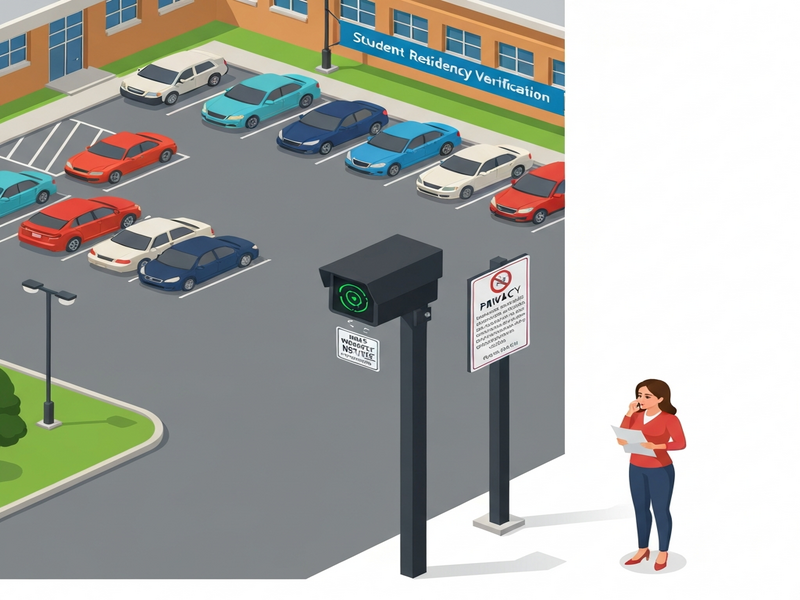
A suburban school district in Illinois has begun using license‑plate‑reader (LPR) cameras at its parking lots to confirm that students actually live within the district’s boundaries. The technology scans every vehicle that enters the lot, cross‑referencing the plate number with the district’s residency database to ensure compliance with enrollment rules.
The policy was put to the test when a mother’s daughter, who had provided utility bills and a lease as proof of residence, was denied enrollment because the LPR system could not verify the address associated with the vehicle’s license plate. The family alleges that the district’s reliance on automated surveillance infringes on privacy rights and creates barriers for families who may not own a car that matches their home address.
Privacy advocates and parent groups have voiced concerns that the LPR system collects and stores location data on students and their families without clear consent or transparent data‑retention policies. Critics argue that the technology could be repurposed for broader monitoring, raising questions about the balance between enrollment verification and civil liberties.
The district maintains that the LPR system is a cost‑effective way to enforce residency requirements and prevent out‑of‑district enrollment fraud. Officials say the data is stored securely and only accessed by authorized staff for verification purposes.
For a full account of the story, see the original article on NBC Chicago.
Related reading on our site:
- Privacy in Education: Balancing Safety and Student Rights
- How School Districts Adopt New Technologies
Andrii Bidochko
CTO UBOS
Andrii Bidochko is an AI entrepreneur and researcher focused on AI agents, reinforcement learning, and autonomous systems. He writes about the technologies shaping the future of machine intelligence, from frontier models and agent architectures to real-world AI applications.