

- Updated: March 30, 2026
- 5 min read
Microsoft Copilot Injects Ads into Pull Requests – Impact on Developers
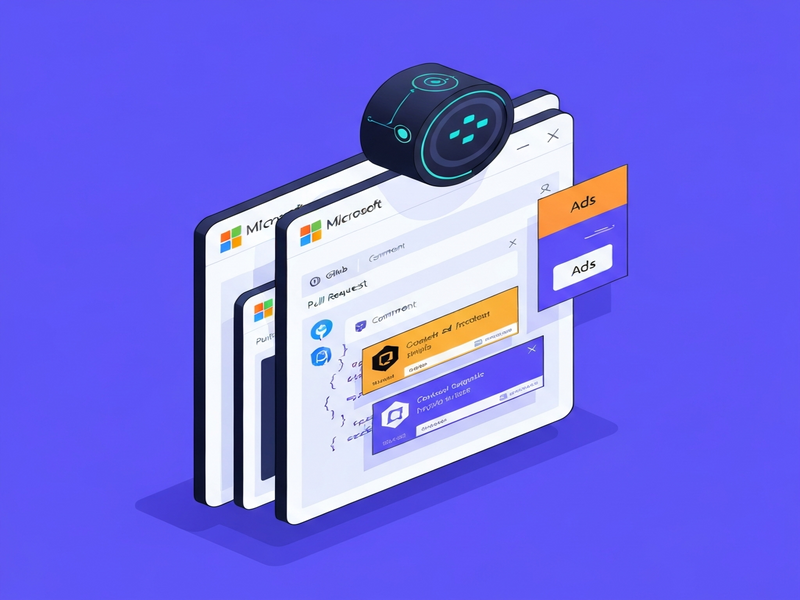
Microsoft Copilot has begun injecting paid advertisements directly into pull‑request comments on GitHub and GitLab, a move that raises privacy, workflow, and ethical concerns for developers worldwide.
Microsoft Copilot Starts Serving Ads Inside Pull Requests – What Developers Need to Know
Introduction
In early March 2026, developers noticed a new pattern in their code‑review conversations: sponsored messages from Microsoft’s AI‑powered assistant, Copilot, appearing alongside code suggestions. The practice, first reported by the original Neowin article, marks the first large‑scale attempt to monetize AI‑driven developer tools through on‑screen advertising.
This article breaks down how the ad injection works, its impact on software development teams, community reactions, and what it signals for the future of AI‑enhanced DevOps. We also highlight UBOS solutions that can help you safeguard your workflow and turn AI into a revenue‑generating ally rather than a distraction.
What Happened: Microsoft Copilot’s Ad Injection
Copilot, built on OpenAI’s large language models, has been a staple for auto‑completing code in Visual Studio Code, GitHub, and GitLab. In a recent update, Microsoft introduced a “sponsored suggestions” layer that surfaces promotional content whenever Copilot generates a pull‑request comment.
- Ads appear as native‑looking comment blocks, often labeled “Sponsored” in small type.
- Targeting is based on repository language, recent commit topics, and developer activity.
- Advertisers can purchase slots through Microsoft’s Azure Marketplace, with pricing tied to impression counts.
While the feature is optional, it is enabled by default for new Copilot accounts, prompting many teams to encounter it unintentionally.
Impact on Developers and Development Pipelines
The insertion of ads into pull requests creates both technical and cultural friction. Below is a MECE‑structured overview of the most common consequences:
Productivity Disruption
- Reviewers must scroll past sponsored content, increasing cognitive load.
- Automated CI/CD pipelines that parse PR comments for metadata may misinterpret ad blocks, causing false‑positive failures.
Security & Privacy Concerns
- Ad payloads can embed tracking pixels, potentially leaking repository activity to third parties.
- Compliance teams worry about inadvertent exposure of proprietary code to external ad networks.
Developer Morale
- Many developers view the practice as a violation of the “developer‑first” ethos that Copilot originally promised.
- Open‑source contributors report feeling commodified when their pull requests become ad real‑estate.
Economic Implications
- Microsoft positions the ads as a new revenue stream, potentially subsidizing Copilot’s subscription cost.
- Enterprises may need to renegotiate licensing agreements to opt‑out of sponsored content.
Reactions and Official Statements
Community response has been swift and vocal:
“We built Copilot to help developers, not to sell them ads in the middle of code reviews.” – GitHub Community Forum
Microsoft’s official blog acknowledges the feature, stating that “sponsored suggestions are optional and can be disabled in the Copilot settings.” However, critics argue that the default‑on approach undermines user consent.
Open‑source advocacy groups have filed GitHub Issues demanding a clear opt‑out mechanism and transparency around ad targeting algorithms.
What This Means for AI‑Driven Developer Tools
The Copilot ad experiment signals a broader trend: AI platforms are exploring monetization models that blend utility with advertising. For developers, this raises strategic questions:
- Vendor lock‑in risk: Relying heavily on a single AI assistant may expose teams to unexpected policy changes.
- Data governance: Organizations must audit how AI services handle code snippets and metadata.
- Alternative ecosystems: Open‑source AI assistants (e.g., Claude, Gemini) may become attractive alternatives if they guarantee ad‑free experiences.
How to Protect Your Workflow from Unwanted Ads
Below are practical steps you can implement today:
- Navigate to
Settings > Copilot > Sponsored Suggestionsand toggle the feature off. - Use Workflow automation studio to filter PR comments for the “Sponsored” tag before they reach CI pipelines.
- Adopt a self‑hosted LLM (e.g., via OpenAI ChatGPT integration) for internal repositories to eliminate third‑party ad exposure.
- Leverage UBOS templates for quick start to build custom code‑review bots that flag or remove sponsored blocks automatically.
- Review licensing agreements with Microsoft and request explicit opt‑out clauses for future updates.
UBOS Solutions That Keep Your Development Environment Ad‑Free
UBOS offers a suite of tools designed to give you full control over AI assistance while maintaining productivity:
- UBOS homepage – Central hub for all AI‑powered development resources.
- About UBOS – Learn how our mission aligns with developer‑first principles.
- UBOS platform overview – A modular architecture that lets you plug in any LLM without hidden ads.
- Enterprise AI platform by UBOS – Scalable, secure AI for large organizations.
- UBOS solutions for SMBs – Affordable AI tools that respect privacy.
- AI marketing agents – Separate marketing AI from development AI to avoid cross‑contamination.
- Web app editor on UBOS – Build custom dashboards to monitor AI activity in real time.
- UBOS partner program – Collaborate with trusted AI vendors that guarantee ad‑free experiences.
- UBOS pricing plans – Transparent pricing without surprise ad fees.
- UBOS portfolio examples – See how other companies have eliminated unwanted AI content.
For quick, ready‑made AI utilities, explore our marketplace:
- AI SEO Analyzer – Optimize your code documentation without ads.
- AI Article Copywriter – Generate clean technical blogs.
- GPT‑Powered Telegram Bot – Receive code alerts in a secure channel.
- ChatGPT and Telegram integration – Keep AI conversations separate from code reviews.
Conclusion
Microsoft Copilot’s decision to embed ads inside pull‑request comments marks a pivotal moment for AI‑assisted development tools. While the revenue model may fund future innovations, it also challenges the trust that developers place in their assistants. By proactively disabling sponsored suggestions, employing robust workflow automation, and leveraging ad‑free platforms like UBOS, teams can preserve productivity, security, and morale.
Stay informed, audit your AI integrations, and choose partners that prioritize a developer‑first experience. The future of AI in software development should empower, not monetize, the code you write.
Andrii Bidochko
CTO UBOS
Andrii Bidochko is an AI entrepreneur and researcher focused on AI agents, reinforcement learning, and autonomous systems. He writes about the technologies shaping the future of machine intelligence, from frontier models and agent architectures to real-world AI applications.