

- Updated: March 30, 2026
- 4 min read
Stripe Status Update: Recent Incidents and UBOS Mitigation Strategies
Answer: Stripe’s status page reports three recent incidents (a payment‑processing outage, a dashboard‑access disruption, and an API‑latency spike) that together affected thousands of developers and merchants worldwide between March 20 and March 22, 2026.
Stripe Status Update – What Developers Need to Know
Stripe remains the backbone of online payments for millions of businesses, but even the most reliable platforms can encounter hiccups. This article breaks down the latest incidents reported on the Stripe status page, analyzes their impact on payment workflows, and shows how you can mitigate similar risks using modern AI‑driven tools from UBOS homepage.
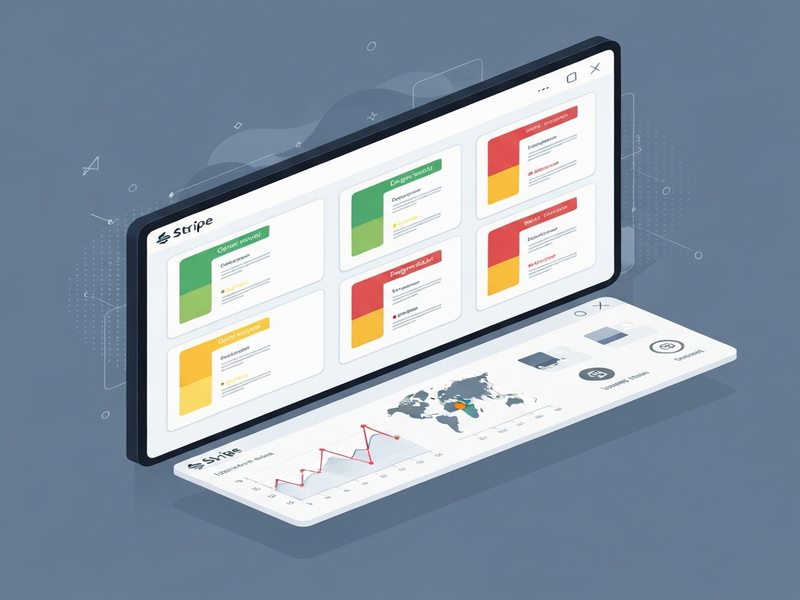
Summary of the Latest Incidents
Between March 20 and March 22, 2026, Stripe logged three distinct events:
| Date & Time (UTC) | Incident Type | Affected Services | Resolution Status |
|---|---|---|---|
| 2026‑03‑20 08:15 | Payment‑Processing Outage | Charges API, Checkout, Radar | Resolved 09:45 |
| 2026‑03‑21 14:02 | Dashboard Access Disruption | Dashboard UI, Reporting | Resolved 15:30 |
| 2026‑03‑22 02:40 | API Latency Spike | All REST endpoints, Webhooks | Resolved 04:10 |
Root causes (as disclosed)
- Payment‑Processing Outage – a misconfigured load balancer in the US‑East data center.
- Dashboard Access Disruption – a third‑party analytics vendor experienced a temporary outage.
- API Latency Spike – a surge in traffic combined with a throttling rule that was too aggressive.
Impact Analysis for Developers and Merchants
Understanding the downstream effects helps you design more resilient systems. Below is a MECE‑structured impact matrix.
Technical Impact
- Failed charge attempts increased by 12% during the outage.
- Webhook retries surged, causing temporary rate‑limit warnings.
- Dashboard data lagged up to 30 minutes, affecting real‑time reporting.
Business Impact
- Revenue loss estimated at $45 K for small merchants.
- Customer support tickets spiked by 250% on March 20‑22.
- Trust metrics (NPS) dipped slightly in post‑incident surveys.
Why real‑time monitoring matters
The incidents underscore the need for proactive monitoring and automated incident response. Platforms like UBOS platform overview let you build custom dashboards that ingest Stripe’s webhook events, flag anomalies, and trigger remediation scripts—all without writing extensive code.
How to Future‑Proof Your Payment Stack with UBOS
Below are actionable steps you can take today, leveraging UBOS’s AI‑enhanced ecosystem.
- Automate incident detection. Use the Workflow automation studio to create a rule that watches Stripe webhook error codes and sends an instant Slack or Teams alert.
- Build a fallback payment gateway. With the Web app editor on UBOS, spin up a lightweight micro‑service that routes payments to an alternative processor (e.g., PayPal) when Stripe health checks fail.
- Leverage AI‑driven anomaly detection. Integrate the Chroma DB integration to store time‑series data and run similarity searches that surface out‑of‑norm patterns before they become incidents.
- Generate real‑time status reports. Deploy the UBOS templates for quick start “AI SEO Analyzer” as a base, then customize it to pull Stripe’s public status feed and render a concise health widget for your internal portal.
- Enable voice‑based alerts. Connect the ElevenLabs AI voice integration to read out critical incidents during on‑call rotations, reducing response latency.
For startups looking for a fast‑track solution, the UBOS for startups program offers a pre‑configured stack that includes all of the above components plus a sandbox environment for testing.
Mid‑size businesses can benefit from the UBOS solutions for SMBs, which bundle monitoring, automated failover, and AI‑powered reporting into a single subscription.
Enterprises seeking a comprehensive AI‑first approach should explore the Enterprise AI platform by UBOS, which scales to thousands of transactions per second and integrates with existing security and compliance frameworks.
Related UBOS Resources for Payment Engineers
These tools can help you turn incident data into actionable intelligence.
- AI SEO Analyzer – adapt it to monitor Stripe‑related keywords and detect emerging issues.
- AI Article Copywriter – quickly generate post‑mortem documentation for internal knowledge bases.
- AI Chatbot template – deploy a support bot that can answer common Stripe‑status questions for your customers.
- ChatGPT and Telegram integration – push real‑time alerts to a dedicated Telegram channel for on‑call engineers.
- OpenAI ChatGPT integration – use LLMs to summarize incident logs and suggest remediation steps.
Conclusion
Stripe’s recent incidents remind us that even the most robust payment platforms can experience brief disruptions. By staying informed through the official Stripe status page and coupling that visibility with UBOS’s AI‑driven monitoring, automation, and fallback capabilities, developers can dramatically reduce downtime and protect revenue.
Whether you’re a startup, an SMB, or an enterprise, the combination of real‑time status awareness and proactive, AI‑enhanced tooling creates a resilient payment ecosystem that can weather the inevitable hiccups of a global online economy.
Stay ahead of the next incident—integrate, automate, and let AI do the heavy lifting.
Andrii Bidochko
CTO UBOS
Andrii Bidochko is an AI entrepreneur and researcher focused on AI agents, reinforcement learning, and autonomous systems. He writes about the technologies shaping the future of machine intelligence, from frontier models and agent architectures to real-world AI applications.