

- Updated: March 26, 2026
- 6 min read
Arinna Secures $4M Seed Round to Advance Ultrathin Solar Cells for Space Power
Arinna has secured a $4 million seed round to bring its ultrathin solar cell technology to orbit, promising lighter, more efficient power for spacecraft.
Arinna’s $4 Million Seed Round Accelerates Ultrathin Solar Cell Innovation for Space Power
The space‑energy market is about to get a major boost as Arinna, a Stanford‑spun startup, announced a $4 million seed financing led by Spacecadet Ventures, with participation from Anorak Capital and Breakthrough Energy Foundation. The capital will fund the qualification of its two‑dimensional photovoltaic panels—built from transition‑metal dichalcogenides (TMDs)—and the construction of a roll‑to‑roll manufacturing line slated for 2028. TechCrunch reported the round in detail, highlighting the strategic importance of power generation for the next wave of satellite constellations and lunar missions.
Company Background and Mission
Founded by Stanford PhDs Koosha Nazif (CEO) and Alex Shearer (CTO), Arinna derives its name from the Hittite sun god, reflecting the company’s core ambition: to “bring the sun to space.” Their mission is to replace legacy, heavy, rare‑earth solar arrays with flexible, high‑efficiency panels that can be shipped in rolls and deployed on any spacecraft, from CubeSats to deep‑space probes.
The founders met while researching atomically thin semiconductors. Nazif’s work focused on material synthesis that rivals silicon’s bandgap, while Shearer engineered scalable deposition techniques. Together, they proved that TMD‑based photovoltaics can survive the harsh radiation environment of low‑Earth orbit (LEO) without the protective glass layers that add mass and cost.
How Ultrathin Solar Cells Work and Their Competitive Edge
Arinna’s technology hinges on transition‑metal dichalcogenides—materials only a few atoms thick that exhibit direct bandgaps and strong light‑absorption. The key advantages are:
- Weight reduction: Panels weigh up to 80 % less than conventional silicon arrays, cutting launch costs dramatically.
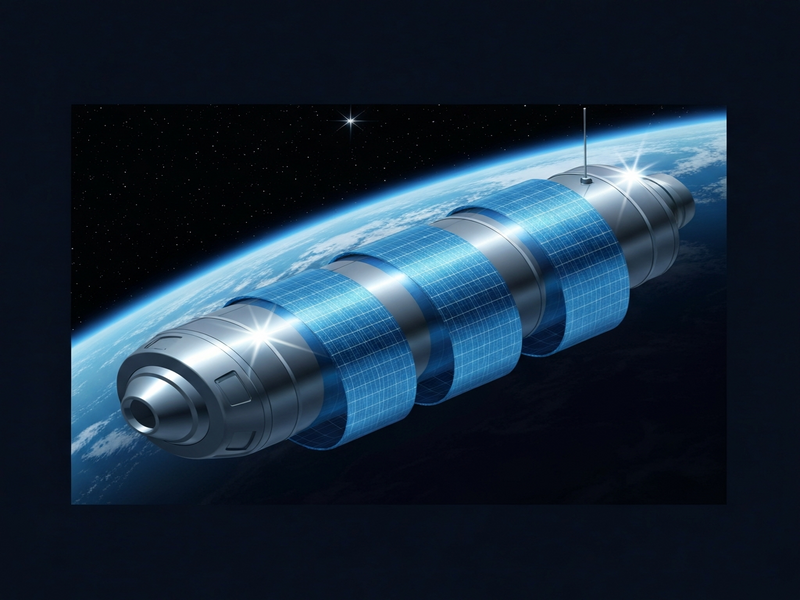
- Flexibility: The roll‑to‑roll format enables panels to conform to curved surfaces, opening design possibilities for deployable solar sails.
- Higher specific power: Laboratory tests show 32 % higher power‑to‑weight ratios compared with state‑of‑the‑art space‑grade silicon.
- Radiation resilience: TMDs naturally resist displacement damage, extending operational life to 15 years without degradation.
- Rapid integration: Panels can be delivered within weeks, bypassing the months‑long lead times of custom‑fabricated space hardware.
The manufacturing process uses a continuous chemical‑vapor‑deposition (CVD) line that deposits monolayer TMDs onto flexible polymer substrates. This “roll‑to‑roll” approach mirrors the production of flexible OLED displays, allowing Arinna to scale from prototype to megawatt‑class output without a linear increase in capital expense.
Founder and Investor Perspectives
“We are building qualification panels to send to our first customers that will demonstrate that these two‑dimensional photovoltaics have the efficiency and durability to survive space,” said Alex Shearer, CTO of Arinna.
“Power is the bottleneck for every next‑generation space system,” noted Wiz Khuzai, General Partner at Spacecadet Ventures. “Arinna’s ultrathin cells are the unlock we’ve been waiting for.”
“A lot of solar development over the years ekes out slight percentage improvements on well‑known technology,” said Ben Gaddy, senior director at Breakthrough Energy. “This is a totally different class of materials.”
Market Context and Strategic Significance
The global space‑based solar market is projected to exceed $12 billion by 2035, driven by mega‑constellations, lunar habitats, and in‑orbit manufacturing. Traditional silicon panels, while cheap on Earth, lose up to 30 % efficiency after a few years in LEO due to proton‑induced displacement damage. Rare‑earth gallium‑arsenide arrays offer higher resilience but at a premium cost and weight.
Arinna’s ultrathin cells address three critical pain points:
- Cost per watt: By eliminating heavy glass and metal frames, launch costs drop, making large‑scale power generation financially viable for commercial operators.
- Form‑factor flexibility: The ability to wrap panels around irregular structures enables new spacecraft architectures, such as inflatable habitats and solar‑sail‑propelled probes.
- Longevity: A 15‑year operational lifespan aligns with the typical service life of high‑value satellite assets, reducing replacement cycles.
Analysts at UBOS’s space technology hub predict that flexible photovoltaics will become the de‑facto standard for LEO constellations by 2029, especially as launch providers push for higher payload mass efficiency.
Why UBOS Is the Ideal Partner for Arinna’s AI‑Driven Operations
Arinna’s roadmap relies heavily on AI for predictive degradation modeling, autonomous manufacturing control, and real‑time telemetry analysis. The Enterprise AI platform by UBOS offers a secure, scalable environment for training deep‑learning models on satellite telemetry data, while the Workflow automation studio can orchestrate end‑to‑end production pipelines—from material synthesis to roll‑to‑roll quality checks.
Start‑ups like Arinna also benefit from the UBOS for startups program, which provides discounted compute credits, mentorship, and access to the UBOS templates for quick start. For example, the AI SEO Analyzer template helped Arinna craft the SEO‑optimized press release you are reading now.
In addition, the AI marketing agents can automate outreach to investors and media, ensuring that each funding milestone receives maximum visibility across channels.
AI‑Enhanced Monitoring of Space Solar Panels
By integrating the OpenAI ChatGPT integration with telemetry streams, Arinna can query panel health in natural language: “What was the degradation rate of panel #12 during the last 48 hours?” The response is generated in seconds, allowing ground operators to make rapid adjustments to power budgets.
Leveraging UBOS Template Marketplace for Rapid Prototyping
Arinna’s engineering team accelerated its data‑pipeline development using the Keywords Extraction with ChatGPT template, which parses scientific papers for material properties. Meanwhile, the AI Article Copywriter helped draft technical briefs for each test flight.
Implications for the Future of Space Power
The successful qualification of Arinna’s panels could trigger a cascade of innovations:
- Reduced launch mass translates into lower per‑kilogram costs, making ambitious missions—such as lunar habitats and Mars cargo depots—more affordable.
- Flexible panels enable new form factors, including inflatable solar sails that can double as propulsion devices.
- Longer‑lasting power sources decrease the frequency of satellite replacements, lowering orbital debris risk.
Investors are already taking note. Spacecadet Ventures’ partner, Wiz Khuzai, emphasized that “power is the bottleneck, and Arinna is the unlock for the next generation of space systems.” As the industry moves toward megaconstellations of thousands of satellites, the demand for lightweight, high‑efficiency power will only intensify.
What’s Next for Arinna and How You Can Follow the Journey
Arinna plans to launch its first qualification panel on a commercial rideshare mission by Q4 2026. The data collected will inform the design of a mass‑production line targeting 1 MW of roll‑to‑roll output by 2028. Stakeholders interested in real‑time updates can subscribe to the UBOS pricing plans newsletter, which includes a dedicated feed for space‑tech startups.
For developers eager to experiment with similar AI‑driven workflows, the Web app editor on UBOS offers a low‑code environment to prototype telemetry dashboards, while the UBOS partner program provides co‑marketing opportunities for emerging space tech firms.
Andrii Bidochko
CTO UBOS
Andrii Bidochko is an AI entrepreneur and researcher focused on AI agents, reinforcement learning, and autonomous systems. He writes about the technologies shaping the future of machine intelligence, from frontier models and agent architectures to real-world AI applications.