

- Updated: March 26, 2026
- 5 min read
Meta Launches Affiliate Shopping Links for Instagram Reels and Facebook Posts
Meta’s new affiliate shopping links let Instagram Reels creators tag up to 30 products and Facebook influencers attach shoppable bubbles directly to posts, turning every piece of content into a potential checkout point.
What’s changing on Instagram Reels and Facebook?
Meta announced a major upgrade to its commerce ecosystem on March 24, 2026, rolling out built‑in affiliate shopping links for both Instagram Reels and Facebook posts. The move mirrors TikTok Shop’s seamless product tagging but keeps the experience inside Meta’s own apps. For a full rundown, see the original Verge article.
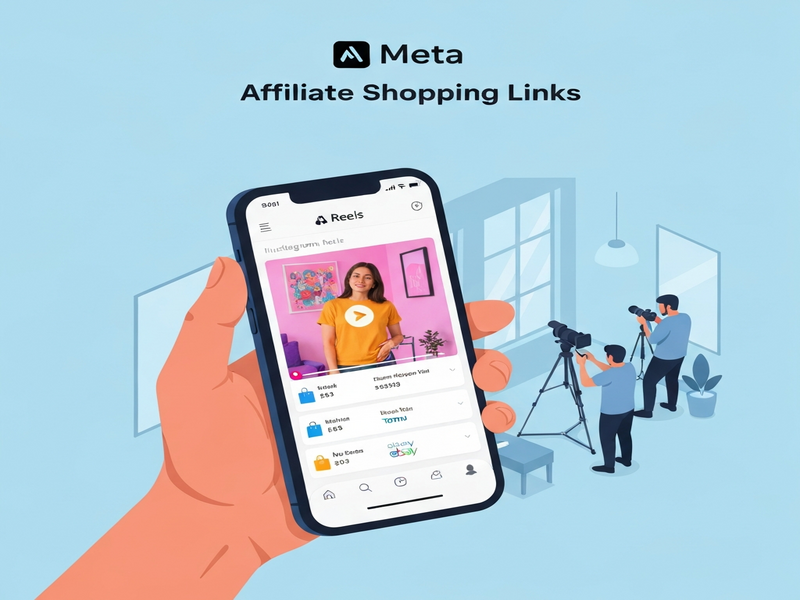
Instagram Reels: Shoppable in a Snap
Instagram’s new feature allows creators to load up to 30 shoppable products into a single Reel. Unlike Facebook’s limited catalog, influencers can paste any affiliate URL, provided the product is registered in Meta’s commerce catalog. The workflow is simple:
- Upload a Reel as usual.
- Open the “Tag Products” panel.
- Paste your affiliate link or select a product from the catalog.
- Position the floating bubble anywhere on the video.
- Publish – viewers can tap the bubble to shop instantly.
This flexibility means fashion influencers can showcase entire outfits, tech reviewers can link multiple gadgets, and food creators can tag every ingredient without leaving the Reel.
Facebook: Affiliate Bubbles on Reels and Photos
On Facebook, the rollout starts with a floating bubble that appears on Reels and photo posts. At launch, only three affiliate partners are supported in the U.S.: Amazon, Temu, and eBay. Creators link their existing affiliate accounts, then tag products directly in the content. The bubble is clickable, opening a new tab with the affiliate’s checkout page.
Key differences from Instagram:
- Maximum of one product per bubble (multiple bubbles can be added).
- Only approved partners (Amazon, Temu, eBay) are available at launch.
- Products must be pre‑approved in the brand’s commerce catalog.
Partner Platforms: Amazon, Temu, eBay
Meta’s affiliate program currently integrates with three major e‑commerce giants:
| Partner | Typical Commission | Tagging Method |
|---|---|---|
| Amazon | 4‑10 % | Paste Amazon Associates link or select from catalog. |
| Temu | 5‑12 % | Link via Temu affiliate dashboard; auto‑populate bubble. |
| eBay | 2‑6 % | Use eBay Partner Network URL or select from catalog. |
Influencers simply copy the affiliate URL from their partner dashboard, paste it into Meta’s tagging UI, and the platform generates a clickable bubble that tracks clicks and conversions.
Why Creators & Brands Should Care
Both sides gain measurable advantages:
Creators
- Higher conversion rates – shoppers stay within the app.
- Reduced reliance on “link‑in‑bio” tools.
- Real‑time analytics via Meta’s Creator Studio.
- Ability to monetize short‑form content beyond sponsorships.
Brands
- Direct access to creator audiences without third‑party platforms.
- Enhanced product discoverability through native UI.
- Unified reporting across Instagram and Facebook.
- Scalable affiliate program management via Meta’s catalog.
Instagram vs. Facebook: Feature Comparison
| Feature | Instagram Reels | Facebook Posts |
|---|---|---|
| Max products per content | 30 (mixed affiliate URLs) | Multiple bubbles, each 1 product |
| Supported affiliate partners | Any partner (catalog‑registered) | Amazon, Temu, eBay (initial launch) |
| Placement UI | Floating bubble + drag‑and‑drop | Bubble appears automatically on tap |
| Analytics integration | Creator Studio + Instagram Insights | Creator Studio + Facebook Page Insights |
How to Leverage This New Commerce Layer for Your Business
If you’re a marketer or SaaS founder looking to capitalize on Meta’s affiliate tools, consider building AI‑driven workflows that automate product tagging, performance tracking, and content generation. UBOS offers a suite of solutions that can accelerate your go‑to‑market strategy:
- Explore the UBOS homepage for a quick overview of the platform.
- Learn how AI marketing agents can auto‑generate shoppable captions.
- Join the UBOS partner program to get co‑marketing credits.
- Use the Web app editor on UBOS to create custom dashboards that pull Instagram and Facebook commerce data.
- Automate repetitive tagging tasks with the Workflow automation studio.
- Check the UBOS pricing plans to find a tier that fits your budget.
- Browse UBOS portfolio examples for inspiration on successful e‑commerce integrations.
- Kick‑start your project with UBOS templates for quick start, such as the AI SEO Analyzer to fine‑tune your product descriptions.
- Deploy a ready‑made AI Article Copywriter to generate blog posts that promote your shoppable reels.
- Leverage the AI YouTube Comment Analysis tool to surface cross‑platform audience insights.
- Boost your brand voice with the Before-After-Bridge copywriting template.
- Run targeted campaigns using the AI LinkedIn Post Optimization template.
- Generate eye‑catching visuals via the Image Generation with Stable Diffusion tool.
- Integrate voice‑enabled shopping experiences with the AI Voice Assistant template.
By combining Meta’s native affiliate links with UBOS’s AI‑powered automation, you can create a frictionless shopping journey that scales across both Instagram and Facebook.
Conclusion: A New Era of Social Commerce
Meta’s affiliate shopping links transform short‑form content into a direct revenue channel. Creators gain higher earnings with fewer middlemen, while brands enjoy tighter attribution and broader reach. The feature’s early focus on Amazon, Temu, and eBay sets a solid foundation, and the open‑catalog approach on Instagram promises rapid expansion to other partners.
For marketers ready to ride this wave, the key is to blend creative storytelling with data‑driven automation—exactly the sweet spot where UBOS’s AI platform excels. Stay ahead of the curve, experiment with the tools above, and watch your social commerce performance soar.
Andrii Bidochko
CTO UBOS
Andrii Bidochko is an AI entrepreneur and researcher focused on AI agents, reinforcement learning, and autonomous systems. He writes about the technologies shaping the future of machine intelligence, from frontier models and agent architectures to real-world AI applications.