

- Updated: March 25, 2026
- 6 min read
OpenAI Shuts Down Sora Video Generator, Ending Billion‑Dollar Disney Partnership
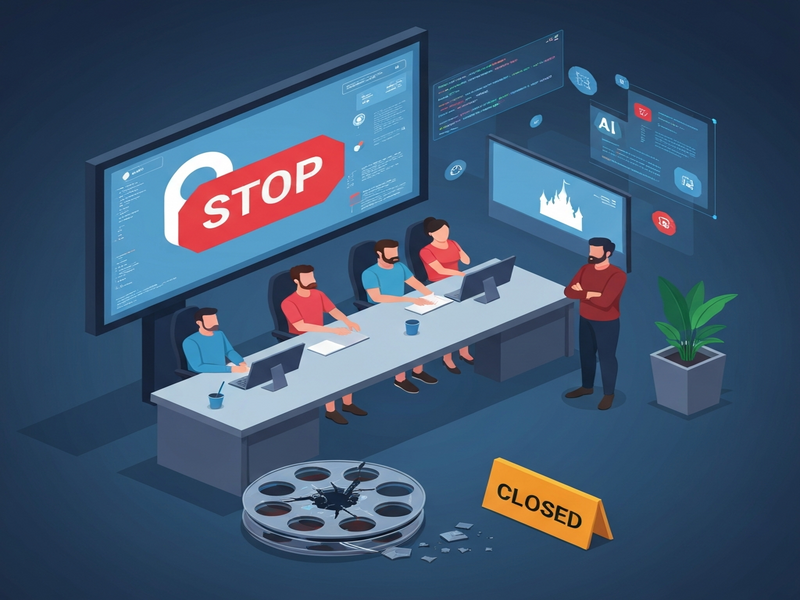
OpenAI has officially announced the shutdown of Sora, its AI‑powered video generation tool, and the termination of the billion‑dollar partnership with Disney.
OpenAI pulls the plug on Sora, ending the Disney deal
On March 24, 2026, OpenAI confirmed that both the consumer‑facing Sora app and the developer API will be discontinued. The decision also nullifies the $1 billion licensing agreement announced with Disney in December 2025, which had promised to bring Disney characters into AI‑generated videos and stream them on Disney+. The move surprised the AI community, investors, and creators who had begun experimenting with the technology.
Background: What Sora was and how Disney got involved
Sora launched at the tail end of 2024 as a “TikTok‑style” AI video generator. Users could type a short prompt—e.g., “a futuristic city skyline at sunset”—and receive a 15‑second video rendered in seconds. The tool leveraged OpenAI’s multimodal models, combining text‑to‑image diffusion with motion synthesis, and promised to democratize video creation for marketers, educators, and hobbyists.
Key capabilities of Sora
- Instant generation of short, high‑resolution clips from natural‑language prompts.
- Built‑in style presets for cinematic, cartoon, and documentary looks.
- Seamless integration with existing OpenAI APIs, allowing developers to embed video generation into apps.
- Community‑driven prompt library that grew to over 200 k shared creations within six months.
Disney’s $1 billion partnership
In December 2025, Disney announced a strategic investment of $1 billion in OpenAI, earmarked for licensing its iconic characters for use within Sora. The plan was to let creators generate short videos featuring characters like Mickey Mouse or Marvel heroes, then push those clips to Disney+. The partnership was hailed as a “new frontier for entertainment,” promising new revenue streams for both companies.
For more context on how AI platforms can accelerate marketing, see our AI marketing agents page.
Details of the discontinuation decision
OpenAI’s internal memo, shared with employees on Tuesday, stated: “We’re saying goodbye to Sora. To everyone who created with Sora, shared it, and built community around it: thank you.” The announcement outlined three immediate actions:
- All Sora accounts will be deactivated by June 30 2026.
- Developers will lose API access on the same date, with a migration window for existing projects.
- OpenAI will provide a download tool for users to export their generated videos and prompts.
The memo did not disclose a specific reason, but industry insiders point to a “code red” situation that emerged earlier in the year when OpenAI’s internal benchmarks showed Sora lagging behind emerging competitors in speed and visual fidelity.
What happens to existing content?
OpenAI promised a “preservation portal” where creators can retrieve their Sora assets. The portal will also host a public gallery of notable works, ensuring that the community’s creative output remains accessible after the shutdown.
Developers looking for alternative video generation solutions can explore the AI Video Generator template in the UBOS marketplace, which offers a plug‑and‑play workflow for turning text prompts into short clips.
Reactions from industry experts and OpenAI statements
Analysts were quick to weigh in. TechCrunch*’s* senior AI reporter called the move “a sobering reminder that even the most hyped AI products can hit a wall when scaling challenges outpace research breakthroughs.
“Sora’s discontinuation underscores the volatility of the generative‑video market. Companies that can combine speed, cost‑efficiency, and brand‑safe content will dominate the next wave.” – Jane Liu, AI analyst at Forrester
OpenAI’s public response was brief. In a tweet, CEO Sam Altman wrote, “We remain focused on delivering safe, reliable AI experiences. Sora was an ambitious experiment, and we learned valuable lessons that will inform future products.” The company has not announced a direct replacement for Sora.
For a deeper dive into OpenAI’s broader product strategy, see the OpenAI ChatGPT integration page on UBOS.
Implications for AI video generation and future projects
The shutdown sends several signals to the AI ecosystem:
Market impact
- Investor caution: Venture capitalists may scrutinize large‑scale video‑AI bets more closely, demanding clearer paths to profitability.
- Competitive reshuffling: Startups such as Runway, Synthesia, and emerging players on the UBOS templates for quick start marketplace are likely to capture displaced Sora users.
- Regulatory attention: Disney’s involvement highlighted the need for robust IP safeguards in AI‑generated media, a topic regulators are now monitoring.
Strategic shift at OpenAI
OpenAI appears to be consolidating around its core offerings—ChatGPT, Codex, and the upcoming “superapp” desktop experience referenced in a recent Wall Street Journal report. By trimming “distracting” projects, the company hopes to double down on products that already generate strong revenue streams.
UBOS, for its part, is expanding its Enterprise AI platform by UBOS to include video‑generation modules that integrate with existing workflow automation tools. The Workflow automation studio now offers a “Video Synthesis” node that can be chained with text‑to‑image and voice‑over services, providing a low‑code alternative for businesses that need custom video content without the overhead of a dedicated AI model.
Future of AI‑generated media
Even without Sora, the demand for AI‑driven video remains high. Brands are looking for ways to produce localized ads, product demos, and social‑media clips at scale. Solutions that combine ElevenLabs AI voice integration with video synthesis are poised to fill the gap, delivering fully automated, brand‑compliant content pipelines.
Developers interested in building their own multimodal pipelines can explore the Chroma DB integration, which offers vector‑based storage for prompt‑video pairs, enabling fast retrieval and fine‑tuning of generative models.
Conclusion
OpenAI’s decision to retire Sora marks a pivotal moment for the AI video generation market. While the shutdown ends a high‑profile partnership with Disney, it also opens space for more specialized, enterprise‑focused solutions—many of which are already available on the UBOS platform. For creators and businesses eager to stay ahead of the curve, exploring alternatives like the AI SEO Analyzer or the AI Article Copywriter can provide immediate value while you await the next wave of generative video tools.
Stay informed on the latest AI developments by following our news hub. For the original reporting on Sora’s shutdown, read the full article on The Verge.
Ready to experiment with AI‑generated video today? Jump straight into a ready‑made template on the UBOS portfolio examples page and start creating without writing a single line of code.