

- Updated: March 25, 2026
- 5 min read
Gridland: A Terminal UI Framework Revolutionizes Development
Gridland is a modern terminal UI framework that blends OpenTUI with React, enabling developers to create low‑code applications that run seamlessly in both web browsers and native terminal environments.
What Is Gridland and Why It Matters for Developers
The rise of low‑code platforms has reshaped how developers prototype and ship products. Gridland pushes this trend into the terminal space, offering a full‑stack experience built on the open‑source OpenTUI library and the familiar React component model. By delivering a single codebase that renders as a rich terminal UI and as a responsive web app, Gridland eliminates the need for separate front‑end and CLI implementations.
For tech enthusiasts, startups, and seasoned developers looking to accelerate product development, Gridland represents a compelling alternative to traditional frameworks such as Ink or Blessed. Its integration with modern JavaScript tooling (including bun) further reduces build times and simplifies dependency management.
Core Features of Gridland
OpenTUI‑Powered Rendering Engine
Gridland inherits OpenTUI’s lightweight, cross‑platform rendering capabilities. The engine translates React’s virtual DOM into terminal‑compatible output, supporting colors, mouse events, and dynamic layouts without sacrificing performance.
React‑Based Component Model
Developers can reuse existing React components, hooks, and state management patterns. This means you can leverage popular libraries like Redux, Zustand, or React Query inside a terminal UI, preserving the same development mindset you use for web apps.
Bun‑Optimized CLI Commands
Gridland ships with a set of bun commands that streamline project scaffolding, live reloading, and production builds. Example commands include:
$ bunx @gridland/demo landing
$ bun create gridland my‑app
These commands reduce the typical setup time from hours to minutes, making rapid prototyping a reality.
Browser‑First Development Experience
While Gridland targets terminal output, the development server runs in a browser, offering Chrome DevTools integration, hot module replacement, and visual debugging. When you’re ready, a single build command produces a binary that works in any POSIX‑compatible shell.
Benefits and Real‑World Use Cases
- Unified Codebase: Write once, run everywhere—no need to maintain separate web and CLI versions.
- Faster Time‑to‑Market: With Workflow automation studio style tooling, you can automate repetitive tasks such as CI pipelines, test suites, and deployment scripts.
- Enhanced Developer Experience: React’s declarative syntax combined with terminal‑native shortcuts (e.g.,
Ctrl+Kto clear screen) creates a fluid workflow for both front‑end and DevOps engineers. - Scalable Architecture: Gridland’s component model supports micro‑frontend patterns, allowing large teams to own isolated UI modules while sharing a common state layer.
- Low‑Code Prototyping: Use pre‑built templates from the UBOS templates for quick start to spin up a terminal dashboard in under ten minutes.
Typical Scenarios
| Industry | Use Case | Why Gridland? |
|---|---|---|
| FinTech | Real‑time trading dashboards for terminal‑savvy analysts | Low latency rendering + React state management |
| DevOps | Interactive CI/CD monitoring tools | Bun‑fast builds + terminal UI ergonomics |
| Education | Coding labs that run inside a browser‑based terminal | Single codebase for web and CLI, simplifying curriculum design |
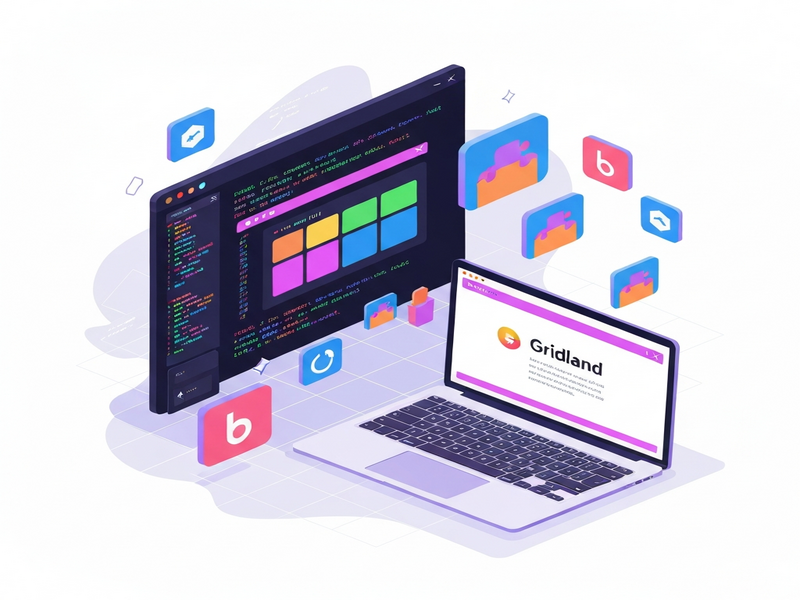
Figure: A sample Gridland application rendered in a terminal window.
How Gridland Fits Into the UBOS Ecosystem
UBOS’s platform overview emphasizes modular AI‑driven components that can be combined with any front‑end framework. Gridland’s React compatibility means you can embed AI‑powered widgets—such as the AI Chatbot template—directly into a terminal dashboard.
For startups seeking rapid validation, the UBOS for startups program offers credits for compute and access to the Enterprise AI platform by UBOS. Pairing Gridland with UBOS’s Web app editor on UBOS lets you design hybrid experiences where a user can switch from a web view to a terminal view without leaving the application.
SMBs can also benefit from the UBOS solutions for SMBs, which include pre‑configured OpenAI ChatGPT integration. Imagine a support console that runs in a terminal, powered by ChatGPT, and accessible via a secure SSH tunnel—perfect for remote teams.
Developers interested in voice‑enabled terminal apps can explore the ElevenLabs AI voice integration. By coupling Gridland’s UI with real‑time speech synthesis, you can create hands‑free monitoring tools for on‑call engineers.
The UBOS partner program also welcomes agencies that want to build custom Gridland‑based solutions for clients, providing co‑marketing resources and technical support.
Boost Your Gridland Projects with Ready‑Made Templates
UBOS’s template marketplace offers dozens of AI‑enhanced building blocks that can be dropped into a Gridland project with a single command. A few standout examples:
- AI Article Copywriter – generate documentation or release notes directly from your terminal.
- GPT‑Powered Telegram Bot – combine Gridland’s UI with a Telegram front‑end for real‑time alerts.
- AI Chatbot template – embed conversational agents inside a terminal dashboard.
- Keywords Extraction with ChatGPT – automate SEO analysis from within a Gridland console.
By leveraging these templates, you can focus on business logic while UBOS handles the heavy lifting of AI integration, data storage, and UI scaffolding.
Conclusion: Why You Should Try Gridland Today
Gridland bridges the gap between modern web development and classic terminal interfaces, delivering a unified, low‑code experience that accelerates product delivery. Its OpenTUI foundation, React compatibility, and bun‑optimized tooling make it a strong candidate for any developer looking to build interactive CLI tools, dashboards, or hybrid apps.
Ready to experiment? Visit the official Gridland site for documentation and starter kits, then explore how UBOS can extend your project with AI features, voice integration, and enterprise‑grade scalability.