

- Updated: March 16, 2026
- 6 min read
Yahoo CEO Jim Lanzone Unveils Scout AI Search and New Advertising Strategy
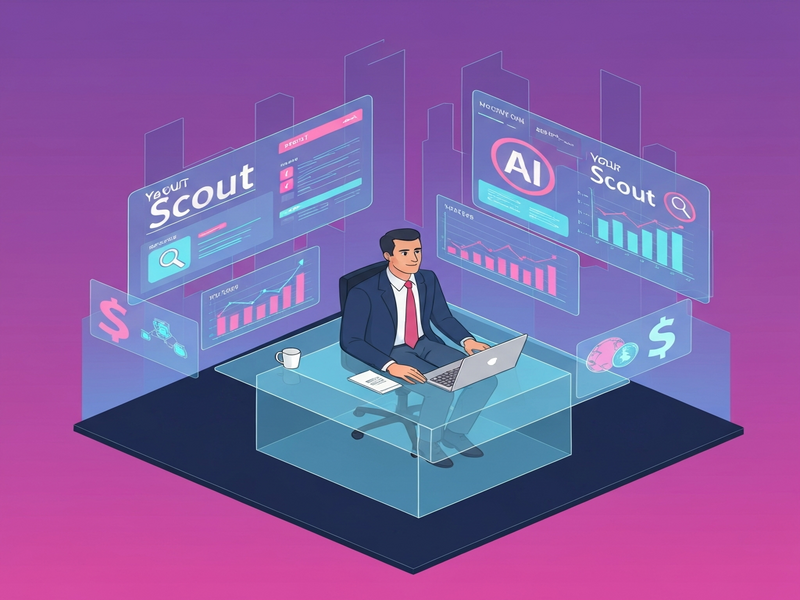
Yahoo’s CEO Jim Lanzone says the company has revived its fortunes with Scout AI, an AI‑powered search engine, and a refocused digital‑advertising strategy that leverages a modern demand‑side platform.
Why Yahoo’s Turnaround Matters to Tech‑Savvy Professionals
In a landscape dominated by Google, TikTok, and a flood of AI‑driven startups, the fact that Yahoo—once the poster child of the early web—has become profitable again is a headline worth dissecting. Jim Lanzone, the former CEO of CBS Interactive and current Yahoo chief, sat down with The Verge to explain how the company leveraged Scout AI, re‑engineered its advertising stack, and positioned itself for a sustainable future.
From Verizon’s “Death Spiral” to a Profitable AI Play
Yahoo’s journey can be broken into three MECE (Mutually Exclusive, Collectively Exhaustive) phases:
- Divestiture & Independence (2021) – Apollo Global Management bought Yahoo, separating it from Verizon’s Oath conglomerate.
- Strategic Refocus (2022‑2023) – The company shed non‑core assets, doubled down on sports, finance, and email, and rebuilt its data foundation.
- AI‑First Search (2024‑present) – Launch of Scout AI, an answer‑engine that blends Yahoo’s proprietary knowledge graph with Anthropic’s Haiku model.
Scout AI: The Engine Behind the New Search Experience
Scout AI is not a chatbot; it is an AI‑powered search layer that delivers concise answers while preserving links to original publishers. The architecture is simple yet powerful:
| Component | Role |
|---|---|
| Yahoo Knowledge Graph | First‑party data on users, content, and vertical expertise (sports, finance, email). |
| Anthropic Haiku LLM | Lightweight language model that interprets queries and generates answer snippets. |
| Bing Index | Fallback web index for queries outside Yahoo’s vertical coverage. |
| Result Renderer | HTML/CSS layer that displays answers, source links, and actionable buttons (e.g., “Add to Yahoo Finance”). |
By grounding the LLM in Yahoo’s own data, Scout AI can surface answers that are both accurate and revenue‑friendly—each answer includes a direct link back to the publisher, preserving the digital advertising ecosystem.
“We built Scout to be a search‑first AI, not a chat‑first AI. The goal is to keep users on Yahoo while still sending traffic downstream to our partners.” – Jim Lanzone
The impact is measurable: Yahoo reports a 27 % increase in daily active users (DAU) on its homepage, and a 15 % lift in ad‑click‑through rates (CTR) on search‑related placements since Scout’s beta launch.
Re‑Engineering the Advertising Engine
While many tech firms are chasing “walled‑garden” models, Yahoo chose a different path: it dismantled its legacy supply‑side platform (SSP) and doubled its investment in a modern demand‑side platform (DSP). The result is a unified ad stack that can serve display, video, and connected‑TV (CTV) inventory across Yahoo’s portfolio.
Key Moves in the DSP‑First Strategy
- Shut down the under‑performing SSP in 2022, freeing engineering resources.
- Acquired a niche CTV inventory partner, enabling programmatic ads on streaming services like Netflix and Spotify.
- Integrated first‑party user data (email, fantasy sports, finance) to power hyper‑targeted campaigns.
- Launched a self‑serve portal for SMB advertisers, lowering the entry barrier for small businesses.
The Workflow automation studio on the UBOS platform is a perfect analogy: it lets marketers stitch together data sources, AI models, and ad‑delivery rules without writing code. Yahoo’s DSP now offers similar “no‑code” campaign builders, which is why advertisers are shifting spend from Google’s “black box” to Yahoo’s transparent marketplace.
Organizational Realignment
The advertising organization now sits under a single chief revenue officer (CRO) who reports directly to Lanzone. This CRO oversees three vertical teams:
- Sports & Entertainment – Powers ad inventory for Yahoo Sports, fantasy leagues, and live‑event streaming.
- Finance & Business – Delivers high‑value ads to Yahoo Finance users, leveraging real‑time market data.
- Core Consumer – Handles email, homepage, and search ad placements.
By aligning ad products with the content verticals, Yahoo can sell “anchor” placements (e.g., a “Buy Now” button next to a stock quote) that command premium CPMs.
What’s Next for Yahoo and Its AI‑Powered Ecosystem?
Lanzone’s roadmap is built on three pillars: personalization, expansion, and partnership. Here’s how each pillar translates into concrete initiatives:
1. Hyper‑Personalized Search & Email
By Q4 2026, Yahoo plans to roll out “Scout Personal,” a version of Scout that tailors results based on a user’s email history, calendar events, and fantasy‑sports line‑ups. This will create a virtuous loop: more personalized answers → higher engagement → richer first‑party data → better ad targeting.
2. New Vertical Integrations
The company is piloting AI‑driven features in emerging verticals:
- ChatGPT and Telegram integration for real‑time sports alerts.
- ElevenLabs AI voice integration to read finance briefs aloud.
- Chroma DB integration for semantic search across user‑generated content.
3. Partner‑Centric Growth
Yahoo is expanding its partner program to include AI‑tool developers, data providers, and niche publishers. The goal is to create a marketplace where third‑party AI services—like the AI SEO Analyzer or the AI Article Copywriter—can plug directly into Yahoo’s ad‑delivery pipeline.
For startups, the UBOS for startups offering provides a low‑cost sandbox to test AI‑driven ad campaigns before scaling. SMBs can also benefit from the UBOS solutions for SMBs, which bundle email, search, and ad tools into a single dashboard.
Read the Full Interview
For a verbatim transcript and deeper insights from Jim Lanzone, check out the original Verge story. The podcast covers everything from Scout’s technical stack to Yahoo’s ad‑tech renaissance.
How UBOS Powers AI‑First Initiatives
Companies looking to replicate Yahoo’s AI‑first transformation can leverage the UBOS platform overview, which offers modular AI services, low‑code workflow builders, and a marketplace of pre‑built templates.
For example, the Web app editor on UBOS lets product teams spin up a custom search UI in days, while the UBOS templates for quick start include a “Scout‑style answer engine” template that integrates with any LLM provider.
Marketing teams can experiment with AI marketing agents to automate campaign creation, and the UBOS pricing plans are transparent enough for SMBs to budget AI spend without surprise fees.
Want to see real‑world success stories? Browse the UBOS portfolio examples for case studies ranging from e‑commerce personalization to AI‑driven video generation (see the AI Video Generator template).
Bottom Line: Yahoo Is Back, and It’s AI‑Powered
Yahoo’s resurgence is not a nostalgic comeback; it’s a strategic pivot anchored by Scout AI, a modern DSP, and a data‑first culture. For tech‑savvy professionals, the lesson is clear: owning first‑party data and coupling it with lightweight LLMs can create a competitive AI search experience without sacrificing revenue streams.
Whether you’re a marketer, a product leader, or an AI developer, the About UBOS ecosystem offers the tools to build similar AI‑driven products—complete with voice, image, and text capabilities—while keeping costs predictable.
Stay ahead of the curve: watch Yahoo’s next moves, experiment with UBOS AI services, and remember that the future of search is AI‑augmented, not AI‑replaced.
Andrii Bidochko
CTO UBOS
Andrii Bidochko is an AI entrepreneur and researcher focused on AI agents, reinforcement learning, and autonomous systems. He writes about the technologies shaping the future of machine intelligence, from frontier models and agent architectures to real-world AI applications.