

- Updated: March 14, 2026
- 5 min read
AI Code Generation Won’t Replace Software Engineering Discipline
AI code generation does **not** replace software engineering; it simply makes poor engineering practices faster and more pervasive.
Why AI‑Generated Code Is Raising New Concerns
Large language models (LLMs) can turn a plain English prompt into runnable code in seconds. For developers, this feels like a productivity miracle: no more endless Stack Overflow searches, no more boilerplate typing. Yet the excitement masks a deeper problem—organizations are treating AI‑generated snippets as a substitute for the disciplined engineering processes that keep complex systems reliable.
In the rush to adopt AI code generation tools, many teams overlook the essential pillars of software engineering: clear specifications, rigorous testing, and continuous alignment between intent and implementation. When those pillars erode, the resulting “fast‑code” often leads to spec drift, hidden bugs, and costly rework.
Read the original analysis of spec drift here for a deeper dive.
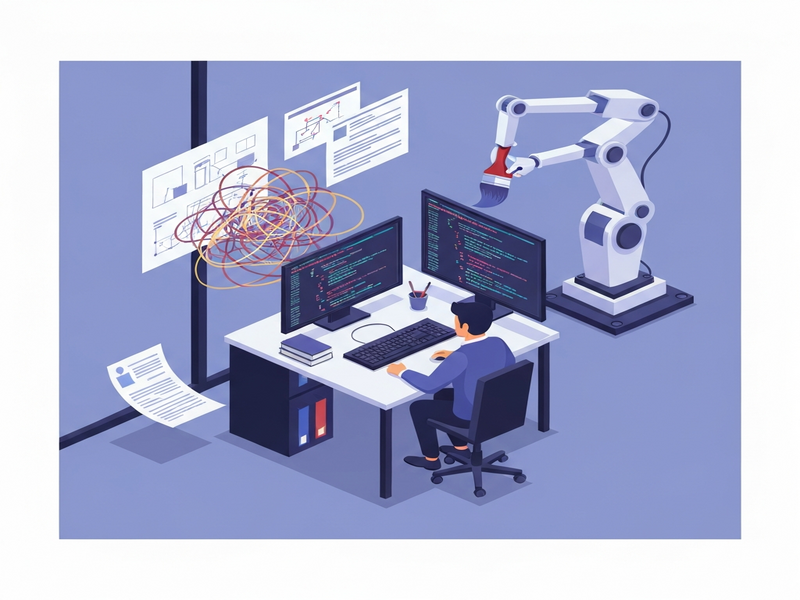
Engineering Discipline Remains Non‑Negotiable
Software development has never been about typing code; it’s about solving problems within constraints. The core activities that cannot be automated include:
- Defining specifications that capture business intent.
- Designing architectures that scale, secure, and evolve gracefully.
- Creating test suites that verify behavior across edge cases.
- Maintaining documentation that keeps teams aligned over time.
When an LLM produces code without these guardrails, the result is often a functional prototype that lacks the robustness required for production. The UBOS platform overview illustrates how a low‑code environment still enforces version control, testing pipelines, and governance—showcasing that even “no‑code” tools need engineering discipline.
Spec Drift: The Silent Killer of Reliability
Spec drift occurs when the original specification, the test suite, and the implementation diverge. AI accelerates this drift in three ways:
- Speed of change: Developers can rewrite large modules in minutes, bypassing design reviews.
- Surface‑level correctness: Generated code often passes existing tests but fails to honor undocumented business rules.
- Documentation lag: Specs and diagrams are rarely updated after an AI‑driven refactor.
Over time, the system becomes a black box where no one can confidently answer, “What does this component really do?” This is the exact scenario described in the original article, now amplified by generative AI.
To combat drift, teams should adopt continuous alignment practices—automated spec‑to‑test generation, traceability matrices, and regular architecture reviews. The Workflow automation studio can orchestrate these checks, ensuring that every AI‑generated change triggers a validation pipeline.
What This Means for Software Engineers
For tech‑savvy professionals, the rise of AI code generation is a double‑edged sword. Below are the practical implications you should prepare for:
1. Shift From Writing to Curating
Engineers will spend more time curating AI output—reviewing, refactoring, and integrating it into a coherent system—than writing code line‑by‑line.
2. Elevated Importance of Specifications
Clear, versioned specs become the primary contract between business and code. Tools like the UBOS templates for quick start help standardize spec formats across teams.
3. New Skill Set: Prompt Engineering
Effective prompts are a new form of requirement gathering. Knowing how to ask an LLM for “idiomatic, test‑driven Python that respects the existing domain model” is a valuable competency.
4. Continuous Validation Pipelines
Every AI‑generated commit should trigger automated linting, static analysis, and regression testing. The Web app editor on UBOS integrates these pipelines out‑of‑the‑box.
5. Career Resilience Through Domain Expertise
Deep knowledge of the problem domain—finance, healthcare, logistics—remains irreplaceable. AI can suggest code, but it cannot replace the nuanced understanding of regulatory constraints or user behavior.
Case Study: AI Marketing Agents and the Need for Guardrails
UBOS’s AI marketing agents can draft copy, schedule posts, and analyze performance automatically. While the speed is impressive, the agents must still adhere to brand guidelines, compliance rules, and SEO best practices.
By integrating the OpenAI ChatGPT integration with a custom validation layer, UBOS ensures that every generated campaign passes a “brand‑compliance” test suite before going live. This illustrates how AI can augment productivity without sacrificing discipline.
How to Harness AI Code Generation Responsibly
Below is a checklist you can adopt today:
- Document every AI‑generated change in a traceable spec.
- Run automated tests immediately after code generation.
- Schedule regular architecture reviews to catch drift early.
- Invest in prompt‑engineering training for all developers.
- Leverage UBOS partner program resources for best‑in‑class validation tools.
Conclusion: Embrace AI, Preserve Engineering Rigor
AI code generation is a powerful accelerator, not a replacement for engineering expertise. By embedding disciplined processes—clear specifications, continuous testing, and alignment checks—organizations can reap the speed benefits while safeguarding reliability.
If you’re ready to integrate AI responsibly into your development workflow, explore the UBOS pricing plans and start a free trial of the Enterprise AI platform by UBOS. Let’s build smarter, not just faster.
Explore More UBOS Solutions
Beyond the topics covered, UBOS offers a rich ecosystem of tools that complement AI‑driven development:
- About UBOS – Learn our mission and engineering philosophy.
- UBOS for startups – Tailored resources for early‑stage teams.
- UBOS solutions for SMBs – Scalable AI tools for growing businesses.
- AI SEO Analyzer – Boost your site’s visibility with AI‑powered insights.
- AI Video Generator – Create marketing videos at scale.
- AI Chatbot template – Deploy conversational agents quickly.
- GPT‑Powered Telegram Bot – Integrate AI into your messaging workflows.
- Telegram integration on UBOS – Seamless messaging automation.
- ChatGPT and Telegram integration – Combine conversational AI with instant delivery.
- Chroma DB integration – Power vector search for your AI apps.
- ElevenLabs AI voice integration – Add natural‑sounding speech to your products.
Andrii Bidochko
CTO UBOS
Andrii Bidochko is an AI entrepreneur and researcher focused on AI agents, reinforcement learning, and autonomous systems. He writes about the technologies shaping the future of machine intelligence, from frontier models and agent architectures to real-world AI applications.