

- Updated: March 12, 2026
- 5 min read
Iran-linked Handala cyberattack cripples Stryker’s medtech operations
Iran‑Linked Cyberattack Halts Stryker Operations – What Healthcare IT Leaders Must Know
An Iran‑linked hacking group crippled Stryker’s global Microsoft environment, wiping over 200,000 devices and forcing the medtech giant’s operations to a complete standstill.
Stryker hit by a massive Iran‑linked cyberattack
On March 12, 2026, Stryker, one of the world’s largest medical‑device manufacturers, disclosed a disruptive cyberattack that took its internal networks offline across the United States, Europe, and Asia. The intrusion, attributed to the Iranian‑linked group known as Handala, erased data from corporate phones, laptops, and servers, leaving employees unable to access critical applications such as Mako, Vocera, and LIFEPAK35. The incident marks the first large‑scale Iran‑sponsored cyber operation against a U.S. medtech firm since the conflict escalated earlier this year.
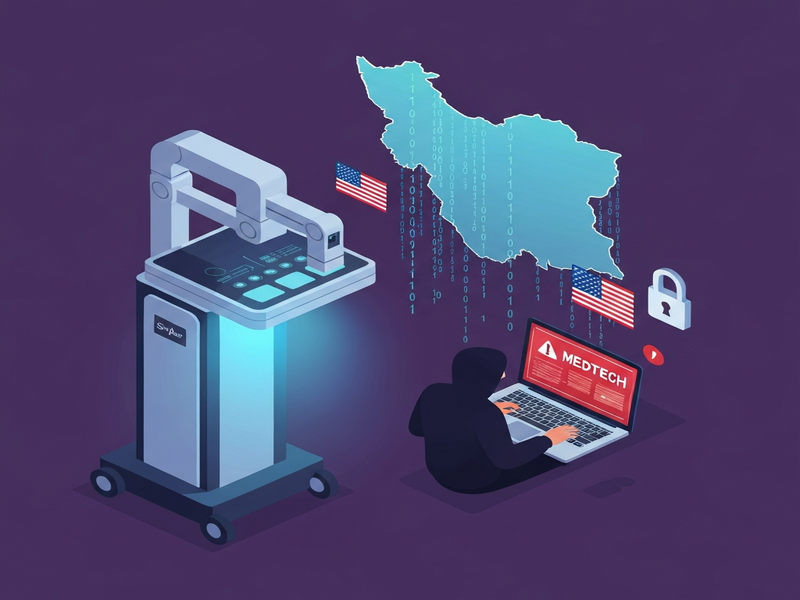
How the attack unfolded and its immediate impact
According to Stryker’s SEC filing, the breach began when threat actors gained unauthorized access to the company’s Microsoft 365 tenant. Within hours, the attackers deployed a custom script that:
- Deleted user profiles and Outlook data on corporate devices.
- Wiped more than 200,000 endpoints, including mobile phones, workstations, and IoT devices used in operating rooms.
- Extracted an estimated 50 terabytes of “critical data,” as claimed by Handala on a public forum.
The fallout was immediate: surgeons could not access real‑time imaging, supply chain managers lost visibility into inventory, and research teams were cut off from collaborative platforms. A senior engineer in Cork, Ireland—Stryker’s largest non‑U.S. site—told the Irish Mirror that “nobody can work,” and that the outage “will have a huge knock‑on effect” for patients awaiting implants.
While the attackers did not leave ransomware notes, the scale of data deletion suggests a destructive motive rather than a financial extortion model. Stryker’s internal security team isolated the compromised tenant, but full restoration timelines remain uncertain.
Official response from Stryker
“We are continuing to resolve the disruption impacting our global network, resulting from the cyber attack. At this time, there is no indication of malware or ransomware and we believe the situation is contained to our internal Microsoft environment only. Our products like Mako, Vocera and LIFEPAK35 are fully safe to use.” – Stryker spokesperson, March 13, 2026
The company’s public statements emphasize patient safety, noting that all medical devices remain operational and have passed internal safety checks. However, the lack of a definitive recovery schedule has raised concerns among investors and healthcare providers alike.
Stryker also pledged to cooperate with U.S. federal authorities, including the Cybersecurity and Infrastructure Security Agency (CISA), to trace the attackers and mitigate future threats.
What the Stryker breach means for medtech cybersecurity
The incident underscores three critical trends that healthcare IT decision makers must address:
- State‑sponsored actors are targeting supply‑chain assets. By compromising a single cloud tenant, attackers can cascade effects across manufacturing, R&D, and clinical operations.
- Medical device ecosystems are increasingly software‑centric. Devices such as the Mako robotic arm rely on continuous connectivity for updates and data logging, making them attractive high‑value targets.
- Incident response readiness remains uneven. Many medtech firms still lack comprehensive playbooks for large‑scale data‑wiping attacks, focusing instead on ransomware scenarios.
For organizations seeking to harden their defenses, integrating AI‑driven monitoring and automated remediation can reduce dwell time. UBOS’s Workflow automation studio enables security teams to trigger instant isolation of compromised accounts, while the Enterprise AI platform by UBOS provides real‑time anomaly detection across cloud services.
Moreover, the rise of generative AI tools—such as the OpenAI ChatGPT integration—allows security analysts to query logs in natural language, accelerating root‑cause analysis during an active breach.
Key takeaways for healthcare technology leaders
The Stryker cyberattack illustrates why medical device security must be a top priority in any healthcare technology roadmap. Below are actionable steps:
- Conduct a zero‑trust audit of all cloud tenants and enforce multi‑factor authentication.
- Deploy AI‑enhanced AI marketing agents—or more accurately, AI‑driven security agents—to monitor for abnormal credential usage.
- Leverage the Web app editor on UBOS to build custom dashboards that surface device health metrics in real time.
- Integrate voice‑enabled alerts via the ElevenLabs AI voice integration for rapid incident escalation.
- Adopt a layered backup strategy that includes immutable snapshots stored off‑site.
By embedding these safeguards, medtech firms can reduce the likelihood of a repeat of the Stryker scenario and protect both patient outcomes and corporate reputation.
Original reporting
For a comprehensive timeline and additional context, see the original coverage by The Verge.
Further reading on UBOS solutions for medtech security
UBOS offers a suite of tools designed to fortify the digital backbone of medical‑device manufacturers:
- UBOS medtech security overview
- UBOS partner program – collaborate with certified security experts.
- UBOS templates for quick start – deploy pre‑configured security workflows in minutes.
- UBOS pricing plans – scalable options for startups to enterprises.
Looking ahead: resilience in a geopolitically charged cyber landscape
As nation‑state actors continue to weaponize cyber capabilities, the medtech sector must evolve from reactive patching to proactive, AI‑augmented defense. The Stryker breach serves as a stark reminder that a single compromised tenant can halt a global supply chain, jeopardize patient safety, and erode stakeholder trust.
By adopting zero‑trust architectures, leveraging generative AI for threat hunting, and partnering with platforms like UBOS that specialize in secure workflow automation, healthcare IT leaders can build the resilience needed to navigate an increasingly hostile digital environment.
The question is no longer “if” another Iran‑linked or state‑sponsored attack will occur, but “how prepared” your organization will be when it does.
Andrii Bidochko
CTO UBOS
Andrii Bidochko is an AI entrepreneur and researcher focused on AI agents, reinforcement learning, and autonomous systems. He writes about the technologies shaping the future of machine intelligence, from frontier models and agent architectures to real-world AI applications.