

- Updated: March 12, 2026
- 7 min read
Nuro Begins Autonomous Vehicle Trials on Tokyo Streets – What It Means for the Future of Delivery
Nuro has begun public‑road testing of its autonomous delivery vehicles in Tokyo, marking the company’s first overseas deployment and a major milestone for AI‑driven robotics in urban logistics.
Nuro’s Tokyo Roll‑Out: What the News Means
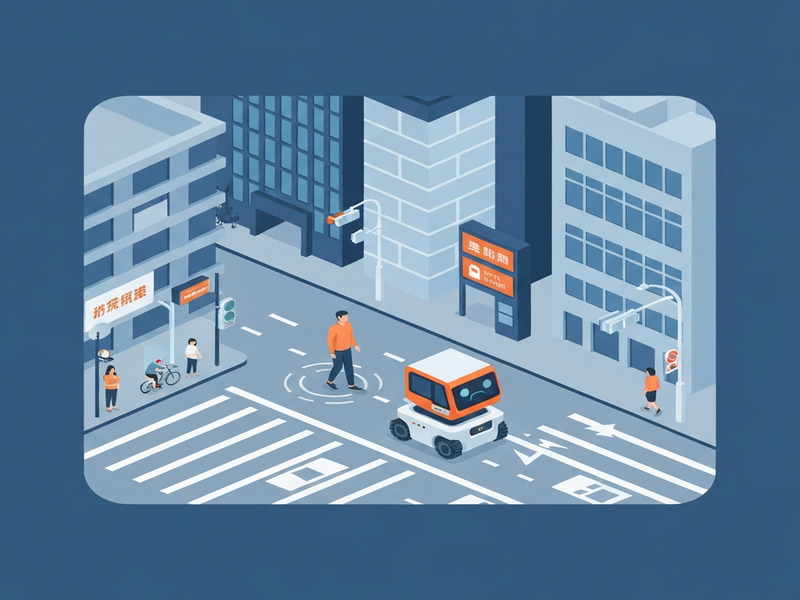
On March 10, 2026, Nuro, the Silicon Valley startup backed by Nvidia, Uber, and SoftBank, launched a fleet of Toyota Prius‑based autonomous delivery vehicles on the bustling streets of Tokyo. The move follows a year‑long preparation that included securing permits, adapting to Japan’s left‑hand traffic, and integrating local road‑sign conventions. This testing phase is supervised by human safety operators seated behind the wheel, ensuring compliance with Japan’s strict autonomous‑vehicle regulations while the AI stack runs in “shadow mode.”
For a deeper dive into the original announcement, see the TechCrunch article that first reported the rollout.
Details of Nuro’s Testing in Tokyo
Key elements of the Tokyo pilot include:
- Twenty‑four Toyota Prius vehicles retrofitted with Nuro’s proprietary self‑driving hardware.
- Human safety operators in each vehicle, ready to intervene at a moment’s notice.
- Test routes covering Shibuya, Ginza, and the residential districts of Setagaya, exposing the system to dense traffic, narrow lanes, and complex pedestrian flows.
- Data collection focused on lane‑keeping, traffic‑signal interpretation, and interaction with cyclists and delivery scooters.
According to Nuro’s blog, the company plans to expand the fleet size and gradually reduce human oversight as confidence in the AI model grows. The pilot is also a stepping stone toward a commercial launch that could see autonomous delivery robots servicing restaurants, grocery stores, and e‑commerce fulfillment centers across the Greater Tokyo Area.
Technology Behind the Drive: Zero‑Shot Autonomous AI
Nuro’s autonomy stack is built on an end‑to‑end AI foundation model that the company dubs “zero‑shot autonomous driving.” This approach enables the system to navigate new environments without prior region‑specific training data. Instead, the model leverages massive multimodal datasets and simulation‑generated edge cases to infer driving policies on the fly.
Key technical pillars include:
- Universal Autonomy Model: Trained on billions of miles of global driving data, the model generalizes across road‑sign conventions, lane‑marking styles, and traffic‑flow patterns.
- Shadow‑Mode Evaluation: While the human driver controls the vehicle, the AI predicts actions in parallel. Engineers compare the AI’s decisions against the human driver to assess safety thresholds before full autonomy is granted.
- High‑Fidelity Simulation: Nuro runs millions of simulated scenarios daily, focusing on rare edge cases such as sudden pedestrian crossings and adverse weather conditions.
- Continuous Learning Loop: Real‑world telemetry from Tokyo feeds back into the model, refining perception and planning modules in near‑real time.
This methodology mirrors the strategies employed by other AI‑first mobility firms, but Nuro’s emphasis on “zero‑shot” capability reduces the time and cost associated with region‑specific data collection.
Funding, Partnerships, and the Road Ahead
In 2024, Nuro raised $203 million in a Series E round that included existing backers Baillie Gifford, Icehouse Ventures, Kindred Ventures, Nvidia, and Pledge Ventures. Uber announced a “multi‑hundred‑million‑dollar” strategic investment as part of a broader partnership with electric‑vehicle maker Lucid, further cementing Nuro’s position in the autonomous‑delivery ecosystem.
These capital infusions have enabled Nuro to:
- Accelerate hardware integration with OEM partners like Toyota.
- Scale its AI research team, focusing on perception, planning, and safety verification.
- Expand globally, with the Tokyo pilot serving as the first overseas testbed.
Strategic collaborations with cloud‑compute providers also power the massive simulation workloads required for zero‑shot learning, ensuring that the autonomy stack remains both scalable and cost‑effective.
Implications for Autonomous Delivery and Urban Logistics
The Tokyo test signals a shift in how AI‑driven robotics can reshape last‑mile delivery in megacities. Key implications include:
- Regulatory Blueprint: Japan’s rigorous safety framework provides a template for other jurisdictions seeking to balance innovation with public safety.
- Cost Reduction: Zero‑shot AI reduces the need for extensive local data collection, lowering deployment costs for new markets.
- Scalable Fleet Management: By leveraging a universal model, operators can manage heterogeneous fleets—ranging from low‑speed sidewalk bots to high‑speed road vehicles—under a single software umbrella.
- Competitive Landscape: Traditional logistics firms may need to partner with AI specialists or develop in‑house capabilities to stay relevant.
For tech‑savvy professionals and early adopters, the Tokyo rollout offers a real‑world case study of how AI can be operationalized at city scale. Companies looking to emulate Nuro’s success can draw lessons from the integration of AI platforms, data pipelines, and safety protocols.
How the Broader AI Ecosystem Is Enabling Autonomous Delivery
Beyond Nuro, a growing number of AI platforms are providing the building blocks for autonomous logistics. For instance, the UBOS homepage showcases a suite of tools that accelerate AI integration across industries. Their UBOS platform overview highlights modular components—such as perception APIs and workflow orchestration—that can be plugged into autonomous vehicle stacks.
Startups can leverage the UBOS templates for quick start to prototype delivery workflows, while the Workflow automation studio enables seamless coordination between fleet management and order fulfillment systems.
Enterprises seeking a robust AI backbone can explore the Enterprise AI platform by UBOS, which offers end‑to‑end security, compliance, and scaling capabilities—critical for handling the massive data streams generated by autonomous fleets.
Moreover, the rise of AI‑enhanced communication tools, such as the Telegram integration on UBOS and the ChatGPT and Telegram integration, empowers operators to receive real‑time alerts and issue commands to vehicles via familiar messaging platforms.
Developers can also experiment with advanced language models through the OpenAI ChatGPT integration, enabling natural‑language query of fleet status, predictive maintenance, and route optimization.
For those interested in data‑centric AI, the Chroma DB integration provides a vector‑search database that can store and retrieve high‑dimensional sensor data, accelerating anomaly detection in autonomous driving pipelines.
Audio‑centric applications, such as voice‑guided delivery confirmations, can be powered by the ElevenLabs AI voice integration, delivering natural‑sounding prompts to end‑users.
These ecosystem components illustrate how the autonomous‑delivery market is converging with broader AI‑as‑a‑service offerings, creating a fertile ground for innovation.
Practical Templates to Jump‑Start Your Autonomous Delivery Project
UBOS’s marketplace hosts a variety of ready‑made AI applications that can be repurposed for autonomous logistics:
- AI SEO Analyzer – Optimize routing pages for search visibility, ensuring customers can locate delivery zones quickly.
- AI Article Copywriter – Generate localized delivery notifications and marketing copy at scale.
- AI Survey Generator – Collect feedback from pilot participants to refine service offerings.
- Web Scraping with Generative AI – Harvest competitor pricing data to inform dynamic pricing models.
- AIDA Marketing Template – Craft persuasive onboarding emails for new users of autonomous delivery services.
- Elevate Your Brand with AI – Build a brand narrative around cutting‑edge autonomous technology.
- AI Video Generator – Produce demo videos showcasing the autonomous fleet in action.
- AI Audio Transcription and Analysis – Convert driver‑operator voice logs into searchable insights.
By leveraging these templates, startups can reduce development cycles from months to weeks, allowing them to focus on differentiating features such as specialized payload handling or hyper‑local routing algorithms.
Ready to Accelerate Your Autonomous Delivery Strategy?
Whether you’re a startup exploring a pilot in a dense urban market or an enterprise seeking to modernize last‑mile logistics, the tools and insights highlighted above can help you move faster.
Stay updated on the latest AI‑driven transportation breakthroughs by following our blog and subscribing to our newsletter.
Andrii Bidochko
CTO UBOS
Andrii Bidochko is an AI entrepreneur and researcher focused on AI agents, reinforcement learning, and autonomous systems. He writes about the technologies shaping the future of machine intelligence, from frontier models and agent architectures to real-world AI applications.