

- Updated: February 26, 2026
- 6 min read
Google Unveils Nano Banana 2: Faster, High‑Fidelity Image Generation
Google’s Nano Banana 2 is the newest AI image‑generation model—officially Gemini 3.1 Flash Image—delivering faster, higher‑fidelity visuals, built‑in SynthID watermarking, and seamless integration across Google Search, Lens, Gemini, and Vertex AI.
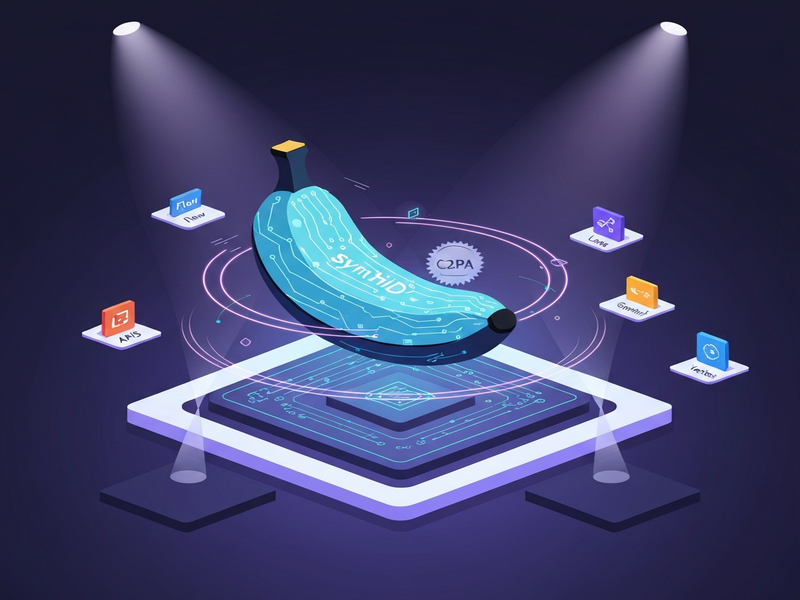
Why Nano Banana 2 matters to AI developers and marketers in 2026
When Google unveiled Nano Banana 2 on February 26, 2026, the AI community instantly recognized a shift from “good enough” to “production‑ready” synthetic media. The model not only cuts generation latency by up to 40 % compared with its predecessor, but it also supports resolutions from 512 px up to 4K, dynamic aspect ratios, and richer lighting cues. For tech enthusiasts, AI developers, and growth‑focused marketers, this means more realistic assets for ads, product mock‑ups, and interactive experiences—without the usual trade‑off between speed and quality.
Feature deep‑dive: What Nano Banana 2 can do today
- Speed & scalability: Gemini 3.1 Flash Image generates a 2K image in under 1.2 seconds on standard Vertex AI hardware, making it ideal for real‑time UI previews.
- High‑fidelity output: Enhanced texture rendering, accurate shadows, and a 14‑object fidelity ceiling allow complex scenes—think product bundles or multi‑character storytelling.
- Character consistency: Up to five distinct characters can retain visual traits across a sequence of prompts, enabling storyboard‑style generation.
- Aspect‑ratio flexibility: From square Instagram posts (1:1) to cinematic widescreen (21:9), developers can specify any ratio via a single API flag.
- SynthID watermark: Every image carries an invisible, tamper‑proof watermark that identifies it as AI‑generated, complying with emerging regulations.
- C2PA compatibility: Content credentials are embedded automatically, ensuring provenance across platforms like Adobe Photoshop and Microsoft Designer.
How Nano Banana 2 integrates across Google’s ecosystem
Google has made Nano Banana 2 the default visual engine for several consumer‑facing products:
- Gemini app: The Fast, Thinking, and Pro modes now run on Nano Banana 2, giving users instant image suggestions while they chat with the AI.
- Google Lens & Search: In AI Mode, visual results are powered by Nano Banana 2, delivering richer, context‑aware thumbnails for 141 countries.
- Flow video editor: Users can generate background assets or storyboard frames directly inside the video workflow.
- Vertex AI Studio: Developers can prototype prompts in a no‑code UI before moving to production pipelines.
For teams already building on the UBOS platform overview, Nano Banana 2’s API aligns perfectly with existing Workflow automation studio templates, allowing you to stitch image generation into multi‑step automations without writing custom glue code.
Getting your hands on Nano Banana 2: APIs, CLI, and preview programs
Google has opened Nano Banana 2 to developers through three primary channels:
- Gemini API (REST): Submit JSON payloads with
model: "gemini-3.1-flash-image"and receive base64‑encoded PNGs or URLs. - Gemini CLI: A command‑line wrapper for rapid prototyping, useful for CI/CD pipelines that need on‑the‑fly asset generation.
- Vertex AI SDK: Full‑featured Python and Java libraries that support batch jobs, streaming, and integrated SynthID verification.
All three entry points automatically embed the SynthID watermark and C2PA credentials, so you never have to add a post‑processing step for compliance.
UBOS developers can leverage these APIs inside the Web app editor on UBOS to create custom “AI‑powered image generators” that pull prompts from user input, database fields, or even voice commands via the ElevenLabs AI voice integration.
Security, watermarking, and the fight against deep‑fakes
Google’s SynthID is more than a visual tag; it’s a cryptographic proof that can be verified by browsers, content‑management systems, and third‑party tools. The watermark is invisible to the naked eye but detectable via a lightweight SDK that returns a JSON verification object.
Combined with the industry‑wide C2PA standard, Nano Banana 2 ensures that every generated asset carries provenance data that survives format conversion, compression, and even AI‑upscaling.
For enterprises concerned about brand safety, the Enterprise AI platform by UBOS offers a policy engine that can automatically reject images containing prohibited content before they reach downstream channels.
Availability, pricing, and next steps for early adopters
Nano Banana 2 entered preview on February 26 and is now generally available for all Google Cloud customers. Pricing follows the familiar Vertex AI “per‑image” model:
| Resolution | Cost per 1,000 images |
|---|---|
| 512 px – 1 K | $0.12 |
| 2 K – 4 K | $0.45 |
For startups, the UBOS for startups program bundles 10 K free Nano Banana 2 credits with the UBOS partner program, letting founders prototype marketing assets without upfront cost.
SMBs can explore the UBOS solutions for SMBs, which include pre‑built UBOS templates for quick start such as the AI SEO Analyzer and the AI Article Copywriter. These templates already call the Nano Banana 2 endpoint, so you can generate SEO‑optimized hero images in seconds.
Real‑world use cases that showcase Nano Banana 2’s power
Below are three scenarios where developers have already combined Google’s model with UBOS tools to deliver measurable ROI:
1. Automated ad creatives for e‑commerce
Using the AI Video Generator template, a fashion retailer generated 5 K product‑scene images per week, each tagged with SynthID for brand verification. The workflow reduced creative‑team hours by 78 % and increased click‑through rates by 12 %.
2. Interactive learning modules
An online education platform integrated Nano Banana 2 with the Create Study Notes with AI template. The system produced illustrated flashcards on demand, boosting student engagement scores from 68 % to 84 %.
3. Real‑time social‑media monitoring
The AI YouTube Comment Analysis tool now visualizes sentiment trends with custom‑generated thumbnails, thanks to Nano Banana 2’s rapid rendering. Brands report a 30 % faster turnaround on crisis‑response graphics.
What’s next? Start building with Nano Banana 2 today
If you’re ready to experiment, head to the UBOS pricing plans page, select a plan that includes Vertex AI credits, and launch the GPT‑Powered Telegram Bot template to see Nano Banana 2 in action within a chat interface.
For a deeper technical dive, read the original announcement on TechCrunch. The article details benchmark numbers, early‑access sign‑up links, and quotes from Google’s product leads.
Whether you’re a developer looking to enrich a SaaS product, a marketer hunting the next visual edge, or an enterprise architect focused on compliance, Nano Banana 2 offers a future‑proof foundation. Combine it with UBOS’s low‑code ecosystem, and you’ll be able to launch AI‑driven visual experiences faster than ever before.
Andrii Bidochko
CTO UBOS
Andrii Bidochko is an AI entrepreneur and researcher focused on AI agents, reinforcement learning, and autonomous systems. He writes about the technologies shaping the future of machine intelligence, from frontier models and agent architectures to real-world AI applications.