

- Updated: February 24, 2026
- 4 min read
Google Launches AI‑Driven Automated Workflows for Opal
Google’s new Opal workflow feature lets users create automated workflows with simple text prompts, leveraging the Gemini 3 Flash model to turn natural‑language instructions into fully functional mini‑apps.
Google Opal Introduces Automated Workflows Powered by AI: Boosting Productivity for Tech‑Savvy Professionals
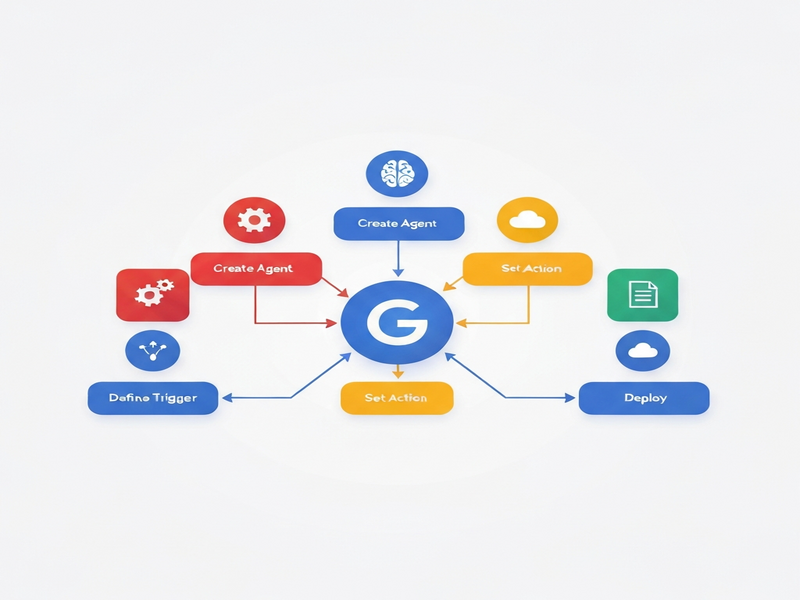
On February 24, 2026 Google announced a major upgrade to its vibe‑coding platform Opal. The addition of an AI‑driven “workflow agent” enables anyone—from developers to business leaders—to design, execute, and iterate on automated workflows without writing a single line of code. By interpreting plain‑language commands, the agent selects the right Google tools (Sheets, Docs, Drive, etc.) and orchestrates them in real time, turning ideas into operational processes in seconds.
Key Features and AI Capabilities
- Natural‑Language Prompting: Users type a request such as “Create a weekly sales report and email it to the team,” and the agent builds the entire pipeline.
- Gemini 3 Flash Engine: The latest Gemini model powers contextual understanding, tool selection, and error handling.
- Memory Across Sessions: Integrated with Google Sheets, the workflow can retain state (e.g., a shopping list) for future interactions.
- Interactive Clarification: If the agent needs more detail, it asks follow‑up questions, ensuring accurate execution.
- Zero‑Code Visual Editor: A drag‑and‑drop canvas lets users see the workflow graphically, mirroring the Workflow automation studio experience on UBOS.
Benefits and Industry Impact
The new Opal workflow agent reshapes how organizations approach AI automation and productivity:
- Speed to Market: Teams can prototype complex processes in minutes, cutting development cycles by up to 80%.
- Cost Reduction: Eliminating the need for custom code lowers engineering spend and reduces reliance on external consultants.
- Empowerment of Non‑Technical Users: Marketing, sales, and operations staff can now build their own solutions, fostering a culture of self‑service.
- Scalable Collaboration: Workflows are stored in the cloud, making them instantly shareable across departments.
- Data‑Driven Decision Making: Integrated analytics feed real‑time insights back into the workflow, enabling rapid iteration.
“Our goal with Opal is to democratize AI‑powered automation. By allowing anyone to describe a task in plain English and watch it come to life, we’re turning productivity into a conversational experience,” said Srini Venkatesan, VP of Product Management at Google.
How Opal Stacks Up Against Competitor Tools
While platforms like AI Article Copywriter and AI SEO Analyzer excel at specific content tasks, Opal offers a broader, end‑to‑end workflow environment:
| Feature | Google Opal | Competitor Platforms |
|---|---|---|
| Zero‑Code UI | ✓ (drag‑and‑drop canvas) | Varies, often code‑centric |
| Native Google Tool Integration | ✓ (Sheets, Docs, Drive, Gmail) | Limited to third‑party APIs |
| Conversational Prompting | ✓ (Gemini 3 Flash) | Often requires template editing |
| Cross‑Session Memory | ✓ (Sheets‑backed state) | Rare |
Take the Next Step with AI‑Powered Automation
If you’re ready to explore how AI can streamline your business processes, discover the broader ecosystem of tools that complement Opal’s capabilities. The UBOS homepage showcases a full UBOS platform overview built for rapid AI integration, including:
- AI marketing agents that generate copy, ads, and campaign insights.
- UBOS templates for quick start, such as the AI Video Generator and AI Image Generator.
- Workflow automation studio that mirrors Opal’s visual canvas, letting you build cross‑app pipelines in seconds.
- Enterprise AI platform by UBOS for large‑scale deployments.
- Specialized integrations like OpenAI ChatGPT integration and ElevenLabs AI voice integration for conversational interfaces.
Explore real‑world success stories in the UBOS portfolio examples and see how startups leverage these tools in the UBOS for startups program. For small‑to‑medium businesses, the UBOS solutions for SMBs provide a cost‑effective path to AI‑driven productivity.
For the original announcement, read the TechCrunch article covering the launch in detail.
Stay up‑to‑date with the latest AI developments on our AI news hub and follow Google‑specific updates at Google updates. Pricing details for all UBOS services can be reviewed in the UBOS pricing plans, while partnership opportunities are outlined in the UBOS partner program.
Conclusion
Google’s Opal workflow feature marks a pivotal shift toward conversational AI that empowers every employee to become a creator of automation. By combining Gemini 3 Flash’s language understanding with native Google tool integration, Opal reduces friction, accelerates delivery, and democratizes productivity. As businesses adopt this capability, the competitive edge will belong to those who can translate ideas into action at the speed of conversation.
Andrii Bidochko
CTO UBOS
Andrii Bidochko is an AI entrepreneur and researcher focused on AI agents, reinforcement learning, and autonomous systems. He writes about the technologies shaping the future of machine intelligence, from frontier models and agent architectures to real-world AI applications.